Link Carol L, Pulliam Samantha J, Hanno Philip M, Hall Susan A, Eggers Paul W, Kusek John W, McKinlay John B
New England Research Institutes, Watertown, Massachusetts, USA.
J Urol. 2008 Aug;180(2):599-606. doi: 10.1016/j.juro.2008.04.009. Epub 2008 Jun 12.
We estimated the prevalence of symptoms suggestive of painful bladder syndrome defined as pain increasing as the bladder fills and/or pain relieved by urination for at least 3 months, and its association with sociodemographics (gender, age, race/ethnicity and socioeconomic status), lifestyle (smoking, alcohol consumption, physical activity) and psychosocial variables (sexual, physical, emotional abuse experienced as a child or as an adult, worry, trouble paying for basics, depression).
The data used come from the Boston Area Community Health Survey, an epidemiological study of 5,506 randomly selected adults 30 to 79 years old of 3 race/ethnic groups (black, Hispanic, white).
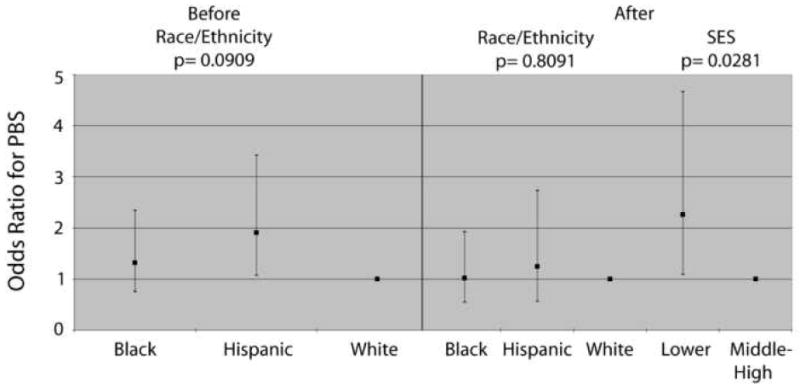
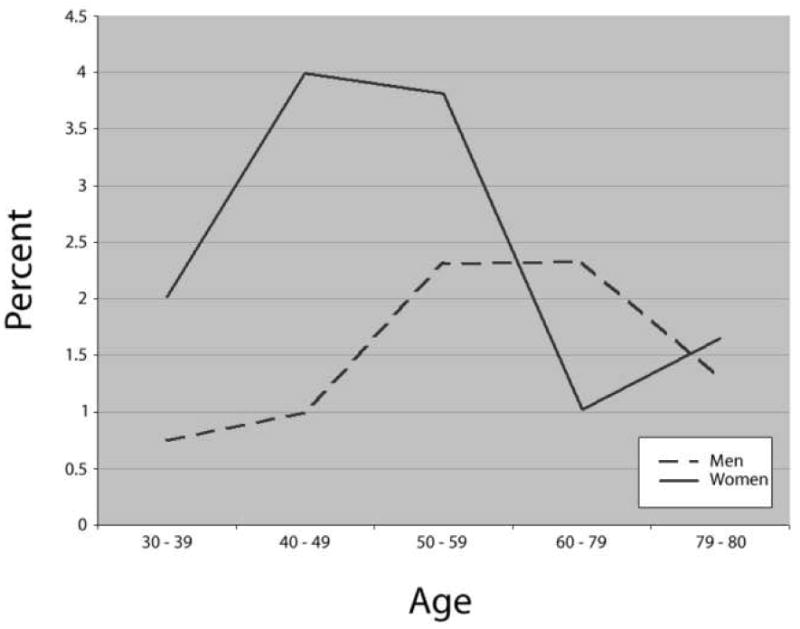
The overall prevalence of symptoms suggestive of painful bladder syndrome was 2% (1.3% in men and 2.6% in women) with increased prevalence in middle-aged adults and those of lower socioeconomic status. Symptoms suggestive of painful bladder syndrome were more common in those who experienced abuse, in those who were worried about someone close to them and in those who were having trouble paying for basics. This pattern held even after adjusting for depression.
Painful bladder syndrome is associated with a number of lifestyle and psychosocial correlates. This suggests that the treatment of patients with painful bladder syndrome (physical symptoms) may benefit from a multifaceted approach of combining medical, psychological and cognitive treatment.
我们估算了提示疼痛性膀胱综合征症状的患病率,该综合征定义为膀胱充盈时疼痛加剧和/或排尿后疼痛缓解至少3个月,并评估了其与社会人口统计学特征(性别、年龄、种族/族裔和社会经济地位)、生活方式(吸烟、饮酒、体育活动)以及心理社会变量(儿童期或成年期经历的性虐待、身体虐待、情感虐待、担忧、支付基本生活费用困难、抑郁)之间的关联。
所用数据来自波士顿地区社区健康调查,这是一项对5506名年龄在30至79岁之间的3个种族/族裔群体(黑人、西班牙裔、白人)的成年人进行的随机抽样流行病学研究。
提示疼痛性膀胱综合征症状的总体患病率为2%(男性为1.3%,女性为2.6%),中年成年人以及社会经济地位较低者的患病率更高。提示疼痛性膀胱综合征的症状在经历过虐待的人群、担心身边亲近之人的人群以及支付基本生活费用有困难的人群中更为常见。即使在对抑郁进行校正之后,这种模式依然存在。
疼痛性膀胱综合征与多种生活方式及心理社会因素相关。这表明,对疼痛性膀胱综合征患者(身体症状)的治疗可能受益于医学、心理和认知治疗相结合的多方面方法。