Ladner Debora C, Tchounwou Paul B, Lawrence Gary W
Environmental Toxicology Research Laboratory, College of Science, Engineering and Technology, Jackson State University, Jackson, Mississippi 39217, USA.
Int J Environ Res Public Health. 2008 Jun;5(2):104-10. doi: 10.3390/ijerph5020104.
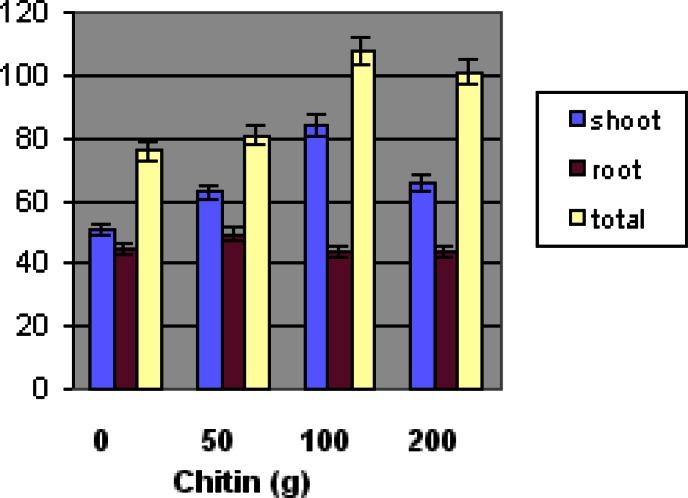
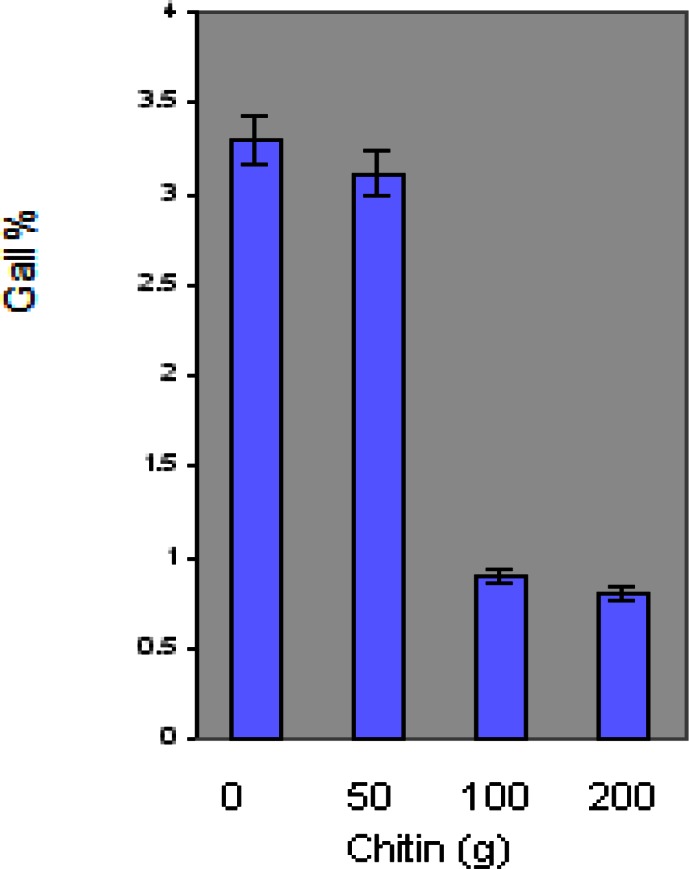
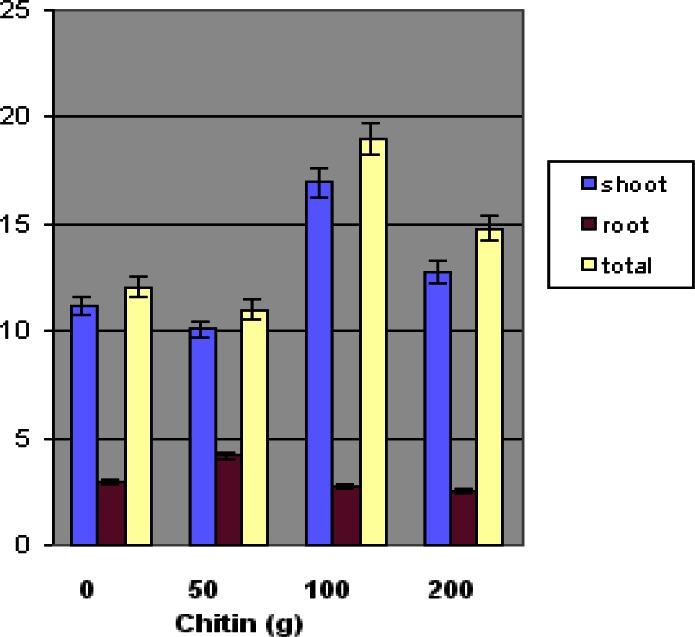
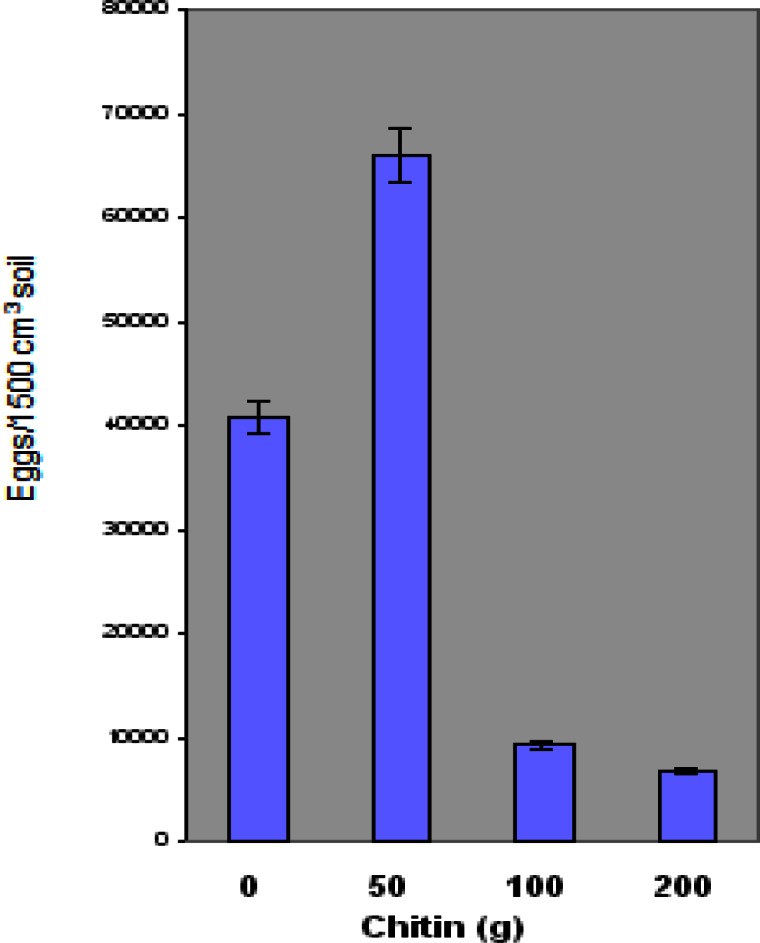
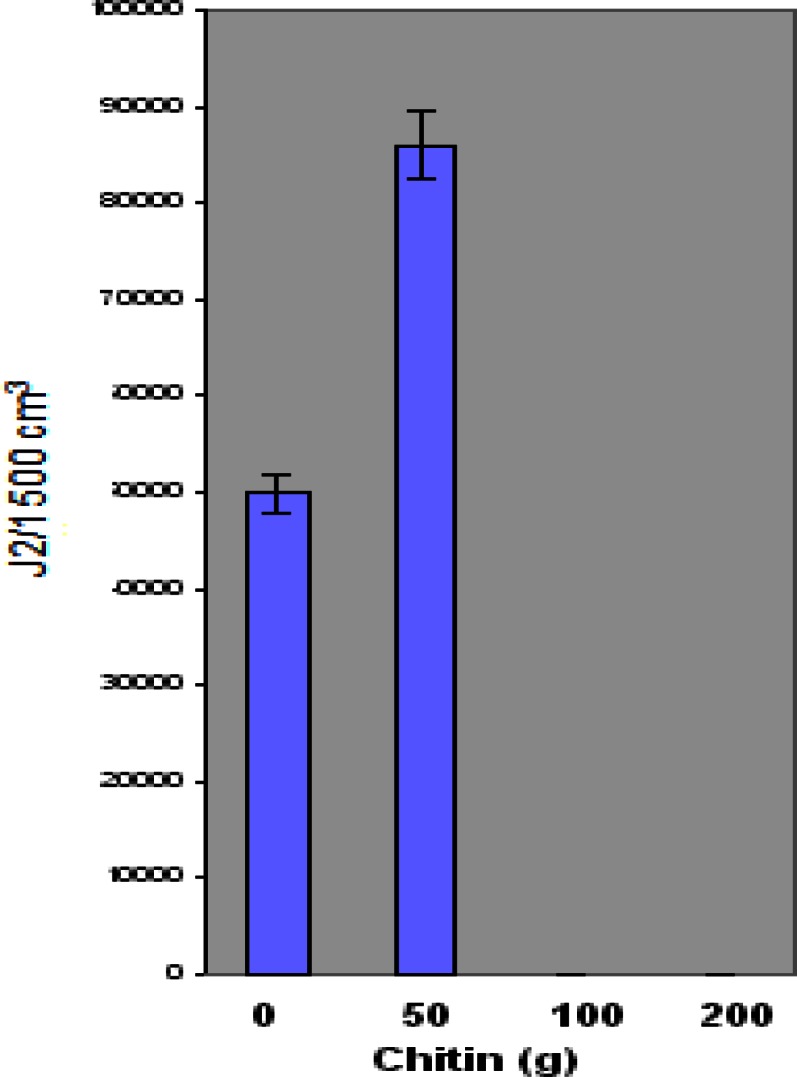
Nonchemical methods and strategies for nematode management including cultural methods and engineered measures have been recommended as an alternative to methyl bromide (a major soil fumigant), due to its role in the depletion of the ozone layer. Hence, an international agreement has recently been reached calling for its reduced consumption and complete phasing out. This present research evaluates the potential of Ecologic, a biological, marine shell meal chitin material, as a soil amendment management agent for root knot nematode, Meloidogyne incognita, control, and its effect on the growth of Floradel tomato plant, Lycopersicon esculentum. To accomplish this goal, studies were conducted during which, experimental pots were set up in greenhouse environments using sterilized soil inoculated with 5,000 root-knot eggs per 1500 g soil. There were 4 treatments and 5 replications. Treatments were: No chitin; 50 g chitin; 100 g chitin; and 200 g chitin. A two-week wait period following Ecologic amendment preceded Floradel tomato planting to allow breakdown of the chitin material into the soil. Fresh and dry weights of shoot and root materials were taken as growth end-points. A statistically significant difference (p < or = 0.05) was obtained with regard to the growth rate of L. esculentum at 100 g chitin treatment compared to the control with no chitin. Mean fresh weights of Floradel tomato were 78.0 +/- 22.3 g, 81.0 +/- 20.3 g, 109.0 +/- 25.4 g and 102.0 +/- 33.3 g at 0, 50, 100 and 200 g chitin, respectively. The analysis of root knot nematode concentrations indicated a substantial effect on reproduction rate associated with chitin amendment. Study results showed a significant decrease in both root knot nematode eggs and juveniles (J2) at 100g and 200 g Ecologic chitin levels, however, an increase in nematode concentrations was recorded at the 50 g Ecologic chitin level (p < or = 0.05). The mean amounts of J2 population, as expressed per 1500 cm3 soil, were 49,933 +/- 38,819, 86,050 +/- 25248, 103 +/- 133 and 103 +/- 133 for 0, 50, 100 and 200 g chitin, respectively. Similarly, the mean numbers of root knot nematode eggs (per 1500 cm3 of soil) were 40,759 +/- 36,712, 66,048 +/- 39,730, 9,904 +/- 16,591 and 9,257 +/- 17,204. Root gall rating was also significantly lower (p < or = 0.05) at the 100 g and 200 g chitin levels compared to the control. Percent gall ratings were 3.3 +/- 1.0%, 3.2 +/- 1.0%, 1.0 +/- 0.5%, and 1.0% +/- 0.6% for amendment levels of 0, 50, 100, and 200 g chitin, respectively.
由于甲基溴(一种主要的土壤熏蒸剂)会导致臭氧层损耗,因此已推荐采用包括栽培方法和工程措施在内的线虫管理非化学方法和策略作为其替代品。因此,最近达成了一项国际协议,要求减少其消费并完全淘汰。本研究评估了一种生物海洋贝壳粉几丁质材料Ecologic作为根结线虫南方根结线虫防治的土壤改良管理剂的潜力,以及它对佛罗里达番茄植株番茄生长的影响。为实现这一目标,进行了相关研究,在温室环境中设置实验花盆,使用每1500克土壤接种5000个根结卵的灭菌土壤。共有4种处理,5次重复。处理分别为:不添加几丁质;添加50克几丁质;添加100克几丁质;添加200克几丁质。在添加Ecologic后等待两周再种植佛罗里达番茄,以使几丁质材料分解到土壤中。将地上部和根部材料的鲜重和干重作为生长终点。与不添加几丁质的对照相比,100克几丁质处理的番茄生长速率有统计学显著差异(p≤0.05)。0、50、100和200克几丁质处理下,佛罗里达番茄的平均鲜重分别为78.0±22.3克、81.0±20.3克、109.0±25.4克和102.0±33.3克。根结线虫浓度分析表明,几丁质改良对繁殖率有显著影响。研究结果显示,在100克和200克Ecologic几丁质水平下,根结线虫卵和幼虫(J2)数量均显著减少,然而,在50克Ecologic几丁质水平下,线虫浓度有所增加(p≤0.05)。每1500立方厘米土壤中J2种群的平均数量,0、50、100和200克几丁质处理分别为49933±38819、86050±25248、103±133和103±133。同样,每1500立方厘米土壤中根结线虫卵的平均数量分别为40759±36712、66048±39730、9904±16591和9257±17204。与对照相比,100克和200克几丁质水平下的根瘤评级也显著更低(p≤0.05)。0、50、100和200克几丁质改良水平下的根瘤评级百分比分别为3.3±1.0%、3.2±1.0%、1.0±0.5%和1.0%±0.6%。