Antons Amanda K, Wang Rui, Kalams Spyros A, Unutmaz Derya
Department of Microbiology and Immunology, Vanderbilt University School of Medicine, Nashville, Tennessee, United States of America.
PLoS One. 2008 Aug 13;3(8):e2952. doi: 10.1371/journal.pone.0002952.
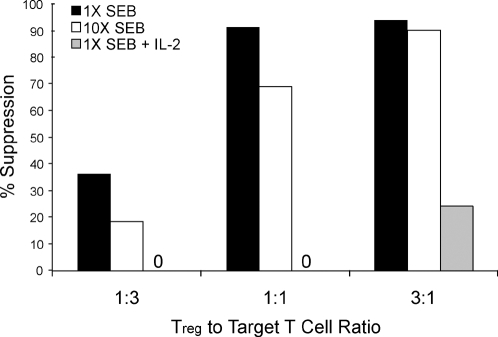
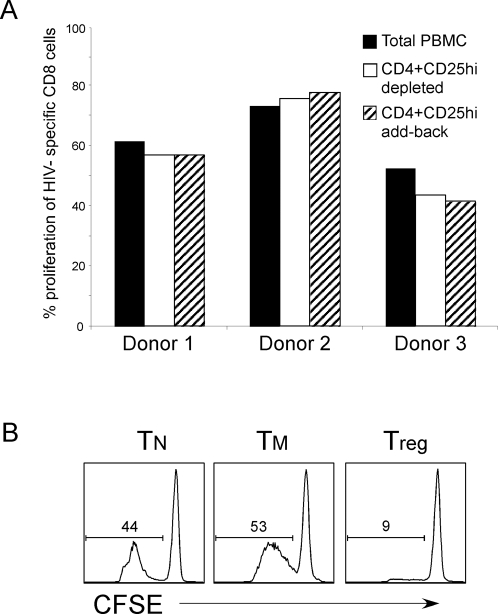
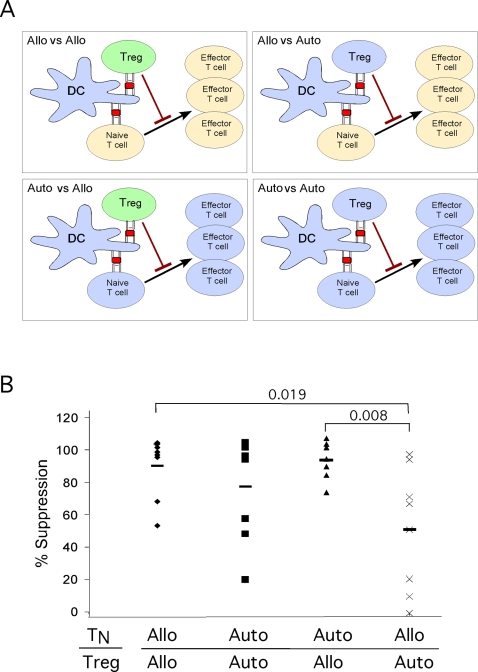
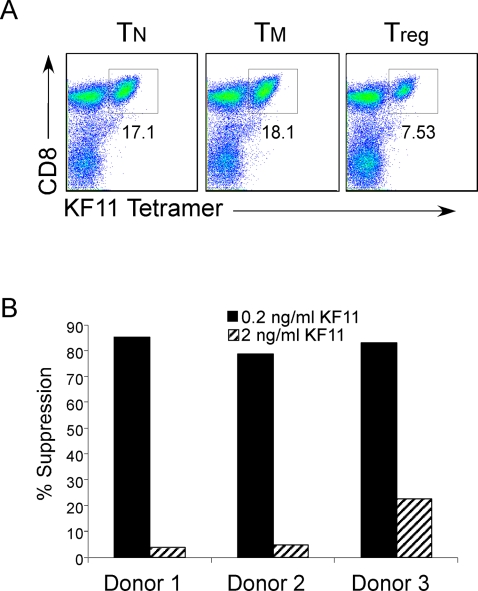
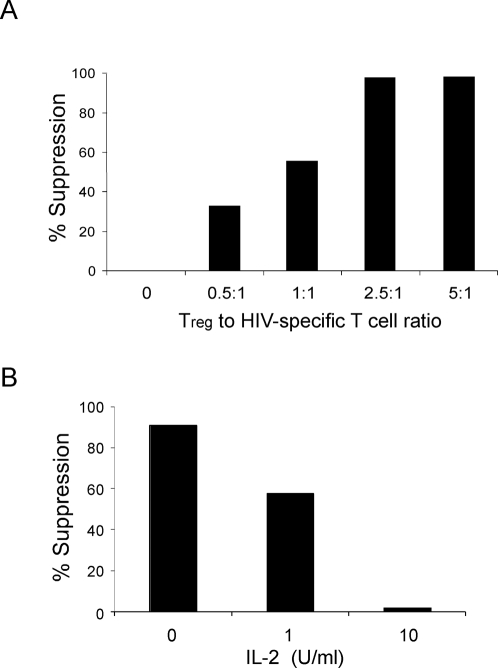
Regulatory T cells (Tregs) suppress immune responses against both self and non-self antigens. Tregs require activation through the T cell receptor (TCR) and IL-2 to exert their suppressive functions. However, how strength of TCR signals modulate the potency of Treg-mediated suppression of antigen-specific T cell activation remain unclear. We found that both strength of TCR signals and ratios of Tregs to target cells, either through superantigen, allogeneic antigens or HIV-specific peptides, modified the suppressive ability of Tregs. While human Tregs were able to mediate suppression in the presence of only autologous antigen-presenting cells, this was much less efficient as compared to when Tregs were activated by allogeneic dendritic cells. In another physiologically relevant system, we show that the strength of peptide stimulation, high frequency of responder CD8+ T cells or presence of high IL-2 can override the suppression of HIV-specific CD8+ T cells by Tregs. These findings suggest that ratios and TCR activation of human Tregs, are important parameters to overcome robust immune responses to pathogens or allogeneic antigens. Modulating the strength of T cell signals and selective enhancement or depletion of antigen-specific Tregs thus may have implications for designing potent vaccines and regulating immune responses during allogeneic transplantation and chronic infections.
调节性T细胞(Tregs)可抑制针对自身和非自身抗原的免疫反应。Tregs需要通过T细胞受体(TCR)和白细胞介素-2(IL-2)激活,以发挥其抑制功能。然而,TCR信号强度如何调节Treg介导的对抗原特异性T细胞激活的抑制效力仍不清楚。我们发现,无论是通过超抗原、同种异体抗原还是HIV特异性肽,TCR信号强度以及Tregs与靶细胞的比例都会改变Tregs的抑制能力。虽然人类Tregs在仅存在自体抗原呈递细胞的情况下能够介导抑制作用,但与同种异体树突状细胞激活Tregs时相比,效率要低得多。在另一个生理相关系统中,我们表明肽刺激的强度、应答性CD8+T细胞的高频率或高IL-2的存在可以克服Tregs对HIV特异性CD8+T细胞的抑制作用。这些发现表明,人类Tregs的比例和TCR激活是克服对病原体或同种异体抗原的强大免疫反应的重要参数。因此,调节T细胞信号强度以及选择性增强或耗尽抗原特异性Tregs可能对设计有效的疫苗以及在同种异体移植和慢性感染期间调节免疫反应具有重要意义。