DiPaola Robert S, Dvorzhinski Dmitri, Thalasila Anu, Garikapaty Venkata, Doram Donyell, May Michael, Bray K, Mathew Robin, Beaudoin Brian, Karp C, Stein Mark, Foran David J, White Eileen
Department of Medicine, University of Medicine and Dentistry of New Jersey (UMDNJ)/Robert Wood Johnson Medical School, New Brunswick, New Jersey, USA.
Prostate. 2008 Dec 1;68(16):1743-52. doi: 10.1002/pros.20837.
Autophagy is a starvation induced cellular process of self-digestion that allows cells to degrade cytoplasmic contents. The understanding of autophagy, as either a mechanism of resistance to therapies that induce metabolic stress, or as a means to cell death, is rapidly expanding and supportive of a new paradigm of therapeutic starvation.
To determine the effect of therapeutic starvation in prostate cancer, we studied the effect of the prototypical inhibitor of metabolism, 2-deoxy-D-glucose (2DG), in multiple cellular models including a transfected pEGFP-LC3 autophagy reporter construct in PC-3 and LNCaP cells.
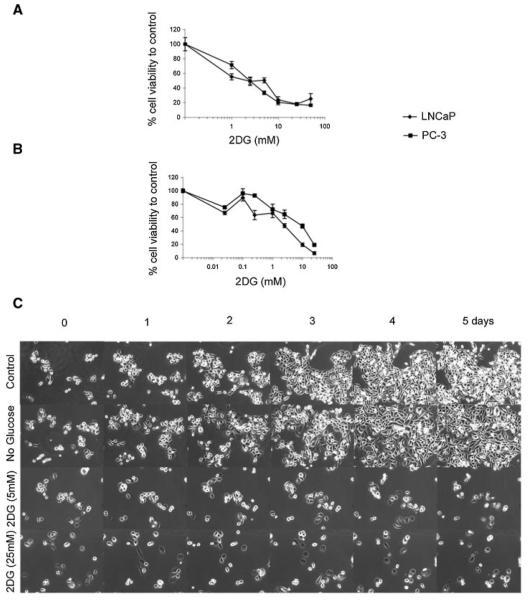
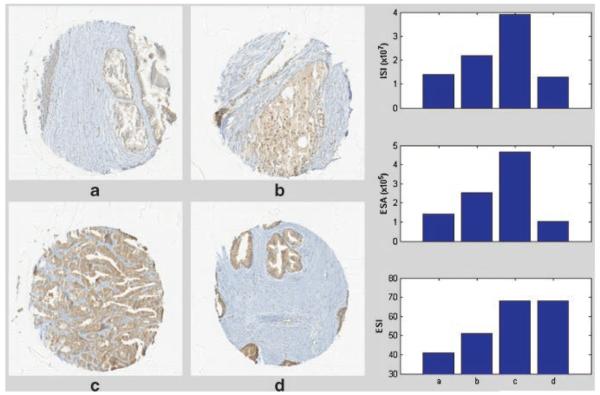
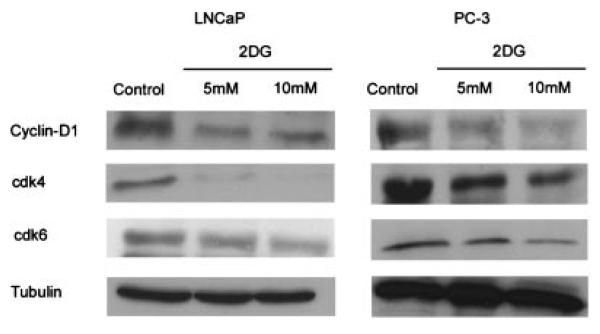
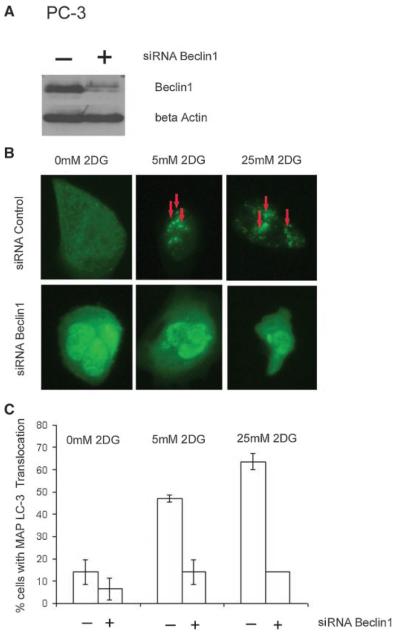
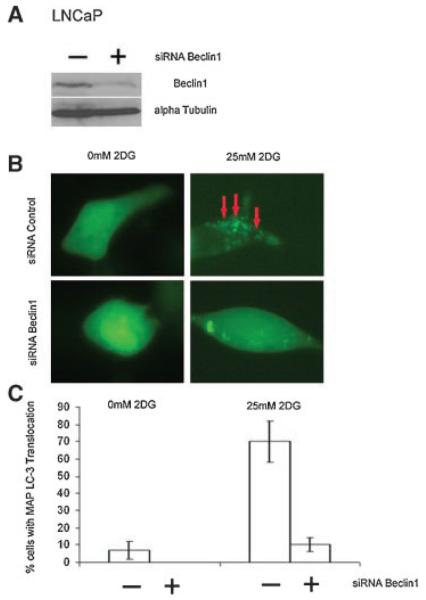
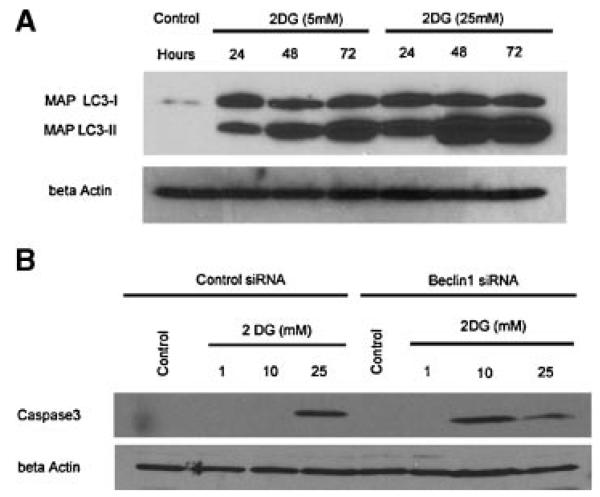
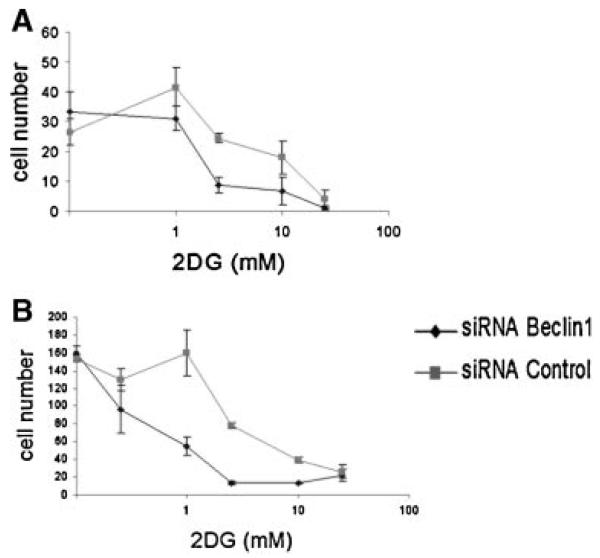
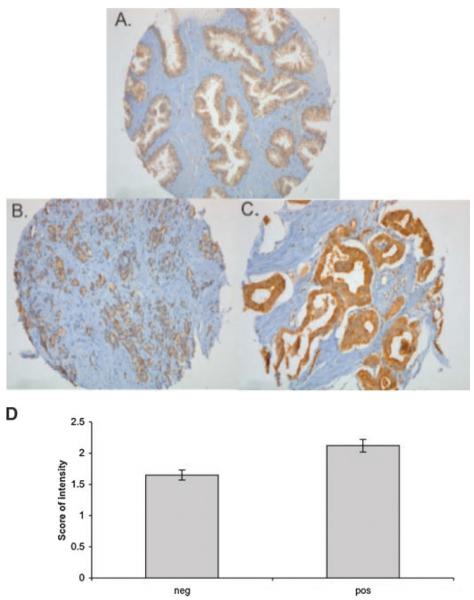
We found that 2DG induced cytotoxicity in PC-3 and LNCaP cells in a dose dependent fashion. We also found that 2DG modulated checkpoint proteins cdk4, and cdk6. Using the transfected pEGFP-LC3 autophagy reporter construct, we found that 2DG induced LC3 membrane translocation, characteristic of autophagy. Furthermore, knockdown of beclin1, an essential regulator of autophagy, abrogated 2DG induced autophagy. Using Western analysis for LC3 protein, we also found increased LC3-II expression in 2DG treated cells, again consistent with autophagy. In an effort to develop markers that may be predictive of autophagy, for assessment in clinical trials, we stained human prostate tumors for Beclin1 by immunohistochemistry (IHC). Additionally, we used a digitized imaging algorithm to quantify Beclin1 staining assessment. These data demonstrate the induction of autophagy in prostate cancer by therapeutic starvation with 2DG, and support the feasibility of assessment of markers predictive of autophagy such as Beclin1 that can be utilized in clinical trials. Prostate 68: 1743-1752 (c) 2008 Wiley-Liss, Inc. These data demonstrate the induction of autophagy in prostate cancer by therapeutic starvation with 2DG, and support the feasibility of assessment of markers predictive of autophagy such as Beclin1 that can be utilized in clinical trials.
自噬是一种由饥饿诱导的细胞自我消化过程,使细胞能够降解细胞质内容物。对于自噬,无论是作为一种抵抗诱导代谢应激疗法的机制,还是作为一种细胞死亡方式的理解,都在迅速扩展,并支持了一种新的治疗性饥饿范式。
为了确定治疗性饥饿对前列腺癌的影响,我们在多种细胞模型中研究了典型的代谢抑制剂2-脱氧-D-葡萄糖(2DG)的作用,包括在PC-3和LNCaP细胞中转入pEGFP-LC3自噬报告基因构建体。
我们发现2DG以剂量依赖性方式诱导PC-3和LNCaP细胞的细胞毒性。我们还发现2DG调节检查点蛋白cdk4和cdk6。使用转入pEGFP-LC3自噬报告基因构建体,我们发现2DG诱导了自噬特有的LC3膜易位。此外,自噬的关键调节因子Beclin1的敲低消除了2DG诱导的自噬。使用针对LC3蛋白的蛋白质印迹分析,我们还发现在2DG处理的细胞中LC3-II表达增加,这同样与自噬一致。为了开发可能预测自噬的标志物,以便在临床试验中进行评估,我们通过免疫组织化学(IHC)对人前列腺肿瘤进行Beclin1染色。此外,我们使用数字化成像算法对Beclin1染色评估进行量化。这些数据证明了2DG治疗性饥饿诱导前列腺癌自噬,并支持评估可用于临床试验的预测自噬标志物(如Beclin1)的可行性。前列腺68: 1743 - 1752 (c) 2008威利 - 利斯公司。这些数据证明了2DG治疗性饥饿诱导前列腺癌自噬,并支持评估可用于临床试验的预测自噬标志物(如Beclin1)的可行性。