Bridgham Jamie T, Brown Justine E, Rodríguez-Marí Adriana, Catchen Julian M, Thornton Joseph W
Center for Ecology and Evolutionary Biology, University of Oregon, Eugene, Oregon, United States of America.
PLoS Genet. 2008 Sep 12;4(9):e1000191. doi: 10.1371/journal.pgen.1000191.
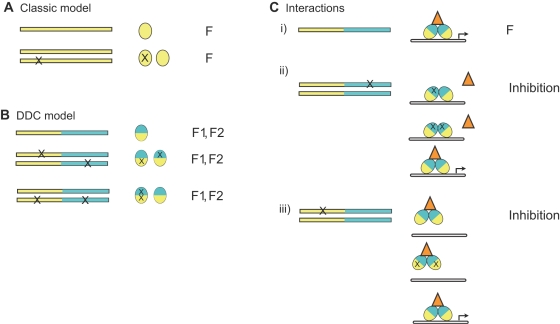
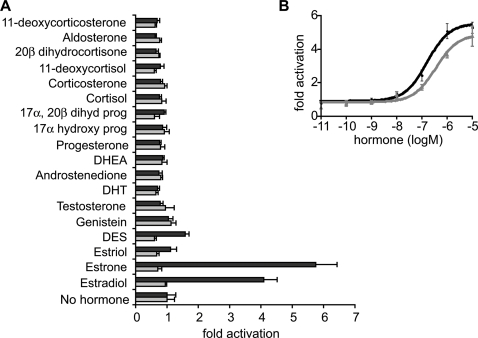
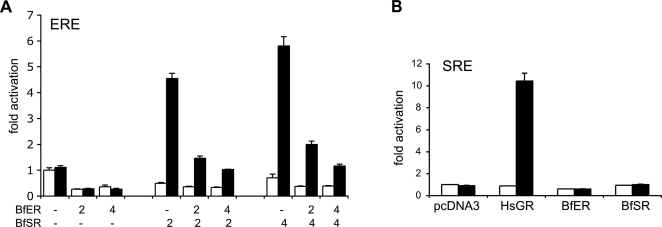
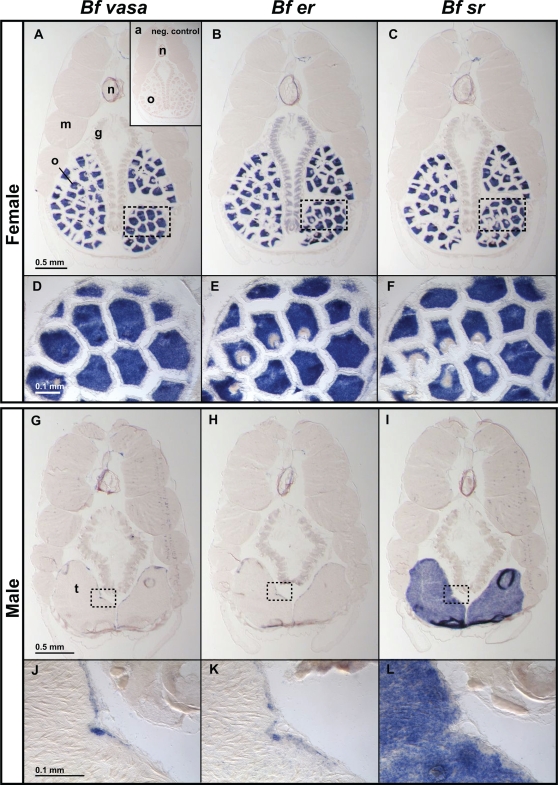
Gene duplication is the predominant mechanism for the evolution of new genes. Major existing models of this process assume that duplicate genes are redundant; degenerative mutations in one copy can therefore accumulate close to neutrally, usually leading to loss from the genome. When gene products dimerize or interact with other molecules for their functions, however, degenerative mutations in one copy may produce repressor alleles that inhibit the function of the other and are therefore exposed to selection. Here, we describe the evolution of a duplicate repressor by simple degenerative mutations in the steroid hormone receptors (SRs), a biologically crucial vertebrate gene family. We isolated and characterized the SRs of the cephalochordate Branchiostoma floridae, which diverged from other chordates just after duplication of the ancestral SR. The B. floridae genome contains two SRs: BfER, an ortholog of the vertebrate estrogen receptors, and BfSR, an ortholog of the vertebrate receptors for androgens, progestins, and corticosteroids. BfSR is specifically activated by estrogens and recognizes estrogen response elements (EREs) in DNA; BfER does not activate transcription in response to steroid hormones but binds EREs, where it competitively represses BfSR. The two genes are partially coexpressed, particularly in ovary and testis, suggesting an ancient role in germ cell development. These results corroborate previous findings that the ancestral steroid receptor was estrogen-sensitive and indicate that, after duplication, BfSR retained the ancestral function, while BfER evolved the capacity to negatively regulate BfSR. Either of two historical mutations that occurred during BfER evolution is sufficient to generate a competitive repressor. Our findings suggest that after duplication of genes whose functions depend on specific molecular interactions, high-probability degenerative mutations can yield novel functions, which are then exposed to positive or negative selection; in either case, the probability of neofunctionalization relative to gene loss is increased compared to existing models.
基因复制是新基因进化的主要机制。这一过程的主要现有模型假定复制基因是冗余的;因此,一个拷贝中的退化性突变能够近乎中性地积累,通常导致从基因组中丢失。然而,当基因产物二聚化或为发挥其功能而与其他分子相互作用时,一个拷贝中的退化性突变可能产生抑制等位基因,抑制另一个拷贝的功能,从而受到选择作用。在此,我们描述了通过类固醇激素受体(SRs)中的简单退化性突变产生一个复制抑制因子的进化过程,类固醇激素受体是一个在生物学上至关重要的脊椎动物基因家族。我们分离并鉴定了头索动物佛罗里达文昌鱼的SRs,其在祖先SR基因复制后不久便与其他脊索动物分化开来。佛罗里达文昌鱼基因组包含两个SRs:BfER,脊椎动物雌激素受体的直系同源物,以及BfSR,脊椎动物雄激素、孕激素和皮质类固醇受体的直系同源物。BfSR被雌激素特异性激活,并识别DNA中的雌激素反应元件(ERE);BfER不会因类固醇激素而激活转录,但能结合ERE,在那里它竞争性地抑制BfSR。这两个基因部分共表达,特别是在卵巢和睾丸中,表明其在生殖细胞发育中具有古老的作用。这些结果证实了先前的发现,即祖先类固醇受体对雌激素敏感,并表明在基因复制后,BfSR保留了祖先功能,而BfER进化出了负调控BfSR的能力。在BfER进化过程中发生的两个历史突变中的任何一个都足以产生一个竞争性抑制因子。我们的研究结果表明,对于其功能依赖于特定分子相互作用的基因,在复制后,高概率的退化性突变能够产生新功能,然后这些新功能会受到正选择或负选择作用;在任何一种情况下,相对于基因丢失,新功能化的概率与现有模型相比都有所增加。