Finkbeiner Stacy R, Kirkwood Carl D, Wang David
Departments of Molecular Microbiology and Pathology & Immunology, Washington University School of Medicine, St, Louis, MO, USA.
Virol J. 2008 Oct 14;5:117. doi: 10.1186/1743-422X-5-117.
Astroviruses infect a variety of mammals and birds and are causative agents of diarrhea in humans and other animal hosts. We have previously described the identification of several sequence fragments with limited sequence identity to known astroviruses in a stool specimen obtained from a child with acute diarrhea, suggesting that a novel virus was present.
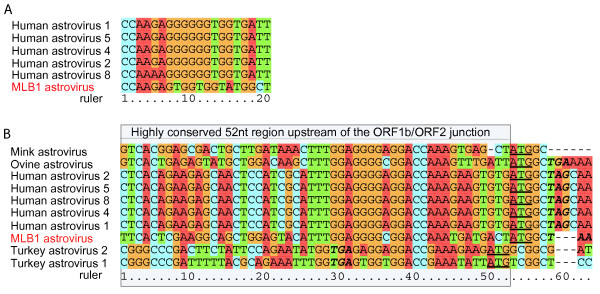
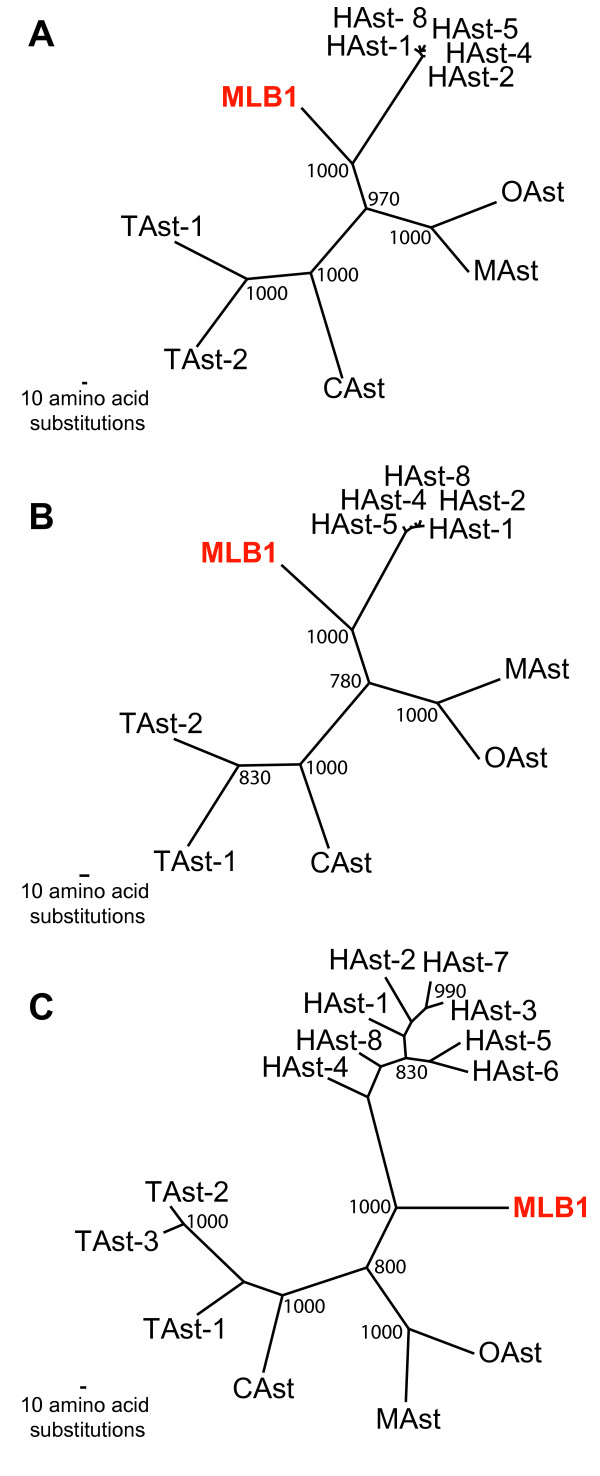
In this study, the complete genome of this novel virus isolate was sequenced and analyzed. The overall genome organization of this virus paralleled that of known astroviruses, with 3 open reading frames identified. Phylogenetic analysis of the ORFs indicated that this virus is highly divergent from all previously described animal and human astroviruses. Molecular features that are highly conserved in human serotypes 1-8, such as a 3'NTR stem-loop structure and conserved nucleotide motifs present in the 5'NTR and ORF1b/2 junction, were either absent or only partially conserved in this novel virus.
Based on the analyses described herein, we propose that this newly discovered virus represents a novel species in the family Astroviridae. It has tentatively been named Astrovirus MLB1.
星状病毒可感染多种哺乳动物和鸟类,是人类及其他动物宿主腹泻的病原体。我们之前曾描述过,从一名急性腹泻儿童的粪便样本中鉴定出了几个与已知星状病毒序列同源性有限的序列片段,这表明存在一种新型病毒。
在本研究中,对该新型病毒分离株的全基因组进行了测序和分析。该病毒的整体基因组结构与已知星状病毒相似,共鉴定出3个开放阅读框。对这些开放阅读框的系统发育分析表明,该病毒与之前描述的所有动物和人类星状病毒存在高度差异。在人类1 - 8血清型中高度保守的分子特征,如3'非翻译区茎环结构以及5'非翻译区和开放阅读框1b/2连接处存在的保守核苷酸基序,在这种新型病毒中要么不存在,要么仅部分保守。
基于本文所述分析,我们认为这种新发现的病毒代表星状病毒科中的一个新物种。它暂时被命名为星状病毒MLB1。