Gillison Maura L, Chaturvedi Anil K, Lowy Douglas R
Division of Viral Oncology, Johns Hopkins, Kimmel Cancer Center, Baltimore, Maryland 21231, USA.
Cancer. 2008 Nov 15;113(10 Suppl):3036-46. doi: 10.1002/cncr.23764.
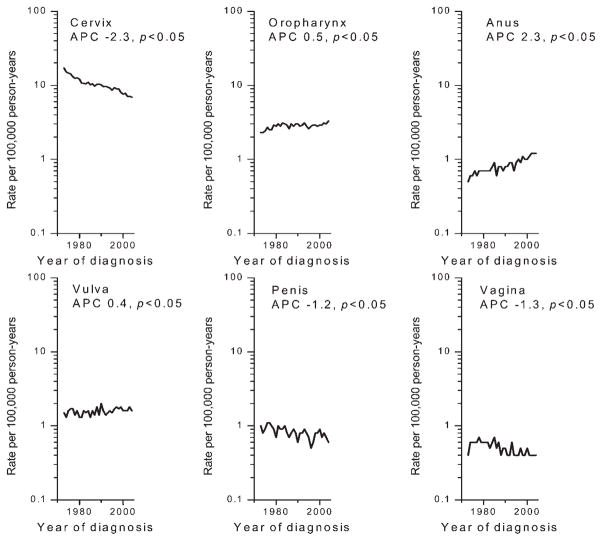
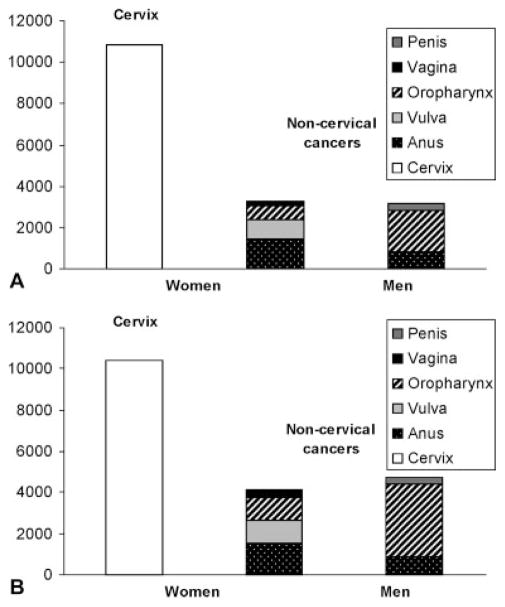
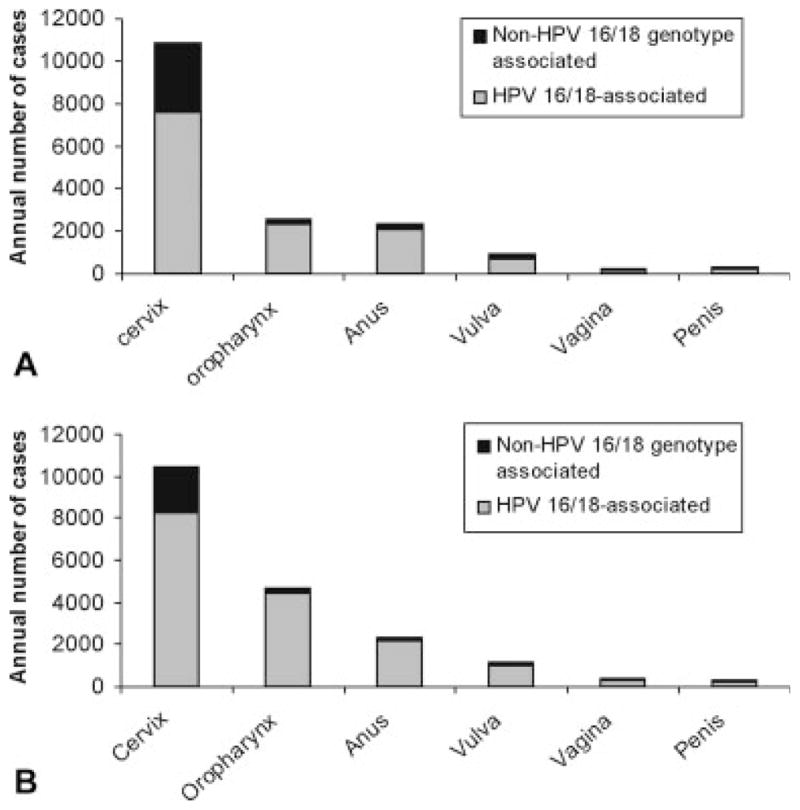
Human papillomavirus (HPV) is a necessary cause of cervical cancer. In addition, on the basis of the fulfillment of a combination of viral as well as epidemiological criteria, it is currently accepted that a proportion of anal, oropharyngeal, vulvar, and vaginal cancers among women and anal, oropharyngeal, and penile cancers among men are etiologically related to HPV. At these noncervical sites with etiologic heterogeneity, HPV-associated cancers represent a distinct clinicopathological entity, which is generally characterized by a younger age at onset, basaloid or warty histopathology, association with sexual behavior, and better prognosis, when compared with their HPV-negative counterparts. Currently available estimates indicate that the number of HPV-associated noncervical cancers diagnosed annually in the US roughly approximates the number of cervical cancers, with an equal number of noncervical cancers among men and women. Furthermore, whereas the incidence of cervical cancers has been decreasing over time, the incidence of anal and oropharyngeal cancers, for which there are no effective or widely used screening programs, has been increasing in the US. The efficacy of HPV vaccines in preventing infection at sites other than the cervix, vagina, and vulva should, therefore, be assessed (eg, oral and anal). Given that a substantial proportion of cervical cancers (approximately 70%) and an even greater proportion of HPV-associated noncervical cancers (approximately 86% to 95%) are caused by HPV16 and 18 (HPV types that are targeted by the currently available vaccines), current HPV vaccines may hold great promise (provided equivalent efficacy at all relevant anatomic sites) in reducing the burden of HPV-associated noncervical cancers, in addition to cervical cancers.
人乳头瘤病毒(HPV)是宫颈癌的必要病因。此外,基于病毒学和流行病学标准的综合满足情况,目前人们公认,女性中的一部分肛门癌、口咽癌、外阴癌和阴道癌以及男性中的肛门癌、口咽癌和阴茎癌在病因上与HPV相关。在这些病因存在异质性的非宫颈部位,HPV相关癌症代表一种独特的临床病理实体,与HPV阴性的同类癌症相比,其通常具有发病年龄较轻、基底样或疣状组织病理学特征、与性行为有关以及预后较好等特点。目前可得的估计数据表明,美国每年诊断出的HPV相关非宫颈癌数量大致与宫颈癌数量相近,男性和女性的非宫颈癌数量相等。此外,虽然宫颈癌的发病率随时间推移一直在下降,但在美国,由于没有有效的或广泛使用的筛查项目,肛门癌和口咽癌的发病率一直在上升。因此,应该评估HPV疫苗在预防宫颈、阴道和外阴以外部位感染方面的效果(例如口腔和肛门)。鉴于相当一部分宫颈癌(约70%)以及更大比例的HPV相关非宫颈癌(约86%至95%)是由HPV16和18(目前可用疫苗所针对的HPV类型)引起的,除宫颈癌外,目前的HPV疫苗在减轻HPV相关非宫颈癌负担方面可能具有巨大潜力(前提是在所有相关解剖部位具有同等效力)。