Lin Yong, Shi Ranxin, Wang Xia, Shen Han-Ming
Molecular Biology and Lung Cancer Program, Lovelace Respiratory Research Institute, 2425 Ridgecrest Dr., SE, Albuquerque, NM 87108, USA.
Curr Cancer Drug Targets. 2008 Nov;8(7):634-46. doi: 10.2174/156800908786241050.
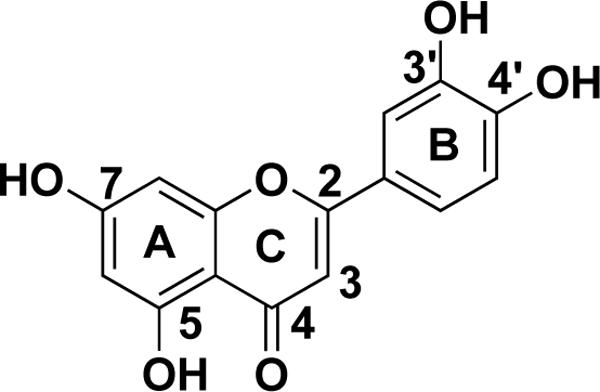
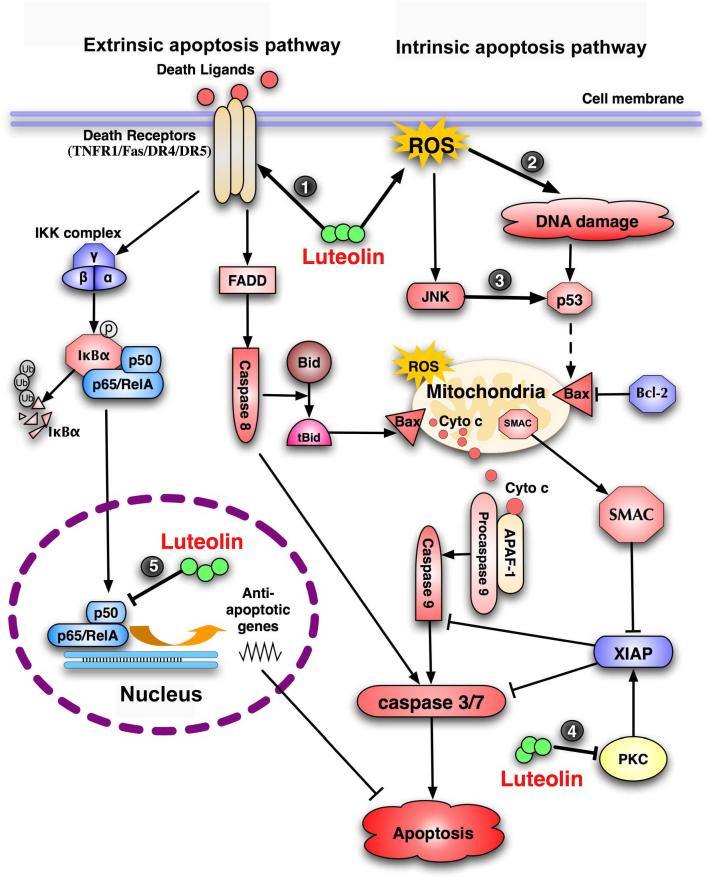
Luteolin, 3',4',5,7-tetrahydroxyflavone, is a common flavonoid that exists in many types of plants including fruits, vegetables, and medicinal herbs. Plants rich in luteolin have been used in Chinese traditional medicine for treating various diseases such as hypertension, inflammatory disorders, and cancer. Having multiple biological effects such as anti-inflammation, anti-allergy and anticancer, luteolin functions as either an antioxidant or a pro-oxidant biochemically. The biological effects of luteolin could be functionally related to each other. For instance, the anti-inflammatory activity may be linked to its anticancer property. Luteolin's anticancer property is associated with the induction of apoptosis, and inhibition of cell proliferation, metastasis and angiogenesis. Furthermore, luteolin sensitizes cancer cells to therapeutic-induced cytotoxicity through suppressing cell survival pathways such as phosphatidylinositol 3'-kinase (PI3K)/Akt, nuclear factor kappa B (NF-kappaB), and X-linked inhibitor of apoptosis protein (XIAP), and stimulating apoptosis pathways including those that induce the tumor suppressor p53. These observations suggest that luteolin could be an anticancer agent for various cancers. Furthermore, recent epidemiological studies have attributed a cancer prevention property to luteolin. In this review, we summarize the progress of recent research on luteolin, with a particular focus on its anticancer role and molecular mechanisms underlying this property of luteolin.
木犀草素,即3',4',5,7 - 四羟基黄酮,是一种常见的黄酮类化合物,存在于多种植物中,包括水果、蔬菜和药草。富含木犀草素的植物在中国传统医学中用于治疗各种疾病,如高血压、炎症性疾病和癌症。木犀草素具有多种生物学效应,如抗炎、抗过敏和抗癌,在生化方面它既作为抗氧化剂又作为促氧化剂发挥作用。木犀草素的生物学效应在功能上可能相互关联。例如,其抗炎活性可能与其抗癌特性有关。木犀草素的抗癌特性与诱导细胞凋亡、抑制细胞增殖、转移和血管生成有关。此外,木犀草素通过抑制磷脂酰肌醇3'-激酶(PI3K)/Akt、核因子κB(NF-κB)和X连锁凋亡抑制蛋白(XIAP)等细胞存活途径,并刺激包括诱导肿瘤抑制因子p53在内的凋亡途径,使癌细胞对治疗诱导的细胞毒性敏感。这些观察结果表明木犀草素可能是一种针对多种癌症的抗癌剂。此外,最近的流行病学研究将木犀草素的防癌特性归因于此。在本综述中,我们总结了木犀草素近期研究的进展,特别关注其抗癌作用以及木犀草素这一特性背后的分子机制。