Nicholson Daniel A, Geinisman Yuri
Department of Cell and Molecular Biology, Northwestern University Feinberg School of Medicine, Chicago, Illinois 60611, USA.
J Comp Neurol. 2009 Jan 20;512(3):399-418. doi: 10.1002/cne.21896.
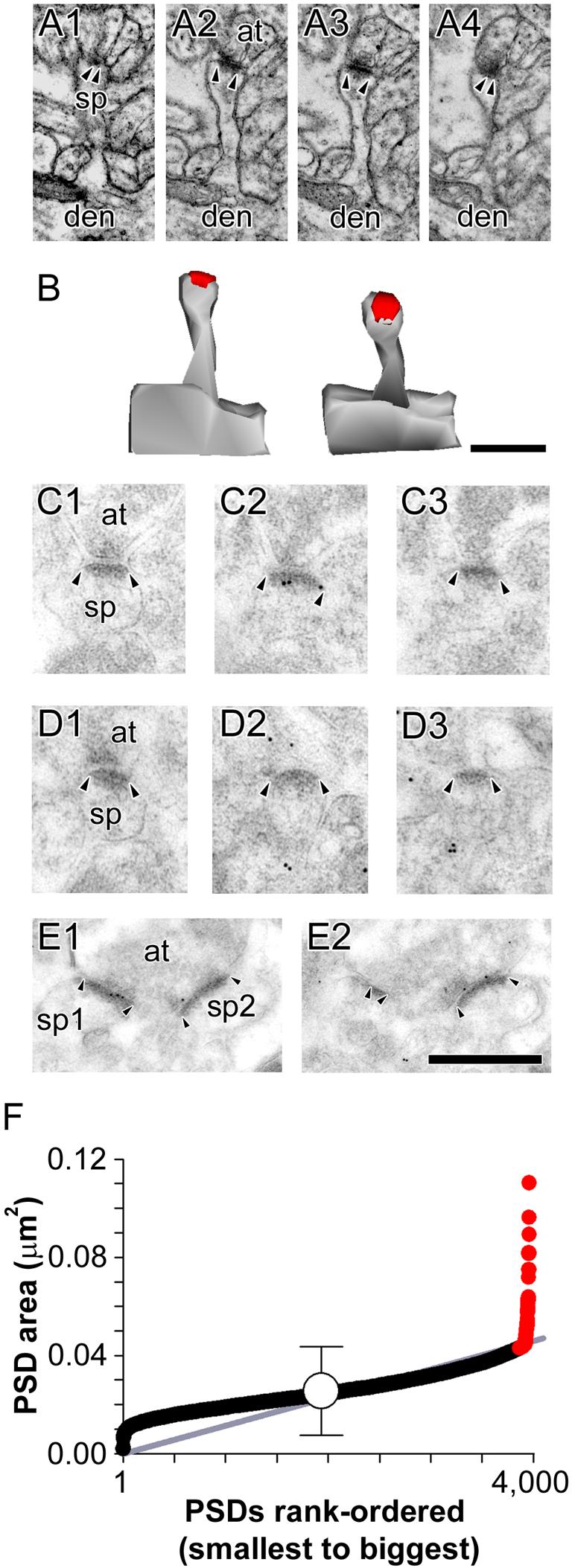
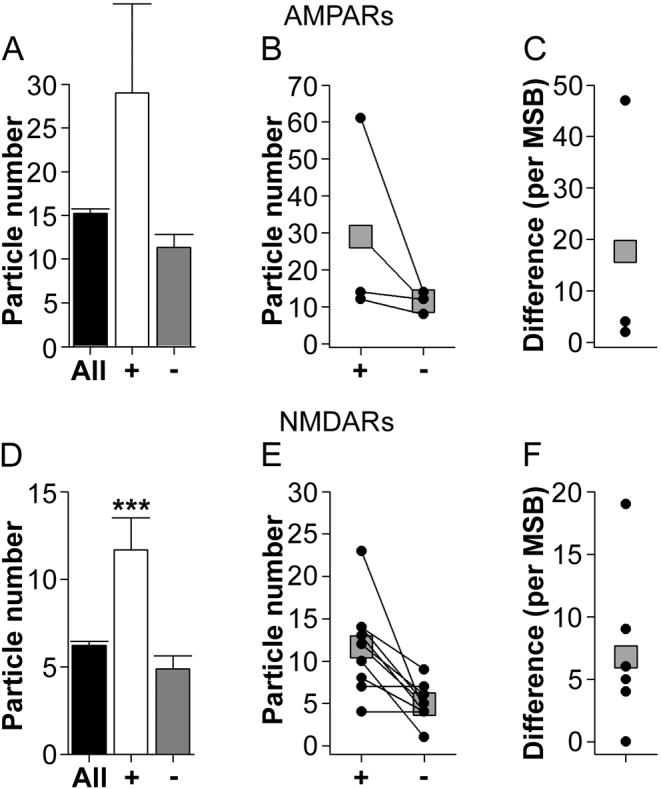
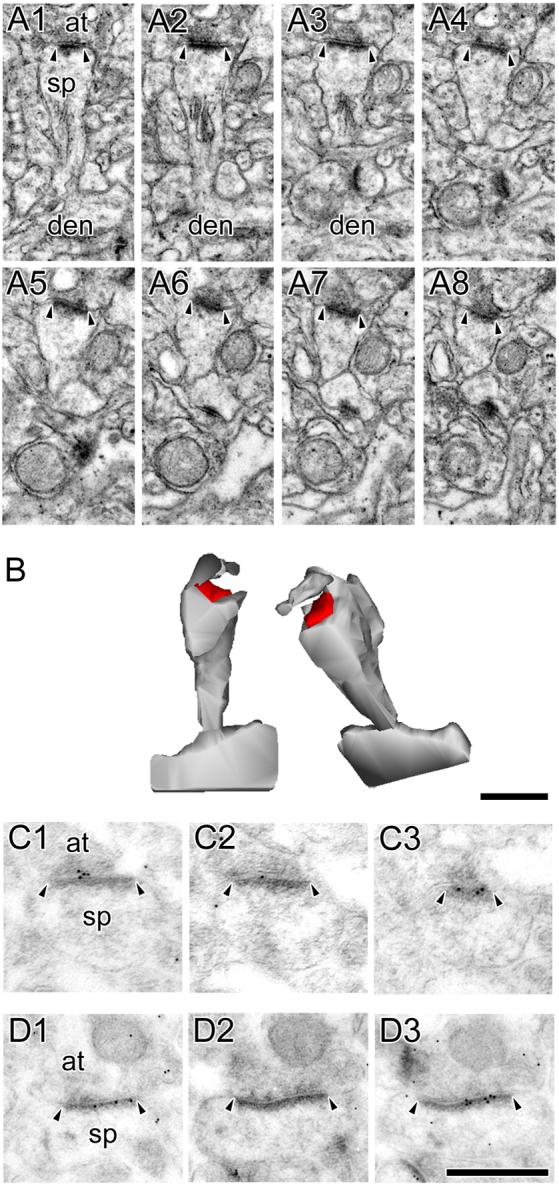
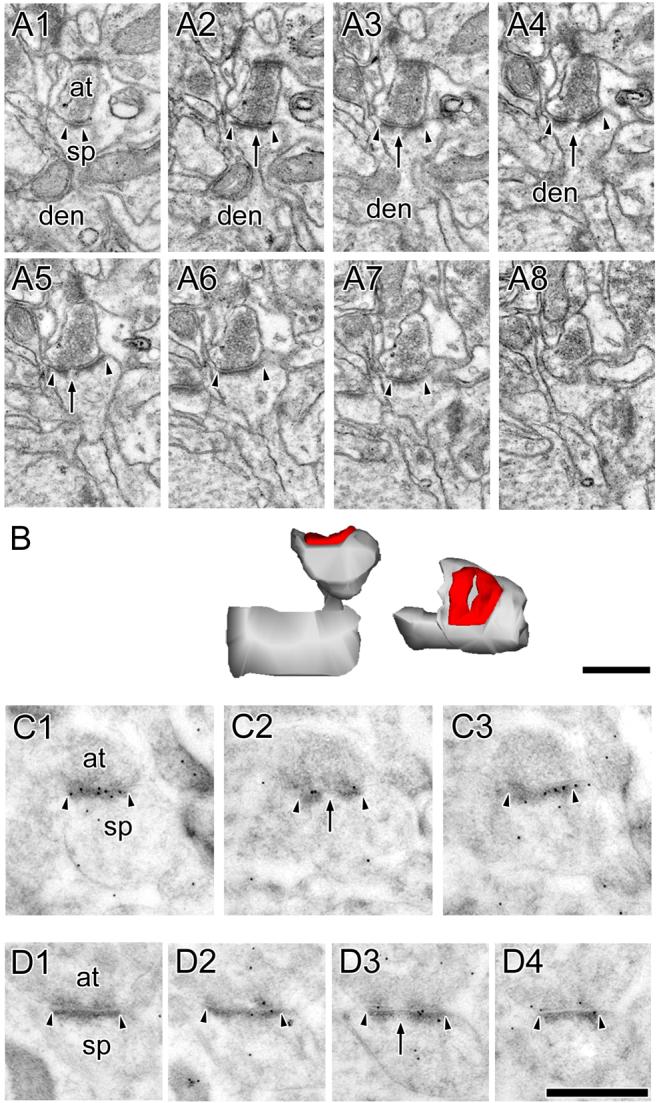
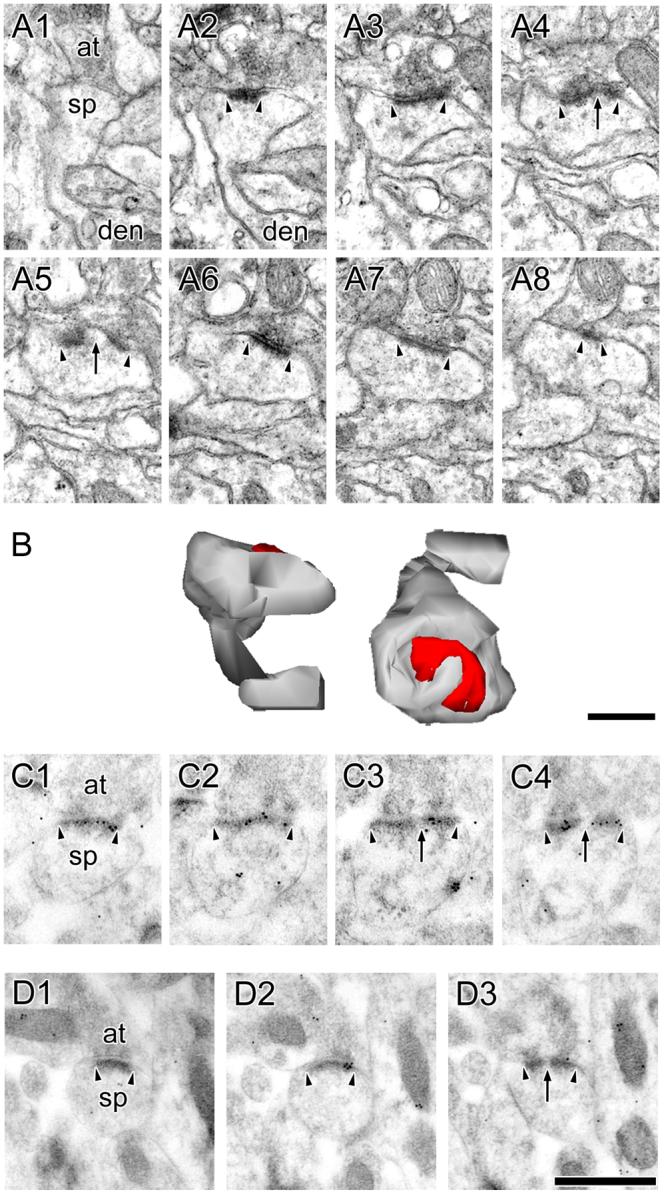
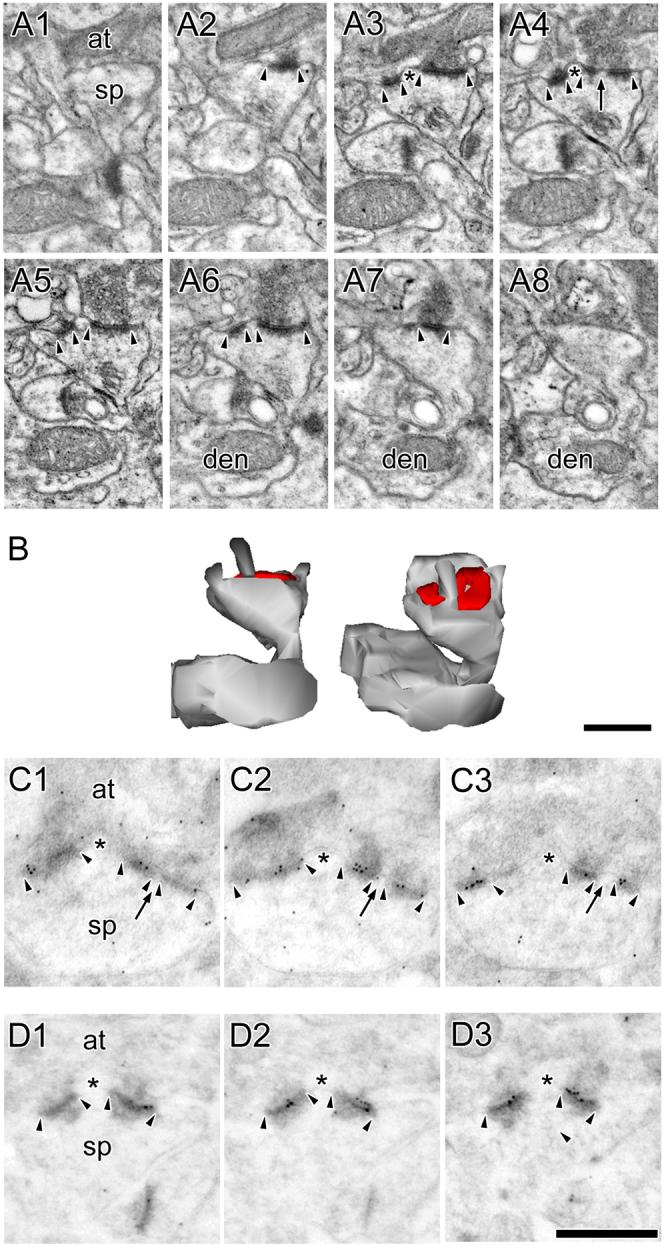
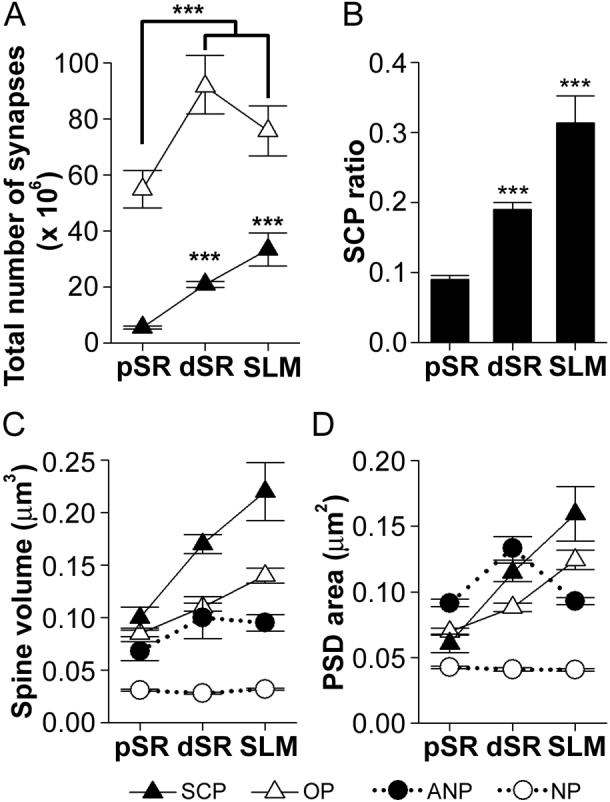
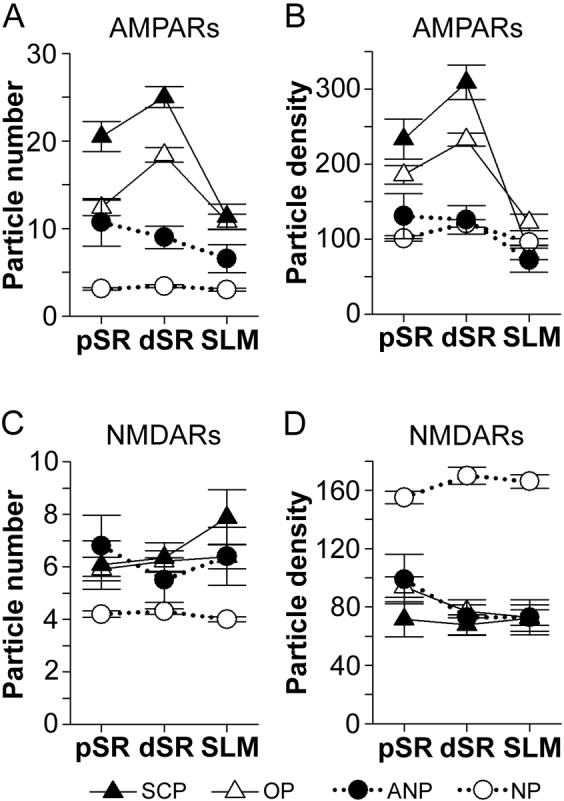
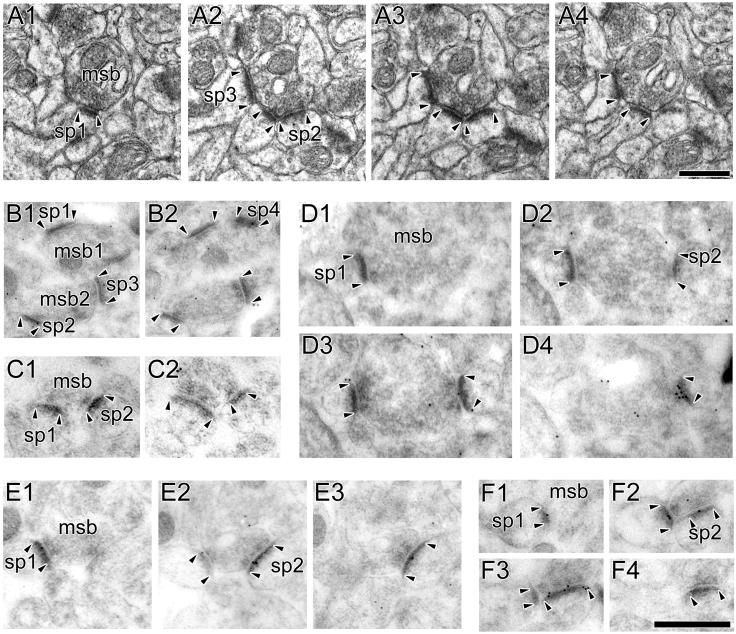
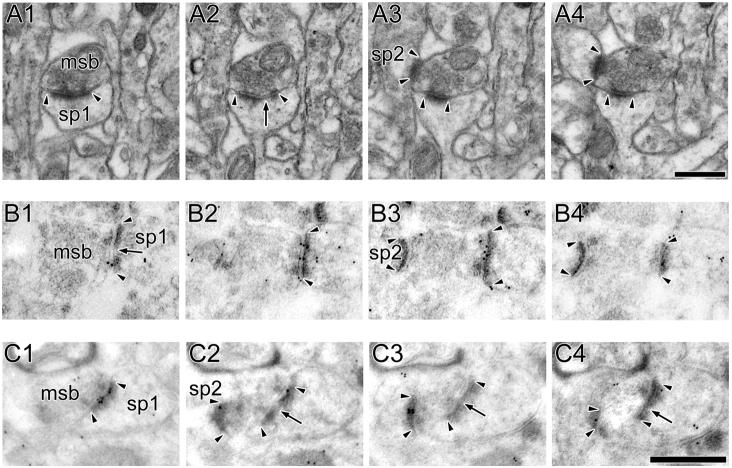
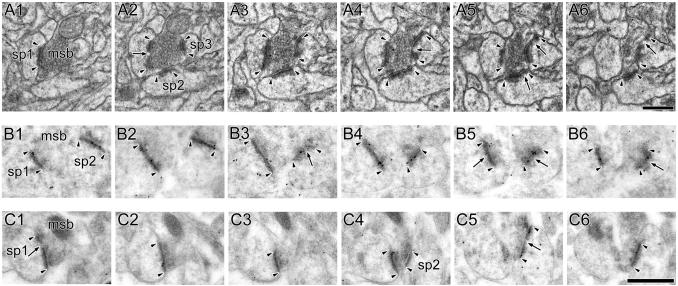
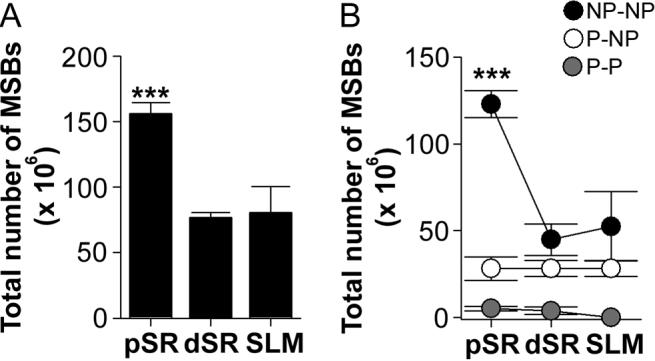
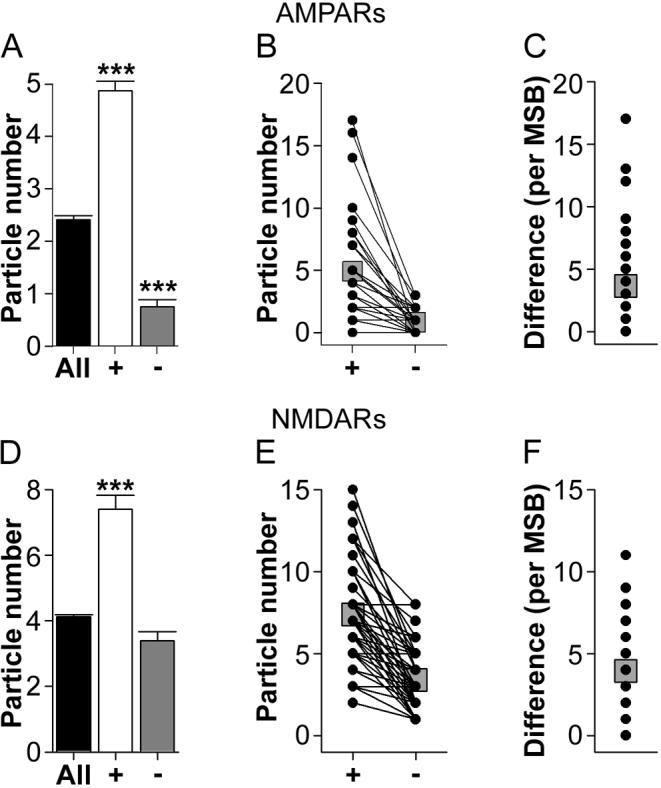
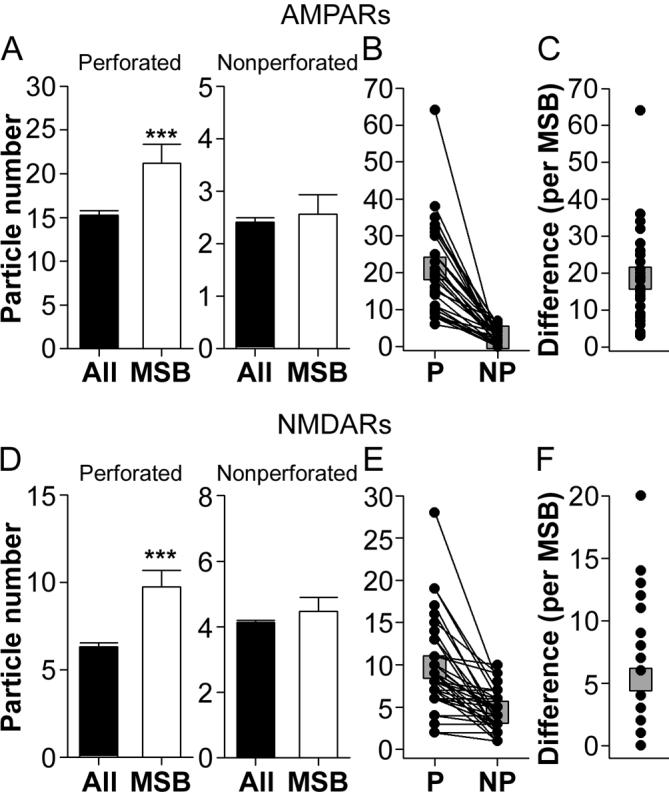
The morphology of axospinous synapses and their parent spines varies widely. Additionally, many of these synapses are contacted by multiple synapse boutons (MSBs) and show substantial variability in receptor expression. The two major axospinous synaptic subtypes are perforated and nonperforated, but there are several subcategories within these two classes. The present study used serial section electron microscopy to determine whether perforated and nonperforated synaptic subtypes differed with regard to their distribution, size, receptor expression, and connectivity to MSBs in three apical dendritic regions of rat hippocampal area CA1: the proximal and distal thirds of stratum radiatum, and the stratum lacunosum-moleculare. All synaptic subtypes were present throughout the apical dendritic regions, but there were several subclass-specific differences. First, segmented, completely partitioned synapses changed in number, proportion, and alpha-amino-3-hydroxy-5-methyl-4-isoxazolepropionate (AMPA) receptor expression with distance from the soma beyond that found within other perforated synaptic subtypes. Second, atypically large, nonperforated synapses showed N-methyl-D-aspartate (NMDA) receptor immunoreactivity identical to that of perforated synapses, levels of AMPA receptor expression intermediate to that of nonperforated and perforated synapses, and perforated synapse-like changes in structure with distance from the soma. Finally, MSB connectivity was highest in the proximal stratum radiatum, but only for those MSBs composed of nonperforated synapses. The immunogold data suggest that most MSBs would not generate simultaneous depolarizations in multiple neurons or spines, however, because the vast majority of MSBs are comprised of two synapses with abnormally low levels of receptor expression, or involve one synapse with a high level of receptor expression and another with only a low level.
轴棘突触及其母棘的形态差异很大。此外,许多此类突触与多个突触终扣(MSB)相接触,并且在受体表达方面表现出很大的变异性。两种主要的轴棘突触亚型是穿孔型和非穿孔型,但在这两类中还有几个亚类。本研究使用连续切片电子显微镜来确定穿孔型和非穿孔型突触亚型在大鼠海马CA1区三个顶树突区域的分布、大小、受体表达以及与MSB的连接性方面是否存在差异:辐射层的近端和远端三分之一,以及腔隙-分子层。所有突触亚型都存在于整个顶树突区域,但存在几个亚类特异性差异。首先,分段的、完全分隔的突触在数量、比例和α-氨基-3-羟基-5-甲基-4-异恶唑丙酸(AMPA)受体表达方面随距胞体的距离而变化,这种变化超出了其他穿孔型突触亚型。其次,非典型大的非穿孔型突触显示出与穿孔型突触相同的N-甲基-D-天冬氨酸(NMDA)受体免疫反应性,AMPA受体表达水平介于非穿孔型和穿孔型突触之间,并且其结构随距胞体的距离呈现出类似穿孔型突触的变化。最后,MSB连接性在近端辐射层最高,但仅针对那些由非穿孔型突触组成的MSB。然而,免疫金数据表明,大多数MSB不会在多个神经元或棘中产生同时的去极化,因为绝大多数MSB由两个受体表达水平异常低的突触组成,或者涉及一个受体表达水平高的突触和另一个受体表达水平低的突触。