Valdés Jorge, Pedroso Inti, Quatrini Raquel, Dodson Robert J, Tettelin Herve, Blake Robert, Eisen Jonathan A, Holmes David S
Center for Bioinformatics and Genome Biology, Fundación Ciencia para la Vida, Facultad de Ciencias de la Salud, Universidad Andres Bello, Santiago, Chile.
BMC Genomics. 2008 Dec 11;9:597. doi: 10.1186/1471-2164-9-597.
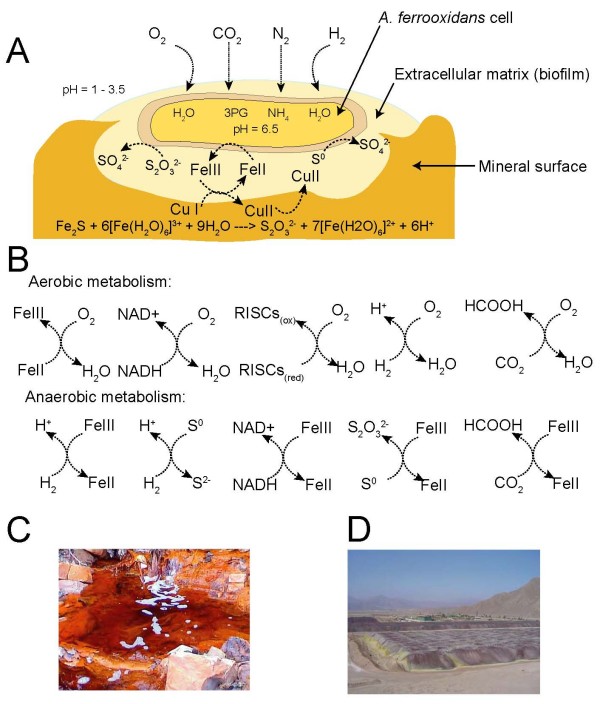
Acidithiobacillus ferrooxidans is a major participant in consortia of microorganisms used for the industrial recovery of copper (bioleaching or biomining). It is a chemolithoautrophic, gamma-proteobacterium using energy from the oxidation of iron- and sulfur-containing minerals for growth. It thrives at extremely low pH (pH 1-2) and fixes both carbon and nitrogen from the atmosphere. It solubilizes copper and other metals from rocks and plays an important role in nutrient and metal biogeochemical cycling in acid environments. The lack of a well-developed system for genetic manipulation has prevented thorough exploration of its physiology. Also, confusion has been caused by prior metabolic models constructed based upon the examination of multiple, and sometimes distantly related, strains of the microorganism.
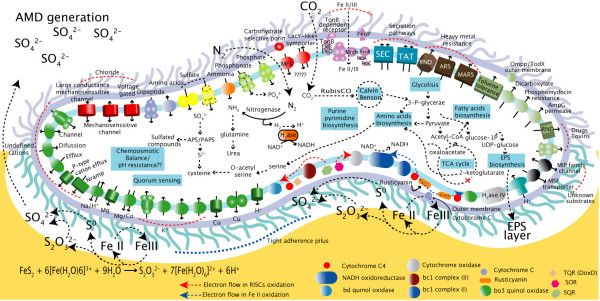
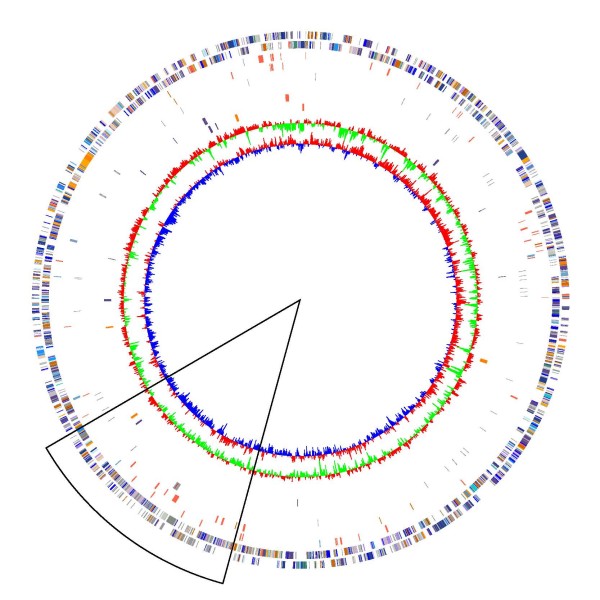
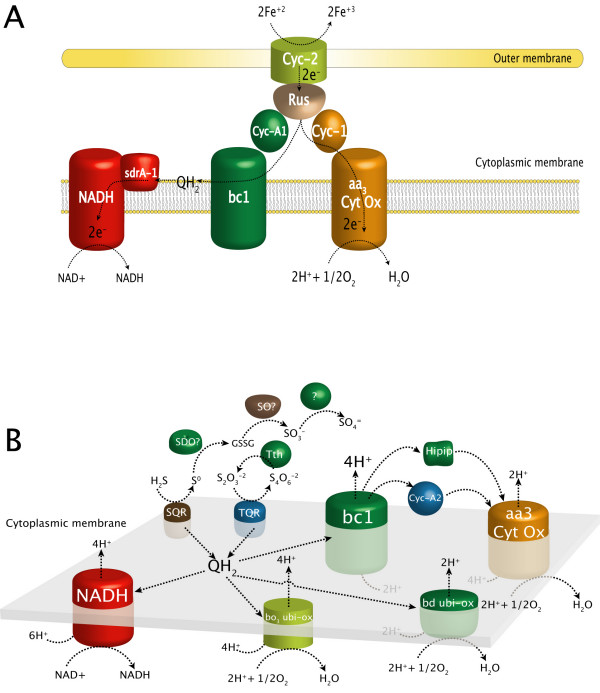
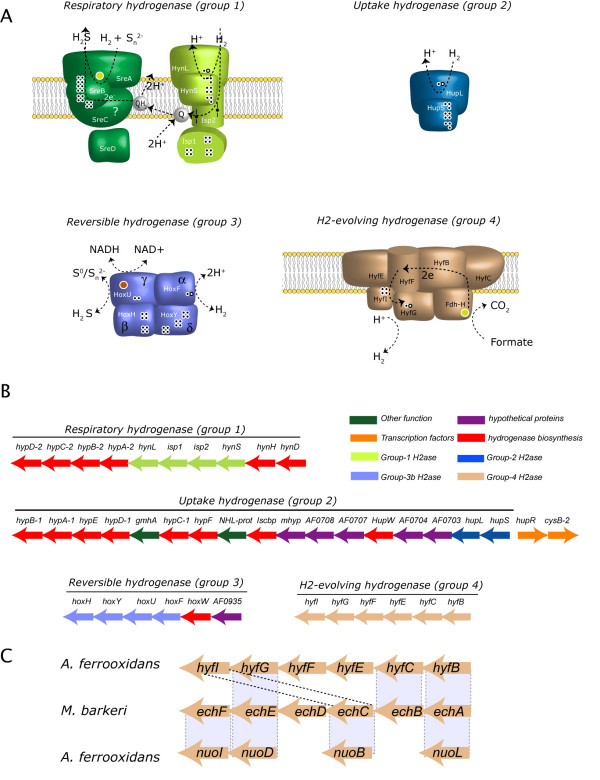
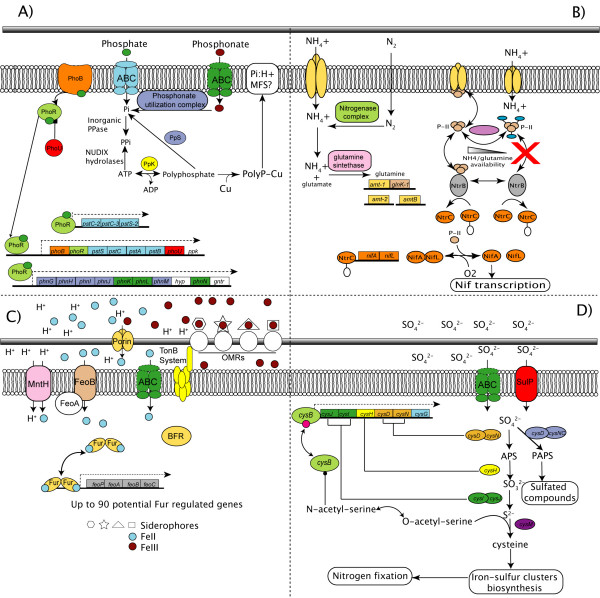
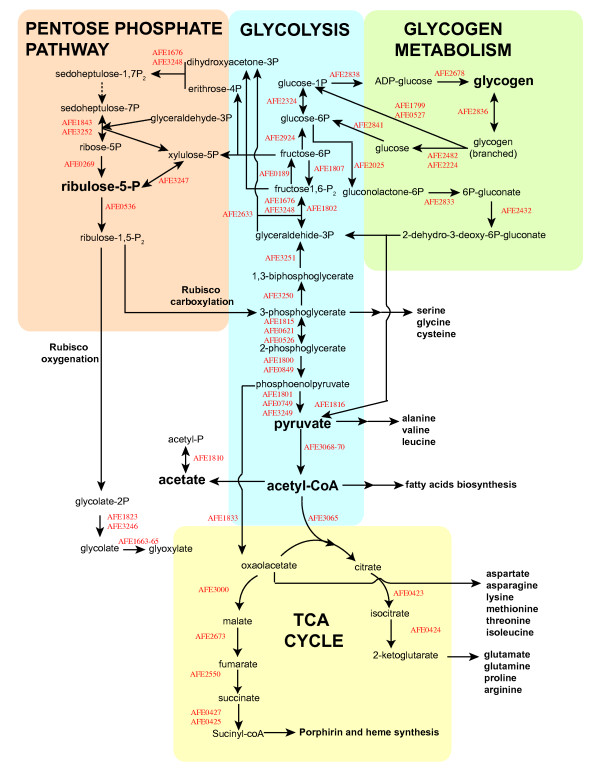
The genome of the type strain A. ferrooxidans ATCC 23270 was sequenced and annotated to identify general features and provide a framework for in silico metabolic reconstruction. Earlier models of iron and sulfur oxidation, biofilm formation, quorum sensing, inorganic ion uptake, and amino acid metabolism are confirmed and extended. Initial models are presented for central carbon metabolism, anaerobic metabolism (including sulfur reduction, hydrogen metabolism and nitrogen fixation), stress responses, DNA repair, and metal and toxic compound fluxes.
Bioinformatics analysis provides a valuable platform for gene discovery and functional prediction that helps explain the activity of A. ferrooxidans in industrial bioleaching and its role as a primary producer in acidic environments. An analysis of the genome of the type strain provides a coherent view of its gene content and metabolic potential.
氧化亚铁硫杆菌是用于铜的工业回收(生物浸出或生物采矿)的微生物群落中的主要参与者。它是一种化能自养型γ-变形菌,利用含铁和含硫矿物氧化产生的能量进行生长。它在极低的pH值(pH 1-2)下茁壮成长,并从大气中固定碳和氮。它能溶解岩石中的铜和其他金属,在酸性环境中的养分和金属生物地球化学循环中发挥重要作用。缺乏完善的基因操作体系阻碍了对其生理学的深入研究。此外,基于对该微生物的多个菌株(有时亲缘关系较远)的研究构建的先前代谢模型也造成了混淆。
对模式菌株氧化亚铁硫杆菌ATCC 23270的基因组进行了测序和注释,以确定其一般特征,并为计算机代谢重建提供框架。早期关于铁和硫氧化、生物膜形成、群体感应、无机离子摄取和氨基酸代谢的模型得到了证实和扩展。还提出了关于中心碳代谢、厌氧代谢(包括硫还原、氢代谢和固氮)、应激反应、DNA修复以及金属和有毒化合物通量的初步模型。
生物信息学分析为基因发现和功能预测提供了一个有价值的平台,有助于解释氧化亚铁硫杆菌在工业生物浸出中的活性及其在酸性环境中作为初级生产者的作用。对模式菌株基因组的分析提供了其基因含量和代谢潜力的连贯视图。