Jones Ryan T, Robeson Michael S, Lauber Christian L, Hamady Micah, Knight Rob, Fierer Noah
Department of Ecology and Evolutionary Biology, University of Colorado, Boulder, CO 80309, USA.
ISME J. 2009 Apr;3(4):442-53. doi: 10.1038/ismej.2008.127. Epub 2009 Jan 8.
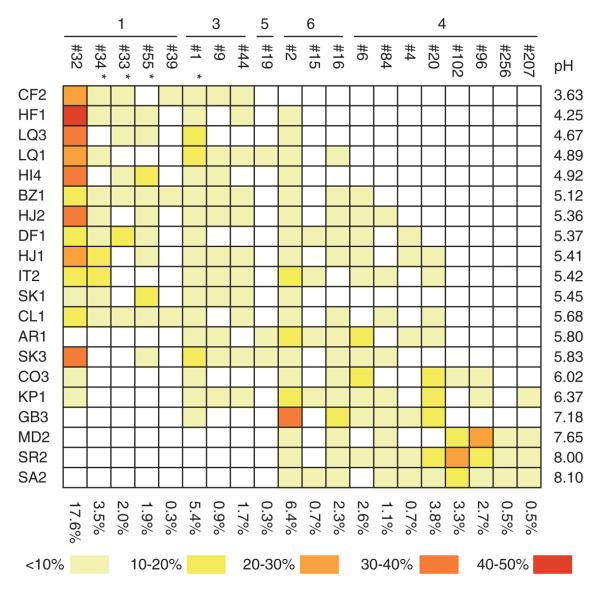
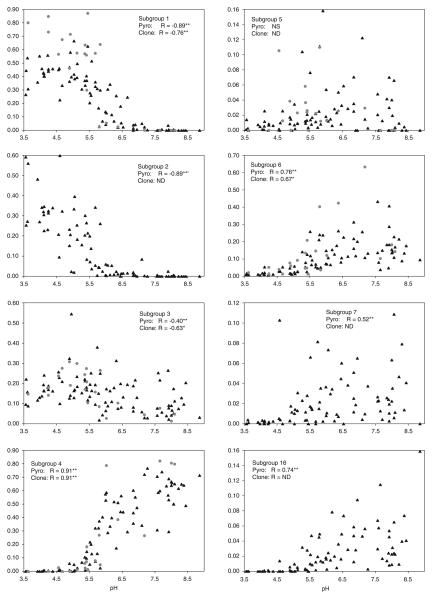
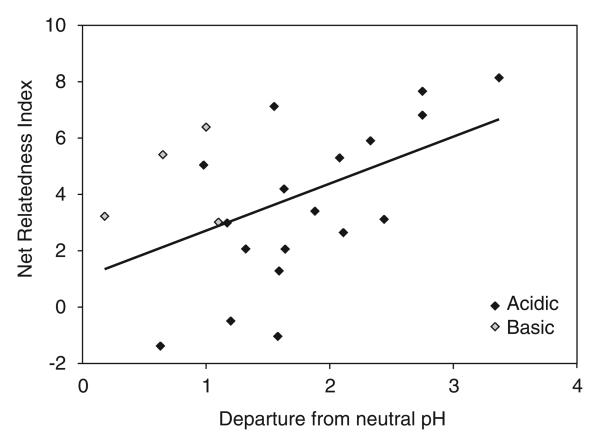
Acidobacteria are ubiquitous and abundant members of soil bacterial communities. However, an ecological understanding of this important phylum has remained elusive because its members have been difficult to culture and few molecular investigations have focused exclusively on this group. We generated an unprecedented number of acidobacterial DNA sequence data using pyrosequencing and clone libraries (39,707 and 1787 sequences, respectively) to characterize the relative abundance, diversity and composition of acidobacterial communities across a range of soil types. To gain insight into the ecological characteristics of acidobacterial taxa, we investigated the large-scale biogeographic patterns exhibited by acidobacterial communities, and related soil and site characteristics to acidobacterial community assemblage patterns. The 87 soils analyzed by pyrosequencing contained more than 8600 unique acidobacterial phylotypes (at the 97% sequence similarity level). One phylotype belonging to Acidobacteria subgroup 1, but not closely related to any cultured representatives, was particularly abundant, accounting for 7.4% of bacterial sequences and 17.6% of acidobacterial sequences, on average, across the soils. The abundance of Acidobacteria relative to other bacterial taxa was highly variable across the soils examined, but correlated strongly with soil pH (R=-0.80, P<0.001). Soil pH was also the best predictor of acidobacterial community composition, regardless of how the communities were characterized, and the relative abundances of the dominant Acidobacteria subgroups were readily predictable. Acidobacterial communities were more phylogenetically clustered as soil pH departed from neutrality, suggesting that pH is an effective habitat filter, restricting community membership to progressively more narrowly defined lineages as pH deviates from neutrality.
酸杆菌是土壤细菌群落中普遍存在且数量丰富的成员。然而,由于该门的成员难以培养,且很少有分子研究专门聚焦于这一群体,因此对这个重要门类的生态学理解仍然难以捉摸。我们利用焦磷酸测序和克隆文库(分别产生了39707个和1787个序列)生成了前所未有的大量酸杆菌DNA序列数据,以表征一系列土壤类型中酸杆菌群落的相对丰度、多样性和组成。为了深入了解酸杆菌分类群的生态特征,我们研究了酸杆菌群落呈现的大规模生物地理模式,并将土壤和位点特征与酸杆菌群落组装模式相关联。通过焦磷酸测序分析的87种土壤包含超过8600个独特的酸杆菌系统发育型(在97%序列相似性水平)。一种属于酸杆菌亚群1但与任何已培养代表菌株关系不密切的系统发育型特别丰富,在所有土壤中平均占细菌序列的7.4%和酸杆菌序列的17.6%。在所研究的土壤中,酸杆菌相对于其他细菌分类群的丰度变化很大,但与土壤pH值密切相关(R = -0.80,P < 0.001)。无论群落如何表征,土壤pH值也是酸杆菌群落组成的最佳预测指标,并且主要酸杆菌亚群的相对丰度很容易预测。随着土壤pH值偏离中性,酸杆菌群落的系统发育聚类程度更高,这表明pH值是一种有效的栖息地筛选因素,随着pH值偏离中性,将群落成员限制在定义越来越狭窄的谱系中。