Winogradsky Institute of Microbiology, Research Center of Biotechnology of the Russian Academy of Sciences, Moscow, Russia.
Department of Soil Biology and Biochemistry, V.V. Dokuchaev Soil Science Institute, Moscow, Russia.
PLoS One. 2020 Mar 17;15(3):e0230157. doi: 10.1371/journal.pone.0230157. eCollection 2020.
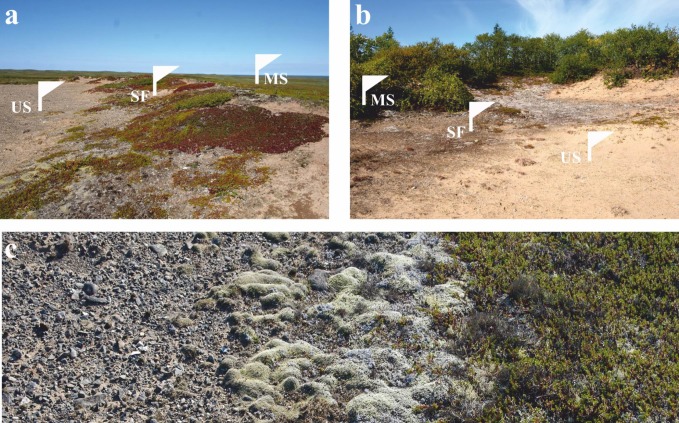
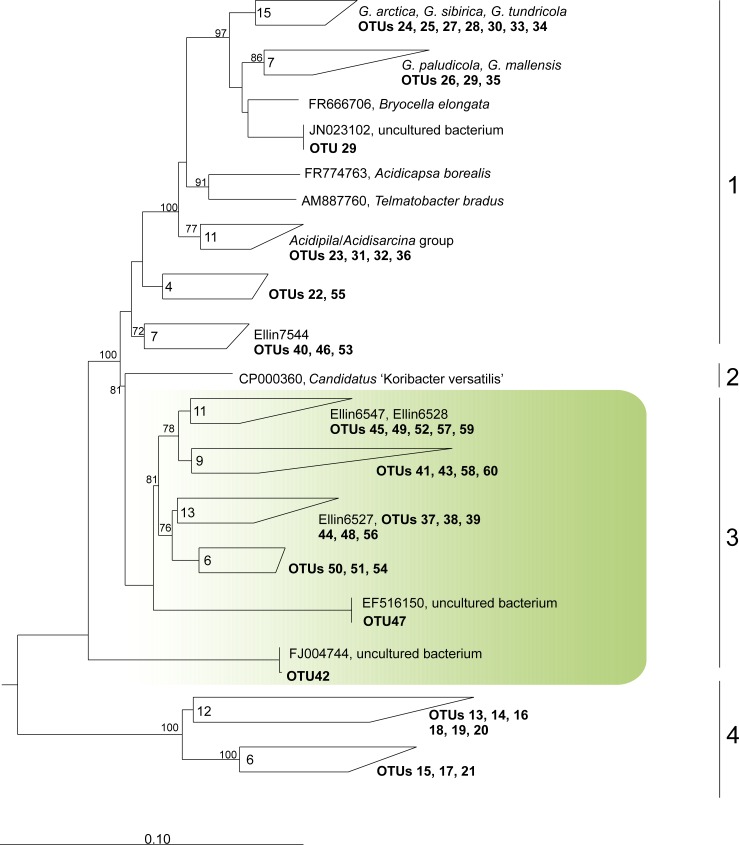
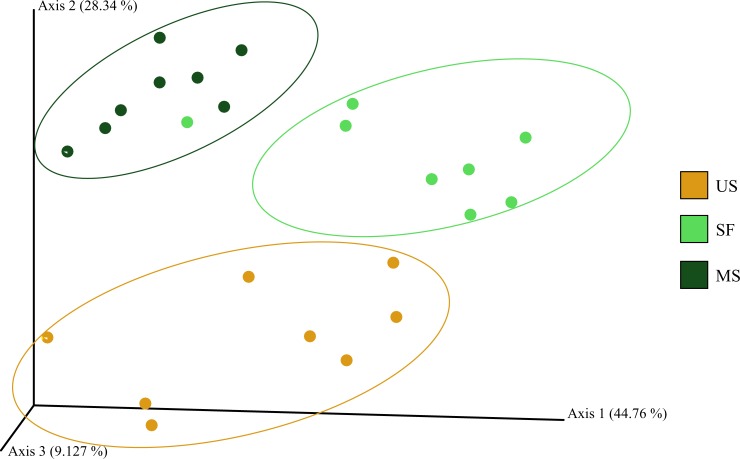
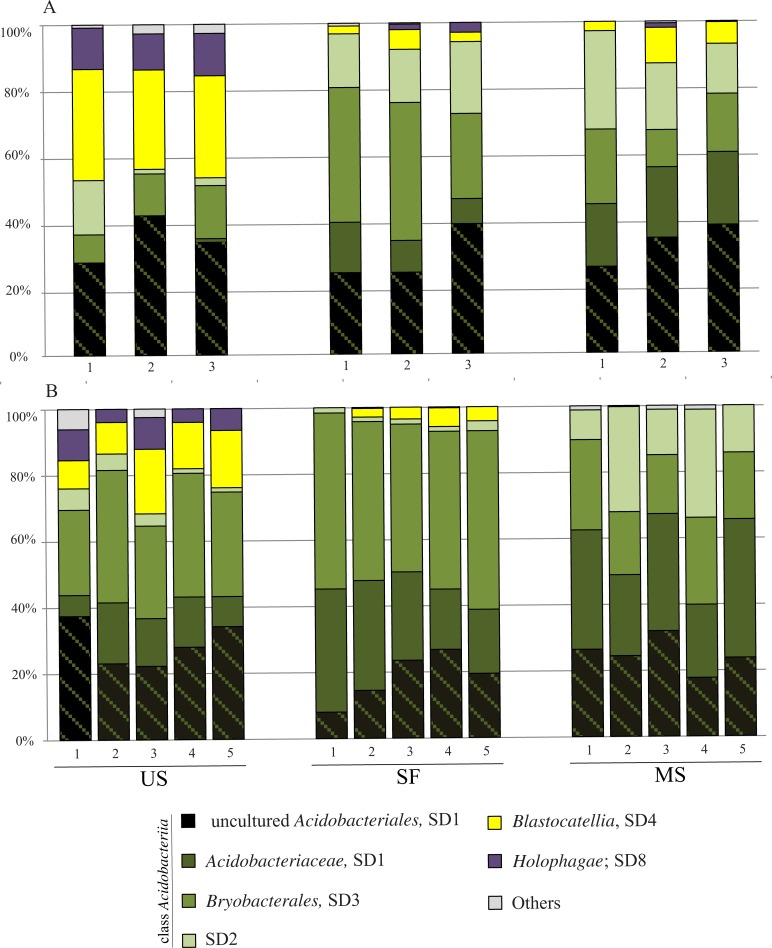
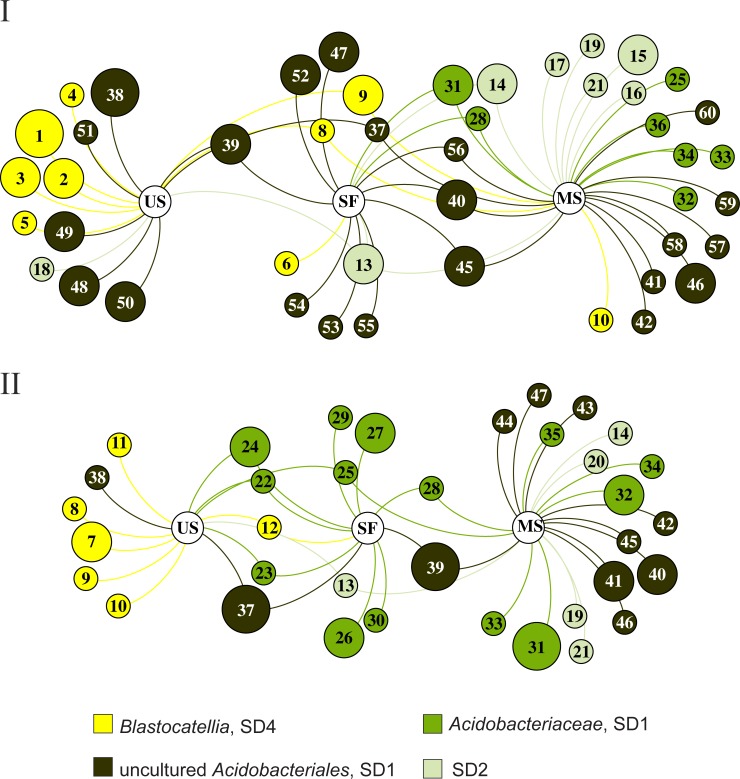
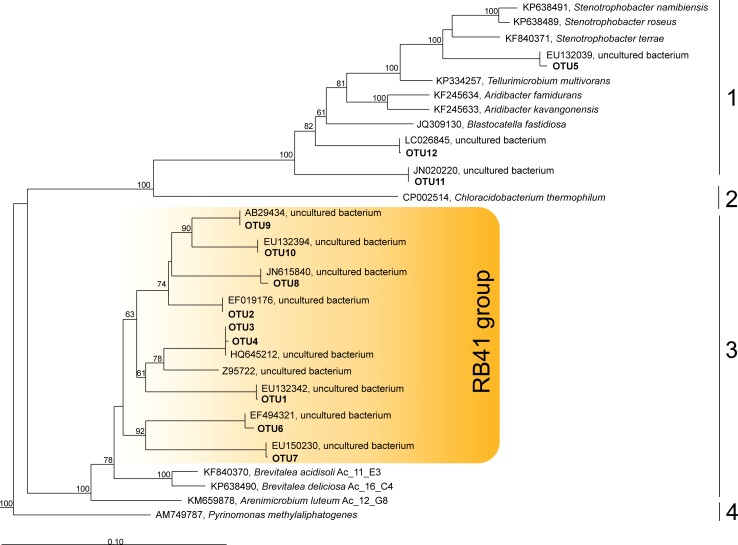
The Acidobacteria is one of the major bacterial phyla in soils and peatlands. The currently explored diversity within this phylum is assigned to 15 class-level units, five of which contain described members. The ecologically relevant traits of acidobacteria from different classes remain poorly understood. Here, we compared the patterns of acidobacterial diversity in sandy soils of tundra, along a gradient of increasing vegetation-unfixed aeolian sand, semi-fixed surfaces with mosses and lichens, and mature soil under fully developed plant cover. The Acidobacteria-affiliated 16S rRNA gene sequences retrieved from these soils comprised 11 to 33% of total bacterial reads and belonged mostly to members of the classes Acidobacteriia and Blastocatellia, which displayed opposite habitat preferences. The relative abundance of the Blastocatellia was maximal in unfixed sands and declined in soils of vegetated plots, showing positive correlation with soil pH and negative correlation with carbon and nitrogen availability. An opposite tendency was characteristic for the Acidobacteriia. Most Blastocatellia-affiliated reads belonged to as-yet-undescribed members of the family Arenimicrobiaceae, which appears to be characteristic for dry, depleted in organic matter soil habitats. The pool of Acidobacteriia-affiliated sequences, apart from Acidobacteriaceae- and Bryobacteraceae-related reads, had a large proportion of sequences from as-yet-undescribed families, which seem to specialize in degrading plant-derived organic matter. This analysis reveals sandy soils of tundra as a source of novel acidobacterial diversity and provides an insight into the ecological preferences of different taxonomic groups within this phylum.
酸杆菌门是土壤和泥炭地中主要的细菌门之一。目前在该门内探索的多样性被分配到 15 个科级单位,其中 5 个包含有描述成员。不同类别的酸杆菌的生态相关特征仍知之甚少。在这里,我们比较了在苔原地区沙质土壤中,沿着植被固定风沙、半固定有苔藓和地衣的表面以及完全发育的植物覆盖下的成熟土壤的酸杆菌多样性梯度的模式。从这些土壤中提取的酸杆菌 16S rRNA 基因序列占总细菌读数的 11%至 33%,主要属于酸杆菌门和 Blastocatellia 类,它们表现出相反的栖息地偏好。Blastocatellia 的相对丰度在未固定的沙中最大,并在植被覆盖的土壤中减少,与土壤 pH 值呈正相关,与碳和氮的可用性呈负相关。酸杆菌的趋势相反。大多数 Blastocatellia 相关的读取属于尚未描述的 Arenimicrobiaceae 家族成员,这似乎是干燥、有机质匮乏土壤栖息地的特征。除了 Acidobacteriaceae 和 Bryobacteraceae 相关的读取外,与 Acidobacteriia 相关的序列库中还包含大量来自尚未描述的家族的序列,这些家族似乎专门用于降解植物衍生的有机物质。这项分析揭示了苔原地区的沙质土壤是新型酸杆菌多样性的来源,并深入了解了该门内不同分类群的生态偏好。