Division of Nutrition, School of Health Professions, College of Health and Human Sciences, Georgia State University, Atlanta, GA 30302-3995, USA.
Nutr Metab (Lond). 2009 Jan 14;6:3. doi: 10.1186/1743-7075-6-3.
Leptin is known to play a role in food intake regulation. The aim of this study was to investigate the relation between serum leptin concentrations and dietary patterns and demographic, lifestyle, and health factors in the US population.
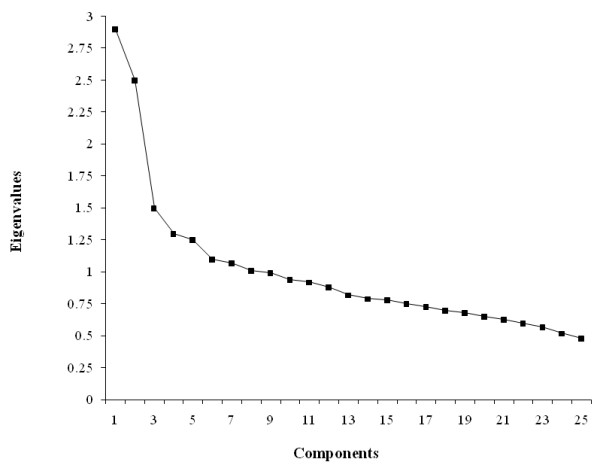
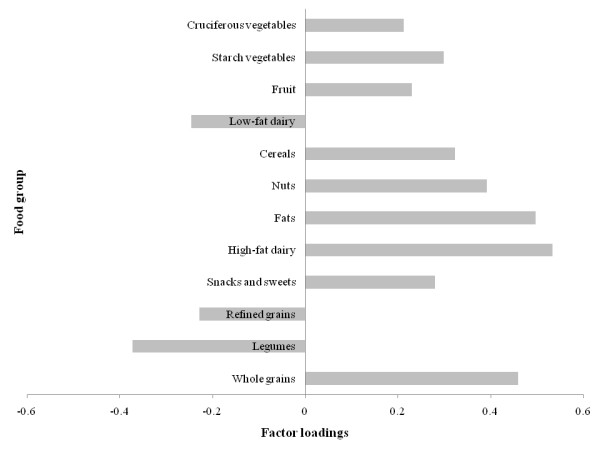
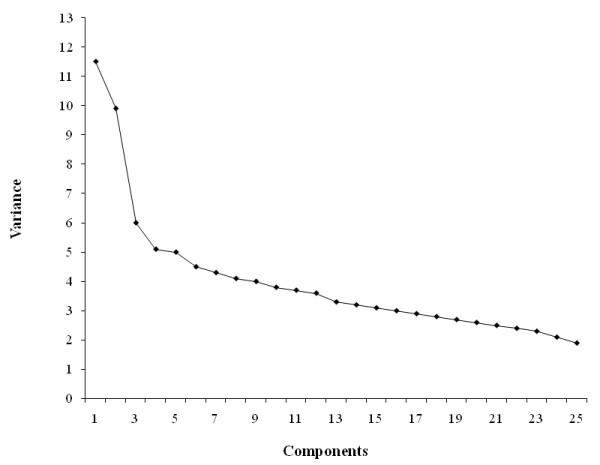
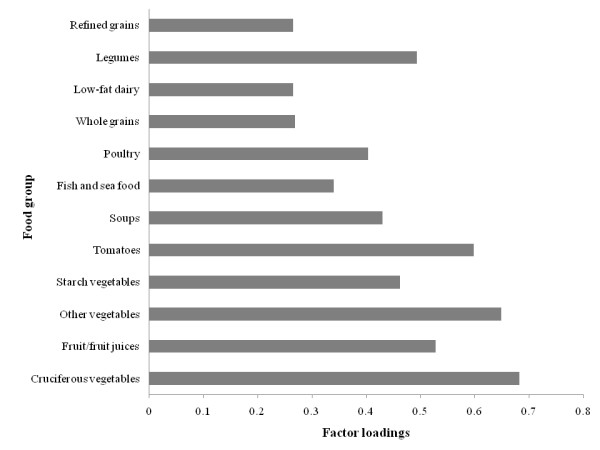
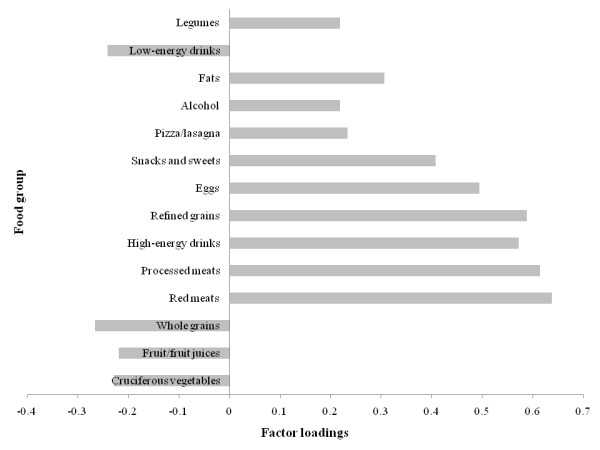
Data from the third National Health and Nutrition Examination Survey, 1988-1994 were used to study the association between fasting serum leptin and dietary patterns, sex, race-ethnicity, smoking, age, energy and alcohol intakes, body mass index (BMI), plasma glucose, serum triacylglycerol, and serum insulin in 4009 individuals. Factor analysis was used to derive three principle factors and these were labeled as Vegetable, Fruit, and Lean Meat, Western, and Mixed dietary patterns.
Serum leptin concentrations were significantly higher in Vegetable, Fruit, and Lean Meat (8.5 fg/L) and Mixed patterns (8.0 fg/L) compared to Western pattern (6.29 fg/L) (P < 0.0001). When analysis was adjusted for confounding variables, no significant association was observed between serum leptin and dietary patterns (P = 0.22). Multivariate adjusted serum leptin concentrations were significantly associated with sex (higher in women than in men; β = -1.052; P < 0.0001), age (direct relation, β = 0.006, P < 0.0001), BMI, (direct relation, β = 0.082, P < 0.0001), fasting plasma glucose (inverse relation, β = -0.024, P = 0.0146), serum triacylglycerol (direct relation, β = 0.034, P = 0.0022), and serum insulin (direct relation, β = 0.003, P < 0.0001) but not with race-ethnicity (P = 0.65), smoking (P = 0.20), energy intake (P = 0.42), and alcohol intake (P = 0.73).
In this study, serum leptin was not independently associated with dietary patterns. Sex, age, BMI, serum triacylglycerol, plasma glucose, and serum insulin are independent predictors of serum leptin concentrations.
瘦素在食物摄入调节中起着重要作用。本研究旨在探讨美国人群血清瘦素浓度与饮食模式以及人口统计学、生活方式和健康因素之间的关系。
使用 1988-1994 年第三次国家健康和营养检查调查的数据,研究了 4009 名个体中空腹血清瘦素与饮食模式、性别、种族-民族、吸烟、年龄、能量和酒精摄入、体重指数(BMI)、血浆葡萄糖、血清三酰甘油和血清胰岛素之间的关联。因子分析用于得出三个主要因素,分别标记为蔬菜、水果和瘦肉、西方和混合饮食模式。
与西方模式(6.29 fg/L)相比,蔬菜、水果和瘦肉(8.5 fg/L)和混合模式(8.0 fg/L)的血清瘦素浓度明显更高(P<0.0001)。当对混杂变量进行分析调整时,血清瘦素与饮食模式之间没有观察到显著关联(P=0.22)。多变量调整后的血清瘦素浓度与性别显著相关(女性高于男性;β=-1.052;P<0.0001),年龄(直接关系,β=0.006,P<0.0001),BMI(直接关系,β=0.082,P<0.0001),空腹血浆葡萄糖(间接关系,β=-0.024,P=0.0146),血清三酰甘油(直接关系,β=0.034,P=0.0022)和血清胰岛素(直接关系,β=0.003,P<0.0001),但与种族-民族(P=0.65)、吸烟(P=0.20)、能量摄入(P=0.42)和酒精摄入(P=0.73)无关。
在这项研究中,血清瘦素与饮食模式无独立相关性。性别、年龄、BMI、血清三酰甘油、血浆葡萄糖和血清胰岛素是血清瘦素浓度的独立预测因子。