Ratcliff Roger, Starns Jeffrey J
Department of Psychology, The Ohio State University, Columbus, Ohio 43210, USA.
Psychol Rev. 2009 Jan;116(1):59-83. doi: 10.1037/a0014086.
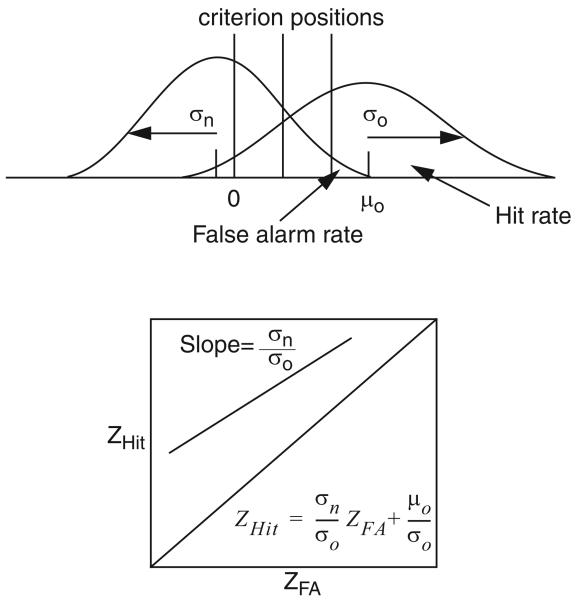
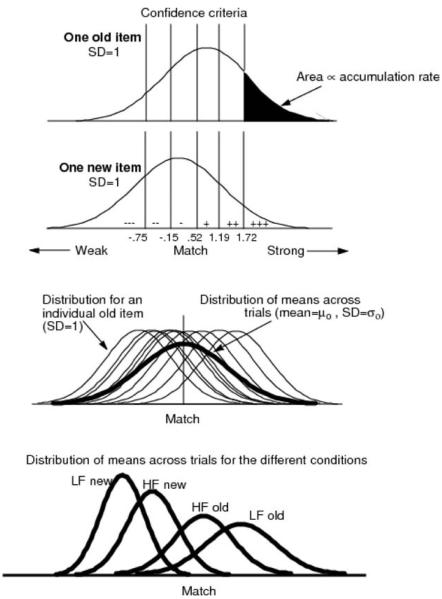
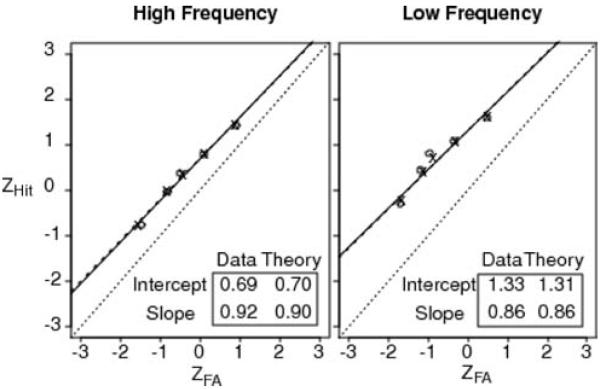
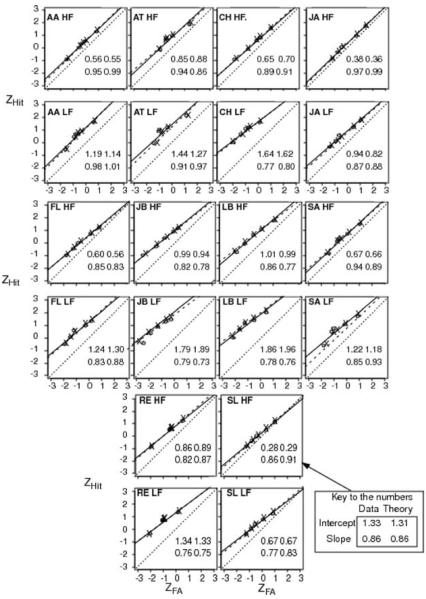
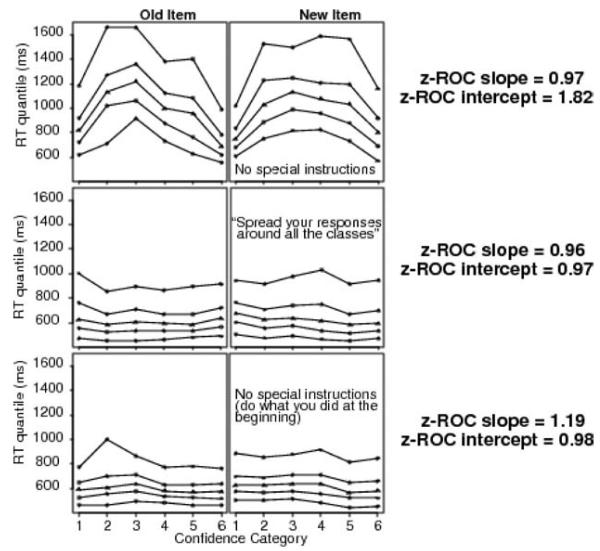
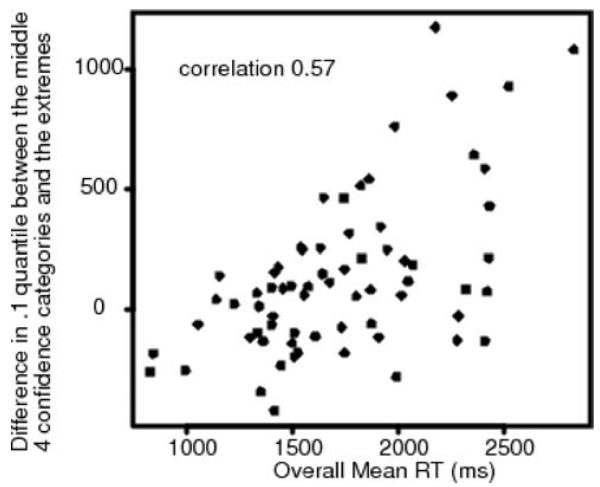
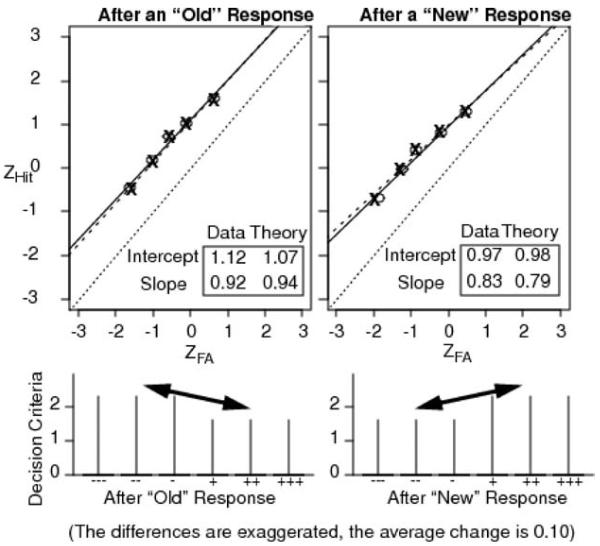
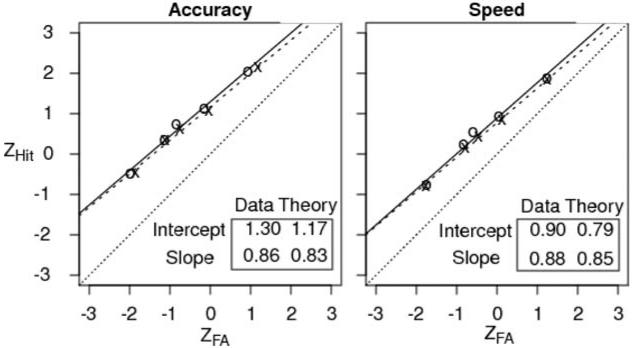
A new model for confidence judgments in recognition memory is presented. In the model, the match between a single test item and memory produces a distribution of evidence, with better matches corresponding to distributions with higher means. On this match dimension, confidence criteria are placed, and the areas between the criteria under the distribution are used as drift rates to drive racing Ornstein-Uhlenbeck diffusion processes. The model is fit to confidence judgments and quantile response times from two recognition memory experiments that manipulated word frequency and speed versus accuracy emphasis. The model and data show that the standard signal detection interpretation of z-transformed receiver operating characteristic (z-ROC) functions is wrong. The model also explains sequential effects in which the slope of the z-ROC function changes by about 10% as a function of the prior response in the test list.
提出了一种用于识别记忆中信心判断的新模型。在该模型中,单个测试项目与记忆之间的匹配产生了一个证据分布,更好的匹配对应于均值更高的分布。在这个匹配维度上设置信心标准,分布下标准之间的区域用作漂移率,以驱动竞赛的奥恩斯坦 - 乌伦贝克扩散过程。该模型适用于来自两个识别记忆实验的信心判断和分位数反应时间,这两个实验操纵了单词频率以及速度与准确性的侧重点。模型和数据表明,对z变换的接收器操作特征(z-ROC)函数的标准信号检测解释是错误的。该模型还解释了顺序效应,即z-ROC函数的斜率会根据测试列表中的先前反应而变化约10%。