Seil Justin T, Webster Thomas J
Laboratory for Nanomedicine Research, Division of Engineering, Brown University, Providence, RI 02912, USA.
Int J Nanomedicine. 2008;3(4):523-31. doi: 10.2147/ijn.s4346.
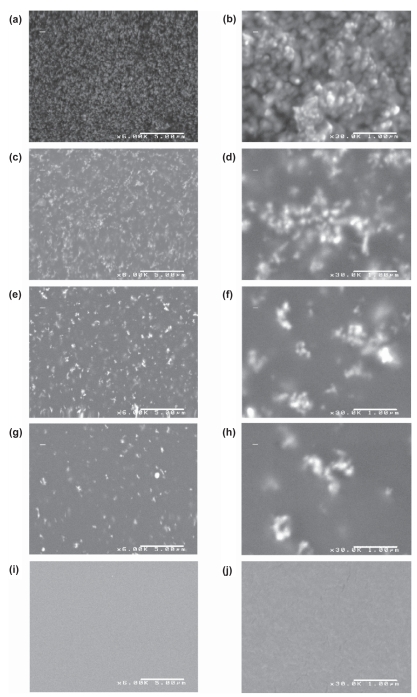
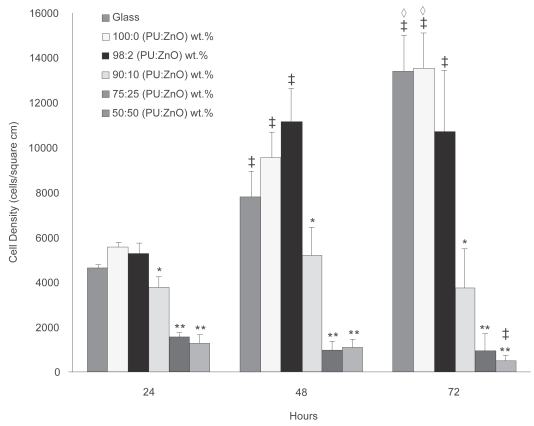
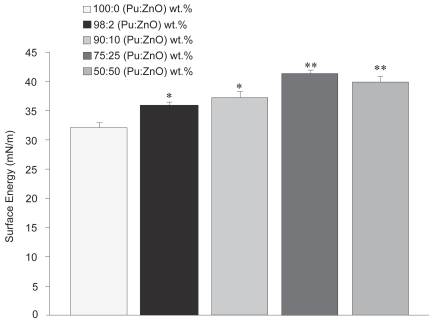
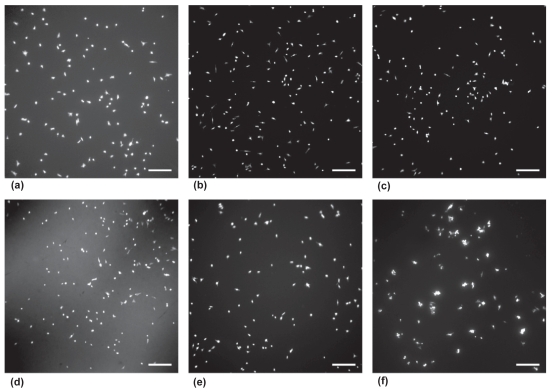
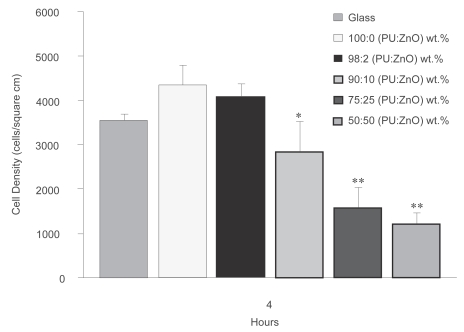
Nanomaterials offer a number of properties that are of interest to the field of neural tissue engineering. Specifically, materials that exhibit nanoscale surface dimensions have been shown to promote neuron function while simultaneously minimizing the activity of cells such as astrocytes that inhibit central nervous system regeneration. Studies demonstrating enhanced neural tissue regeneration in electrical fields through the use of conductive materials have led to interest in piezoelectric materials (or those materials which generate a transient electrical potential when mechanically deformed) such as zinc oxide (ZnO). It has been speculated that ZnO nanoparticles possess increased piezoelectric properties over ZnO micron particles. Due to this promise in neural applications, the objective of the present in vitro study was, for the first time, to assess the activity of astroglial cells on ZnO nanoparticle polymer composites. ZnO nanoparticles embedded in polyurethane were analyzed via scanning electron microscopy to evaluate nanoscale surface features of the composites. The surface chemistry was characterized via X-ray photoelectron spectroscopy. Astroglial cell response was evaluated based on cell adhesion and proliferation. Astrocyte adhesion was significantly reduced on ZnO nanoparticle/polyurethane (PU) composites with a weight ratio of 50:50 (PU:ZnO) wt.%, 75:25 (PU:ZnO) wt.%, and 90:10 (PU:ZnO) wt.% in comparison to pure PU. The successful production of ZnO nanoparticle composite scaffolds suitable for decreasing astroglial cell density demonstrates their potential as a nerve guidance channel material with greater efficiency than what may be available today.
纳米材料具有许多神经组织工程领域感兴趣的特性。具体而言,具有纳米级表面尺寸的材料已被证明可促进神经元功能,同时将抑制中枢神经系统再生的星形胶质细胞等细胞的活性降至最低。通过使用导电材料在电场中增强神经组织再生的研究引发了对压电材料(即那些在机械变形时产生瞬态电势的材料)如氧化锌(ZnO)的兴趣。据推测,ZnO纳米颗粒比ZnO微米颗粒具有更高的压电性能。鉴于其在神经应用中的前景,本体外研究的目的首次是评估星形胶质细胞对ZnO纳米颗粒聚合物复合材料的活性。通过扫描电子显微镜分析嵌入聚氨酯中的ZnO纳米颗粒,以评估复合材料的纳米级表面特征。通过X射线光电子能谱对表面化学进行表征。基于细胞粘附和增殖评估星形胶质细胞反应。与纯聚氨酯相比,在重量比为50:50(聚氨酯:ZnO)重量%、75:25(聚氨酯:ZnO)重量%和90:10(聚氨酯:ZnO)重量%的ZnO纳米颗粒/聚氨酯(PU)复合材料上,星形胶质细胞的粘附显著降低。成功制备出适合降低星形胶质细胞密度的ZnO纳米颗粒复合支架,证明了它们作为神经引导通道材料的潜力,其效率高于目前可用的材料。