Himmelreich Uwe, Malik Richard, Kühn Till, Daniel Heide-Marie, Somorjai Ray L, Dolenko Brion, Sorrell Tania C
Centre for Infectious Diseases and Microbiology and Westmead Millennium Institute, The University of Sydney, Westmead, Australia.
PLoS One. 2009;4(4):e5328. doi: 10.1371/journal.pone.0005328. Epub 2009 Apr 24.
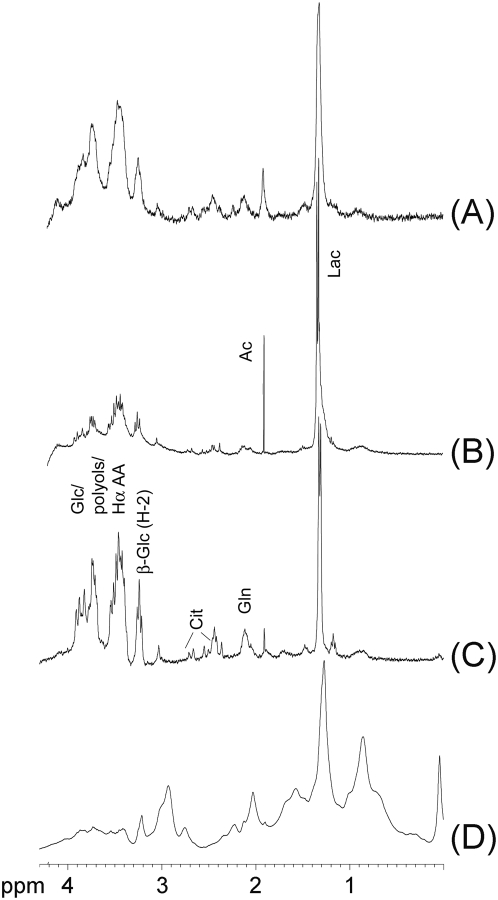
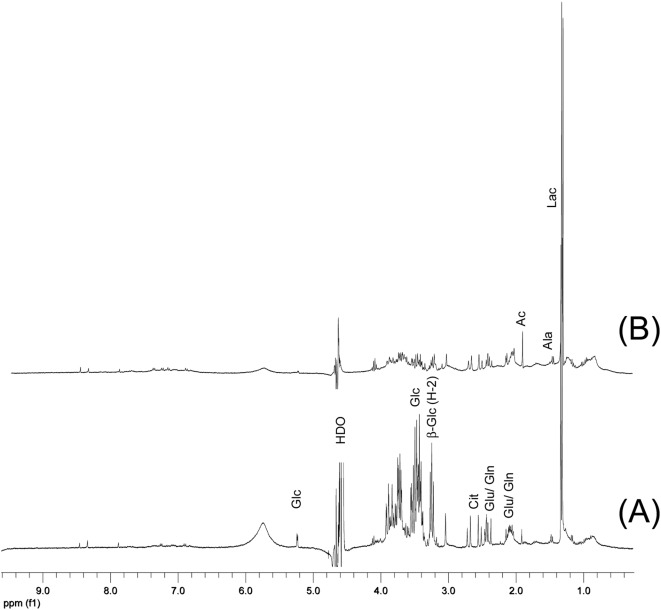
Bacterial meningitis is an acute disease with high mortality that is reduced by early treatment. Identification of the causative microorganism by culture is sensitive but slow. Large volumes of cerebrospinal fluid (CSF) are required to maximise sensitivity and establish a provisional diagnosis. We have utilised nuclear magnetic resonance (NMR) spectroscopy to rapidly characterise the biochemical profile of CSF from normal rats and animals with pneumococcal or cryptococcal meningitis. Use of a miniaturised capillary NMR system overcame limitations caused by small CSF volumes and low metabolite concentrations. The analysis of the complex NMR spectroscopic data by a supervised statistical classification strategy included major, minor and unidentified metabolites. Reproducible spectral profiles were generated within less than three minutes, and revealed differences in the relative amounts of glucose, lactate, citrate, amino acid residues, acetate and polyols in the three groups. Contributions from microbial metabolism and inflammatory cells were evident. The computerised statistical classification strategy is based on both major metabolites and minor, partially unidentified metabolites. This data analysis proved highly specific for diagnosis (100% specificity in the final validation set), provided those with visible blood contamination were excluded from analysis; 6-8% of samples were classified as indeterminate. This proof of principle study suggests that a rapid etiologic diagnosis of meningitis is possible without prior culture. The method can be fully automated and avoids delays due to processing and selective identification of specific pathogens that are inherent in DNA-based techniques.
细菌性脑膜炎是一种急性疾病,死亡率很高,早期治疗可降低死亡率。通过培养鉴定致病微生物敏感但速度慢。需要大量脑脊液(CSF)以最大化敏感性并建立初步诊断。我们利用核磁共振(NMR)光谱法快速表征正常大鼠以及患有肺炎球菌性或隐球菌性脑膜炎动物的脑脊液生化特征。使用小型化毛细管NMR系统克服了脑脊液体积小和代谢物浓度低所带来的限制。通过监督统计分类策略对复杂的NMR光谱数据进行分析,该策略包括主要、次要和未鉴定的代谢物。在不到三分钟的时间内生成了可重复的光谱图,揭示了三组中葡萄糖、乳酸、柠檬酸盐、氨基酸残基、乙酸盐和多元醇相对含量的差异。微生物代谢和炎性细胞的作用明显。计算机化统计分类策略基于主要代谢物以及次要的、部分未鉴定的代谢物。该数据分析对诊断具有高度特异性(在最终验证集中特异性为100%),前提是将有明显血液污染的样本排除在分析之外;6-8%的样本被归类为不确定。这项原理验证研究表明,无需事先培养即可快速进行脑膜炎的病因诊断。该方法可完全自动化,避免了基于DNA技术中固有的因处理和选择性鉴定特定病原体而导致的延迟。