Avery Anthony J, Rodgers Sarah, Cantrill Judith A, Armstrong Sarah, Elliott Rachel, Howard Rachel, Kendrick Denise, Morris Caroline J, Murray Scott A, Prescott Robin J, Cresswell Kathrin, Sheikh Aziz
Division of Primary Care, The Medical School, Queen's Medical Centre, Nottingham, NG7 2UH, UK.
Trials. 2009 May 1;10:28. doi: 10.1186/1745-6215-10-28.
Medication errors are an important cause of morbidity and mortality in primary care. The aims of this study are to determine the effectiveness, cost effectiveness and acceptability of a pharmacist-led information-technology-based complex intervention compared with simple feedback in reducing proportions of patients at risk from potentially hazardous prescribing and medicines management in general (family) practice.
RESEARCH SUBJECT GROUP: "At-risk" patients registered with computerised general practices in two geographical regions in England.
Parallel group pragmatic cluster randomised trial.
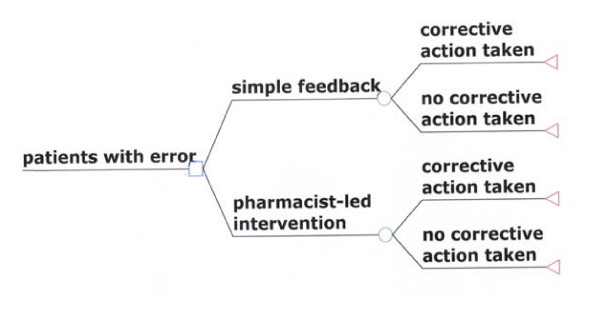
Practices will be randomised to either: (i) Computer-generated feedback; or (ii) Pharmacist-led intervention comprising of computer-generated feedback, educational outreach and dedicated support.
The proportion of patients in each practice at six and 12 months post intervention: - with a computer-recorded history of peptic ulcer being prescribed non-selective non-steroidal anti-inflammatory drugs; - with a computer-recorded diagnosis of asthma being prescribed beta-blockers; - aged 75 years and older receiving long-term prescriptions for angiotensin converting enzyme inhibitors or loop diuretics without a recorded assessment of renal function and electrolytes in the preceding 15 months. SECONDARY OUTCOME MEASURES; These relate to a number of other examples of potentially hazardous prescribing and medicines management.
An economic evaluation will be done of the cost per error avoided, from the perspective of the UK National Health Service (NHS), comparing the pharmacist-led intervention with simple feedback. QUALITATIVE ANALYSIS: A qualitative study will be conducted to explore the views and experiences of health care professionals and NHS managers concerning the interventions, and investigate possible reasons why the interventions prove effective, or conversely prove ineffective.
34 practices in each of the two treatment arms would provide at least 80% power (two-tailed alpha of 0.05) to demonstrate a 50% reduction in error rates for each of the three primary outcome measures in the pharmacist-led intervention arm compared with a 11% reduction in the simple feedback arm.
At the time of submission of this article, 72 general practices have been recruited (36 in each arm of the trial) and the interventions have been delivered. Analysis has not yet been undertaken.
用药错误是基层医疗中发病和死亡的重要原因。本研究的目的是确定与简单反馈相比,由药剂师主导的基于信息技术的综合干预措施在降低普通(家庭)医疗中潜在危险处方和药品管理风险患者比例方面的有效性、成本效益和可接受性。
研究对象组:在英格兰两个地理区域的计算机化普通诊所注册的“高危”患者。
平行组实用聚类随机试验。
诊所将被随机分为:(i)计算机生成的反馈;或(ii)由药剂师主导的干预措施,包括计算机生成的反馈、教育推广和专门支持。
干预后6个月和12个月时,每个诊所中患者的比例:- 有消化性溃疡计算机记录病史却被开具非选择性非甾体抗炎药;- 有哮喘计算机记录诊断却被开具β受体阻滞剂;- 75岁及以上患者接受血管紧张素转换酶抑制剂或袢利尿剂长期处方,且在之前15个月内没有记录肾功能和电解质评估。次要结局指标;这些与其他一些潜在危险处方和药品管理的例子有关。
将从英国国家医疗服务体系(NHS)的角度对避免每个错误的成本进行经济评估,比较药剂师主导的干预措施与简单反馈。定性分析:将进行定性研究,以探讨医疗保健专业人员和NHS管理人员对干预措施的看法和经验,并调查干预措施证明有效或反之证明无效的可能原因。
两个治疗组各34个诊所将提供至少80%的检验效能(双侧α为0.05),以证明与简单反馈组错误率降低11%相比,药剂师主导的干预组三个主要结局指标的错误率各降低50%。
在提交本文时,已招募72个普通诊所(试验每组36个)并实施了干预措施。尚未进行分析。