Ng Theodore W K, Chan Dick C, Barrett P Hugh R, Watts Gerald F
School of Medicine and Pharmacology, Metabolic Research Centre, University of Western Australia, Royal Perth Hospital, GPO Box X2213, Perth WA 6847, Australia.
Clin Sci (Lond). 2009 Oct 2;118(1):79-85. doi: 10.1042/CS20090110.
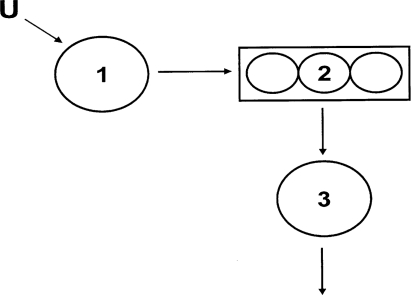
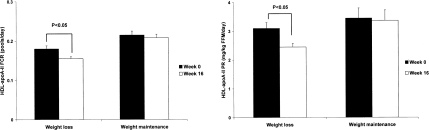
Reduced HDL (high-density lipoprotein) concentration in the MetS (metabolic syndrome) is associated with increased risk of cardiovascular disease and is related to defects in HDL-apoA-II (apolipoprotein A-II) kinetics. Dietary restriction is the most commonly used weight loss strategy. In the present study, we examined the effect of weight loss on HDL-apoA-II kinetics in men with the MetS at the start and end of a 16-week intervention trial of a hypocaloric low-fat diet (n=20) compared with a weight maintenance diet (n=15), using a stable isotope technique and compartmental modelling. The low-fat diet achieved a significant reduction (P<0.01) in BMI (body mass index), abdominal fat compartments and HOMA (homoeostasis model assessment) score compared with weight maintenance. Weight loss also significantly (P<0.05) decreased both the production rate (-23%) and FCR (fractional catabolic rate) (-12%) of HDL-apoA-II, accounting for a net decrease in apoA-II concentration (-9%). Reductions in the HDL-apoA-II production rate were significantly associated with changes in body weight (r=0.683, P<0.01), plasma triacylglycerols (triglycerides) (r=0.607, P<0.01) and, to a lesser extent, plasma insulin (r=0.440, P=0.059) and HOMA-IR (HOMA of insulin resistance) (r=0.425, P=0.069). Changes in the apoA-II FCR were also significantly associated with reductions in visceral adipose tissue mass (r=0.561, P=0.010). In conclusion, in obese men with the MetS, short-term weight loss with a low-fat low-caloric diet lowers plasma apoA-II concentrations by decreasing both the production and catabolism of HDL-apoA-II. The cardiometabolic significance of this effect on HDL metabolism remains to be investigated further.
代谢综合征(MetS)中高密度脂蛋白(HDL)浓度降低与心血管疾病风险增加相关,且与HDL-载脂蛋白A-II(apoA-II)动力学缺陷有关。饮食限制是最常用的减肥策略。在本研究中,我们采用稳定同位素技术和房室模型,在一项为期16周的低热量低脂饮食干预试验(n = 20)开始和结束时,对比体重维持饮食组(n = 15),研究了减肥对患有MetS男性的HDL-apoA-II动力学的影响。与体重维持组相比,低脂饮食使体重指数(BMI)、腹部脂肪区和稳态模型评估(HOMA)评分显著降低(P<0.01)。减肥还使HDL-apoA-II的生成率(-23%)和分解代谢率(FCR)(-12%)显著降低(P<0.05),导致apoA-II浓度净下降(-9%)。HDL-apoA-II生成率的降低与体重变化(r = 0.683,P<0.01)、血浆三酰甘油(甘油三酯)(r = 0.607,P<0.01)以及程度较轻的血浆胰岛素(r = 0.440,P = 0.059)和HOMA-IR(胰岛素抵抗的HOMA)(r = 0.425,P = 0.069)显著相关。apoA-II FCR的变化也与内脏脂肪组织量的减少显著相关(r = 0.561,P = 0.01)。总之,在患有MetS的肥胖男性中,低脂低热量饮食导致的短期体重减轻通过降低HDL-apoA-II的生成和分解代谢,降低了血浆apoA-II浓度。这种对HDL代谢的影响在心脏代谢方面的意义仍有待进一步研究。