Ophthalmology Department, Hospital das Clinicas da Fauldade de Medicina da Universidade de São Paulo, São Paulo/SP, Brazil.
Clinics (Sao Paulo). 2009;64(8):735-41. doi: 10.1590/S1807-59322009000800005.
This study seeks to identify practices of self-medication in the treatment of ocular emergencies. We examine patients' use of both homemade preparations and manufactured products before seeking specialized care.
We conducted a cross-sectional analytic survey of consecutive patients seen in the ophthalmology emergency room of a teaching hospital.
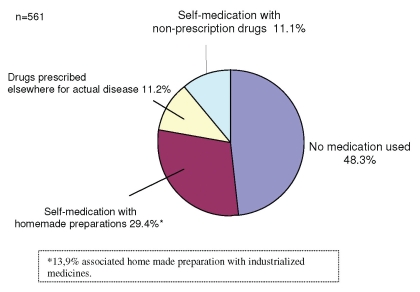
The sample included 561 subjects, 51.3% males and 48.7% females, with a mean age of 39.8 years. Prior to seeking emergency care, 40.5% reported self-medicating; 29.4% used a homemade preparation (13.9% referred to an industrialized product like boric acid as a homemade preparation), and 11.1% used a manufactured product. The most frequently used products included a boric acid solution (53.3%), a normal saline solution (35.7%), herbal infusions (6.1%) and breast milk (4.8%). Viral conjunctivitis was the most frequent diagnosis (24.4%), followed by the presence of a corneal foreign body (7.4%). No significant differences were found in the self-treatment of ocular injuries according to gender (p = 0.95), level of education (p = 0.21) or age (p = 0.14). In addition, self-medication practices were not related to the medically judged severity of the condition.
Patients often attempt to treat conditions that require ophthalmologic emergency care by self-medicating with homemade or manufactured products. The most widely used products include boric acid, normal saline, leaf infusions and breast milk. This behavior occurs independently of educational level, gender, age or the nature of the ocular condition. Self-medication is a culturally driven practice that is used even in cases of acute ocular injuries.
本研究旨在确定眼部急症治疗中的自我用药实践。我们检查了患者在寻求专业治疗之前使用自制制剂和成品药物的情况。
我们对一家教学医院眼科急诊的连续患者进行了横断面分析调查。
该样本包括 561 名患者,男性占 51.3%,女性占 48.7%,平均年龄为 39.8 岁。在寻求急诊治疗之前,40.5%的患者报告自我用药;29.4%使用了自制制剂(13.9%将工业硼酸等产品视为自制制剂),11.1%使用了成品药物。最常使用的产品包括硼酸溶液(53.3%)、生理盐水溶液(35.7%)、草药浸剂(6.1%)和母乳(4.8%)。病毒性结膜炎是最常见的诊断(24.4%),其次是角膜异物(7.4%)。根据性别(p = 0.95)、教育程度(p = 0.21)或年龄(p = 0.14),眼部损伤的自我治疗无显著差异。此外,自我用药实践与医学判断的病情严重程度无关。
患者经常试图通过使用自制或成品药物自我治疗需要眼科急诊治疗的疾病。最广泛使用的产品包括硼酸、生理盐水、叶浸剂和母乳。这种行为独立于教育程度、性别、年龄或眼部状况的性质。自我用药是一种文化驱动的实践,即使在急性眼部损伤的情况下也会使用。