Center for the Study of Hepatitis C, Laboratory of Virology and Infectious Disease, The Rockefeller University, New York, New York 10065, USA.
EMBO Rep. 2009 Nov;10(11):1220-7. doi: 10.1038/embor.2009.223. Epub 2009 Oct 16.
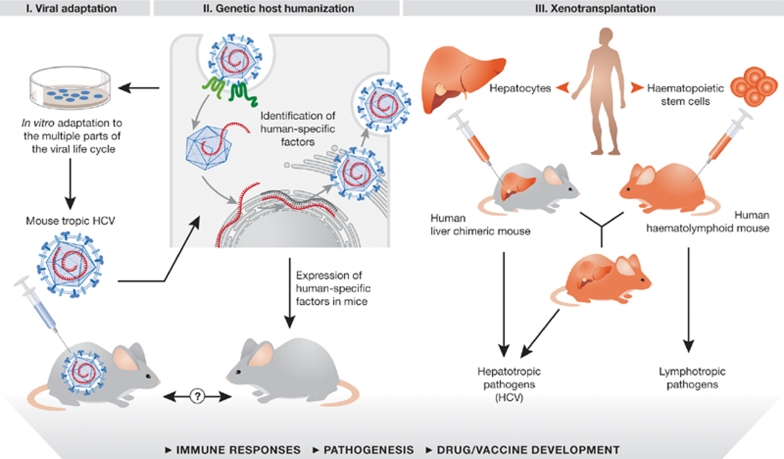
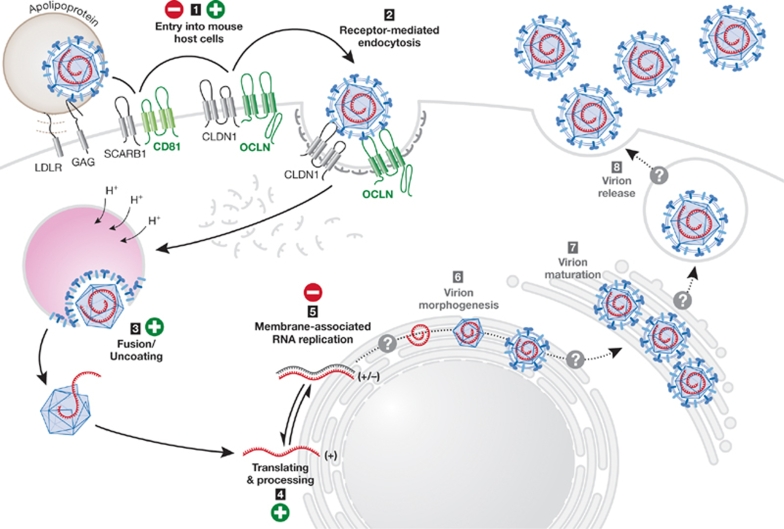
Hepatitis C virus (HCV) causes chronic liver disease and affects an estimated 3% of the world's population. Options for the prevention or therapy of HCV infection are limited; there is no vaccine and the nonspecific, interferon-based treatments now in use are frequently ineffective and have significant side effects. A small-animal model for HCV infection would significantly expedite antiviral compound development and preclinical testing, as well as open new avenues to decipher the mechanisms that underlie viral pathogenesis. The natural species tropism of HCV is, however, limited to humans and chimpanzees. Here, we discuss the prospects of developing a mouse model for HCV infection, taking into consideration recent results on HCV entry and replication, and new prospects in xenotransplantation biology. We highlight three independent, but possibly complementary, approaches towards overcoming current species barriers and generating a small-animal model for HCV pathogenesis.
丙型肝炎病毒(HCV)可导致慢性肝病,影响着全球约 3%的人口。预防或治疗 HCV 感染的方法有限;目前尚无疫苗,且广泛使用的非特异性干扰素治疗方法常常无效,且具有显著的副作用。HCV 感染的小动物模型将极大地促进抗病毒化合物的开发和临床前测试,并开辟新的途径来解析病毒发病机制的机制。然而,HCV 的天然物种嗜性仅限于人类和黑猩猩。在这里,我们讨论了开发 HCV 感染小鼠模型的前景,同时考虑了 HCV 进入和复制的最新结果,以及异种移植生物学的新前景。我们强调了三种独立但可能互补的方法,以克服当前的物种障碍并生成 HCV 发病机制的小动物模型。