Department of Radiology, Johns Hopkins University School of Medicine, Baltimore, MD 21205, USA.
Neuroimage. 2010 Feb 1;49(3):2340-51. doi: 10.1016/j.neuroimage.2009.10.027. Epub 2009 Oct 19.
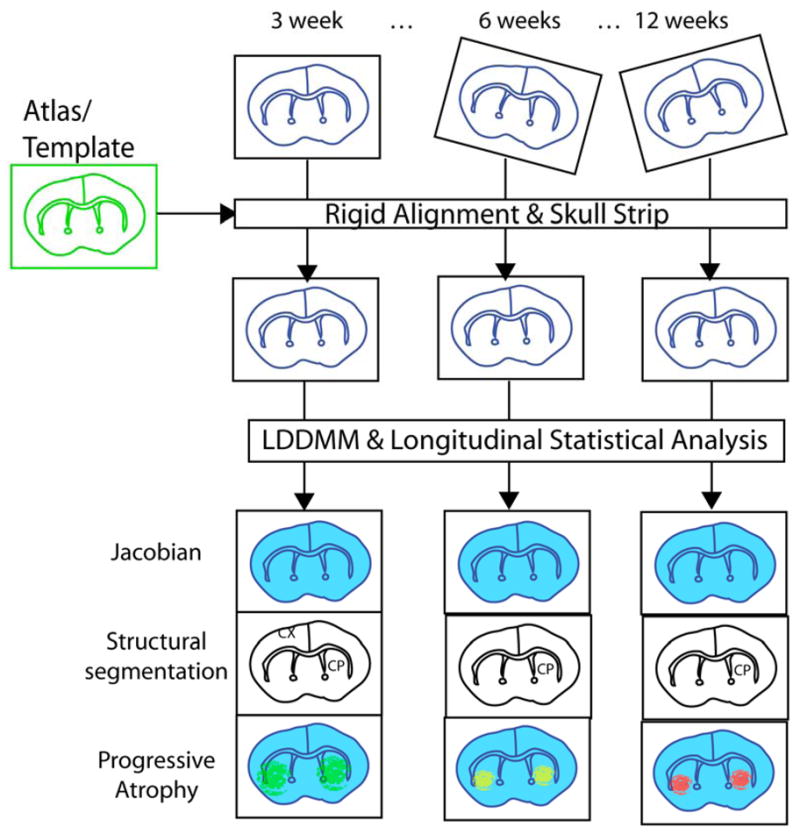
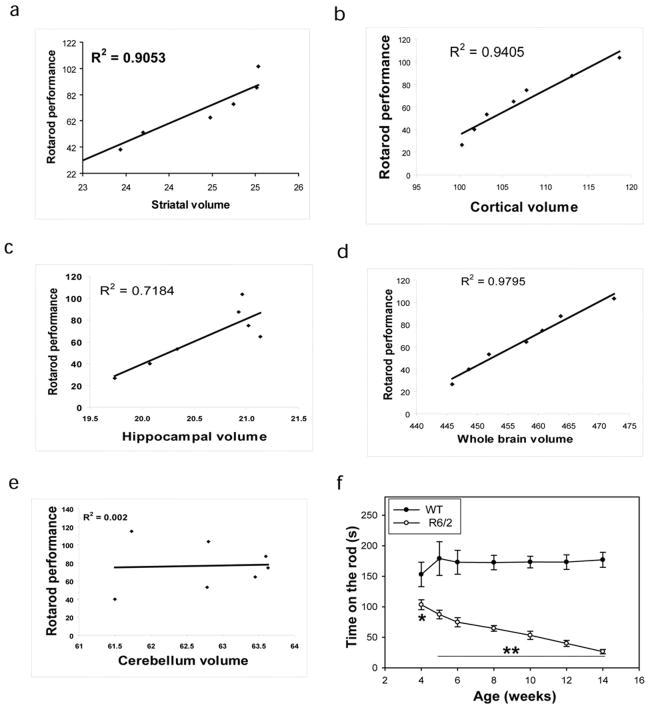
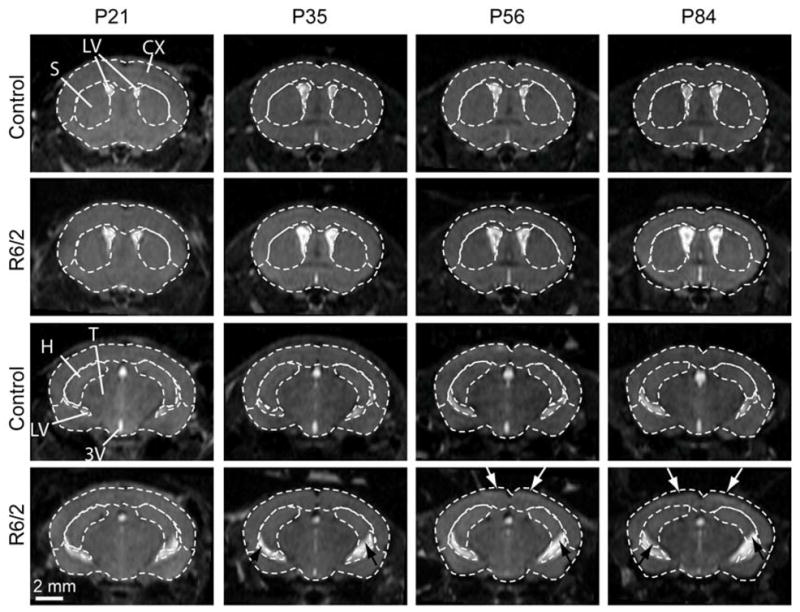
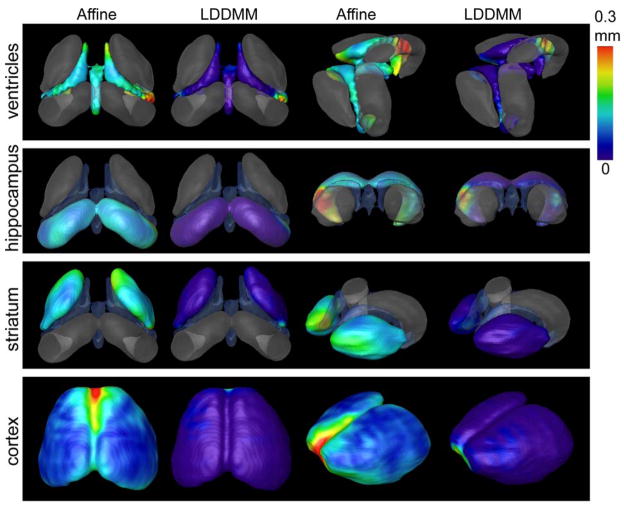
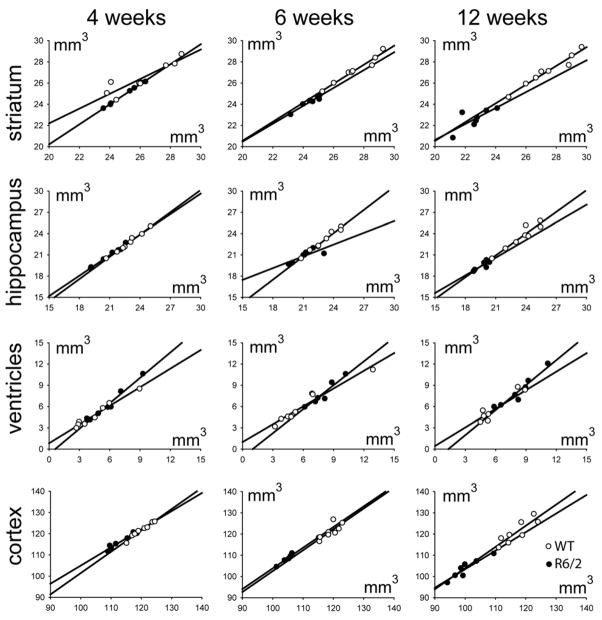
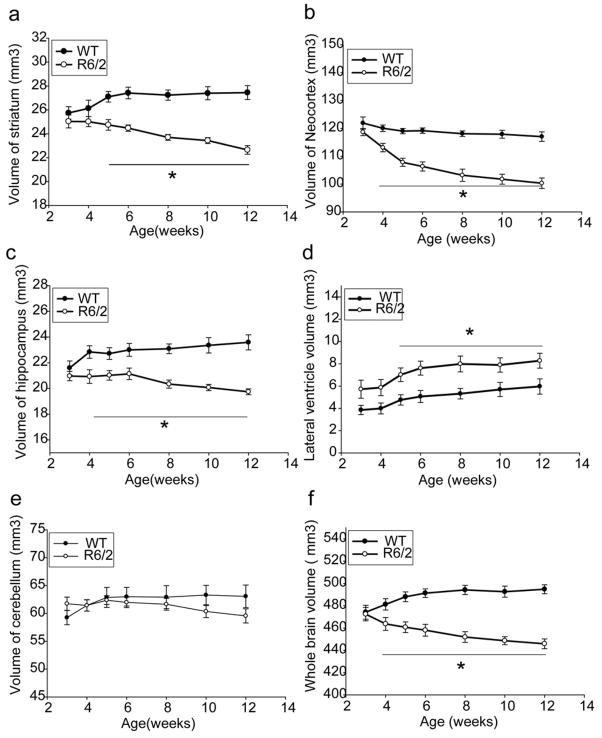
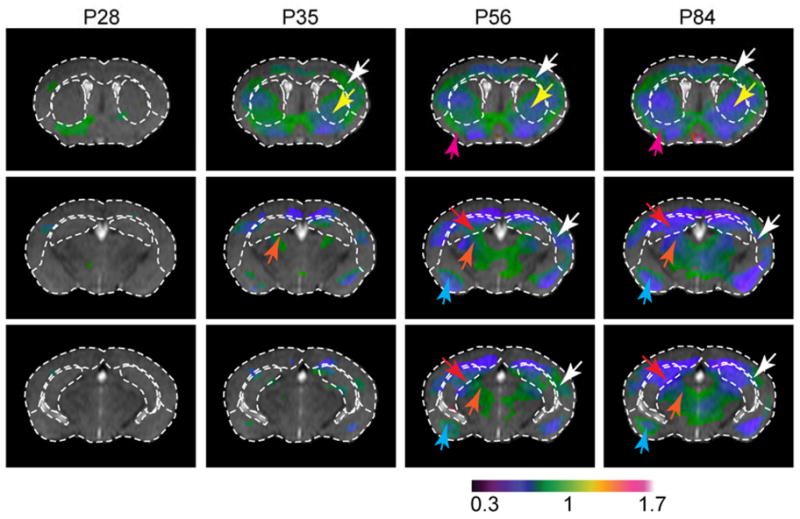
Mouse models of human diseases play crucial roles in understanding disease mechanisms and developing therapeutic measures. Huntington's disease (HD) is characterized by striatal atrophy that begins long before the onset of motor symptoms. In symptomatic HD, striatal volumes decline predictably with disease course. Thus, imaging based volumetric measures have been proposed as outcomes for presymptomatic as well as symptomatic clinical trials of HD. Magnetic resonance imaging of the mouse brain structures is becoming widely available and has been proposed as one of the biomarkers of disease progression and drug efficacy testing. However, three-dimensional and quantitative morphological analyses of the brains are not straightforward. In this paper, we describe a tool for automated segmentation and voxel-based morphological analyses of the mouse brains. This tool was applied to a well-established mouse model of Huntington's disease, the R6/2 transgenic mouse strain. Comparison between the automated and manual segmentation results showed excellent agreement in most brain regions. The automated method was able to sensitively detect atrophy as early as 4 weeks of age and accurately follow disease progression. Comparison between ex vivo and in vivo MRI suggests that the ex vivo end-point measurement of brain morphology is also a valid approach except for the morphology of the ventricles. This is the first report of longitudinal characterization of brain atrophy in a mouse model of Huntington's disease by using automatic morphological analysis.
人类疾病的小鼠模型在理解疾病机制和开发治疗措施方面发挥着至关重要的作用。亨廷顿病(HD)的特征是纹状体萎缩,这种萎缩早在运动症状出现之前就开始了。在有症状的 HD 中,纹状体体积随着疾病进程的发展可预测性地下降。因此,基于成像的容积测量已被提议作为 HD 无症状和有症状临床试验的结果。对小鼠大脑结构的磁共振成像越来越普及,并已被提议作为疾病进展和药物疗效测试的生物标志物之一。然而,对大脑的三维和定量形态分析并不简单。在本文中,我们描述了一种用于自动分割和基于体素的小鼠大脑形态分析的工具。该工具应用于一种成熟的亨廷顿病小鼠模型,即 R6/2 转基因小鼠品系。自动分割和手动分割结果的比较表明,在大多数脑区都有极好的一致性。自动方法能够敏感地检测到早在 4 周龄时的萎缩,并准确地跟踪疾病的进展。离体和体内 MRI 的比较表明,除了脑室的形态外,脑形态的离体终点测量也是一种有效的方法。这是首例使用自动形态分析对亨廷顿病小鼠模型进行的脑萎缩纵向特征描述。