Blumstein Sheila E
Albert D. Mead Professor of Cognitive and Linguistic Sciences at Brown University.
Lang Linguist Compass. 2009 Jul 1;3(4):824-838. doi: 10.1111/j.1749-818X.2009.00136.x.
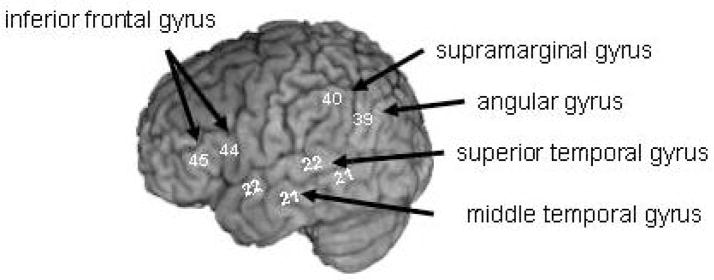
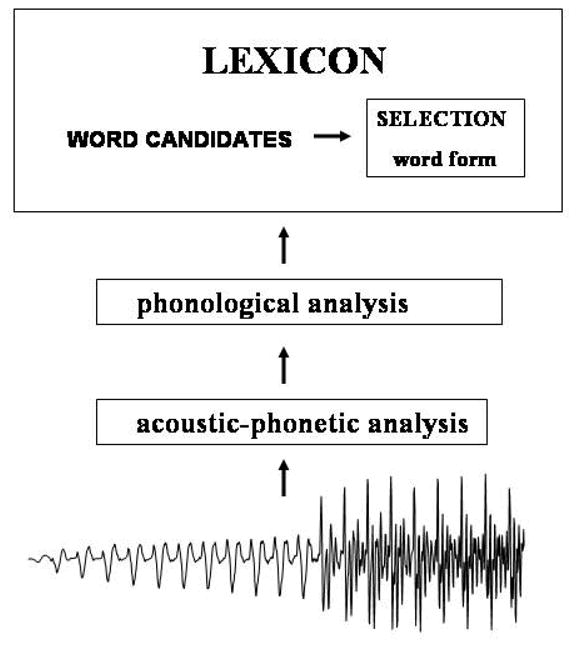
This review examines the neural systems underlying auditory word recognition processes using both lesion and functional neuroimaging studies. Focus is on the influence of the sound properties of language (its phonetic as well as its phonological properties) in the service of identifying a particular word or the conceptual/meaning associated with that word. Results indicate that auditory word recognition recruits a neural system in which information is passed through the network in what appears to be functionally distinct stages - acoustic-phonetic analysis in temporal areas, mapping of sound structure to the lexicon, accessing a lexical candidate and its associated lexical-semantic network in temporo-parietal areas, and lexical selection in frontal areas. Information cascades throughout the network as shown by the influence of 'goodness' of fit and phonological/lexical competition on modulation of activation in both posterior areas including the superior temporal gyrus and supramarginal gyrus and in frontal areas including the inferior frontal gyrus.
本综述使用损伤研究和功能神经影像学研究来考察听觉单词识别过程背后的神经系统。重点在于语言的声音属性(其语音以及音系属性)在识别特定单词或与该单词相关的概念/意义方面的影响。结果表明,听觉单词识别会调动一个神经系统,在这个系统中,信息似乎会在功能上不同的阶段通过网络传递——颞叶区域进行声学语音分析,将声音结构映射到词汇表,在颞顶叶区域获取一个词汇候选及其相关的词汇语义网络,以及在额叶区域进行词汇选择。如匹配度“优劣”以及音系/词汇竞争对包括颞上回和缘上回在内的后部区域以及包括额下回在内的额叶区域激活调节的影响所示,信息在整个网络中层层递进。