Department of Disease Control and Prevention, Taipei City Hospital, Taipei City Government, Taipei, Taiwan.
PLoS One. 2009 Nov 23;4(11):e7962. doi: 10.1371/journal.pone.0007962.
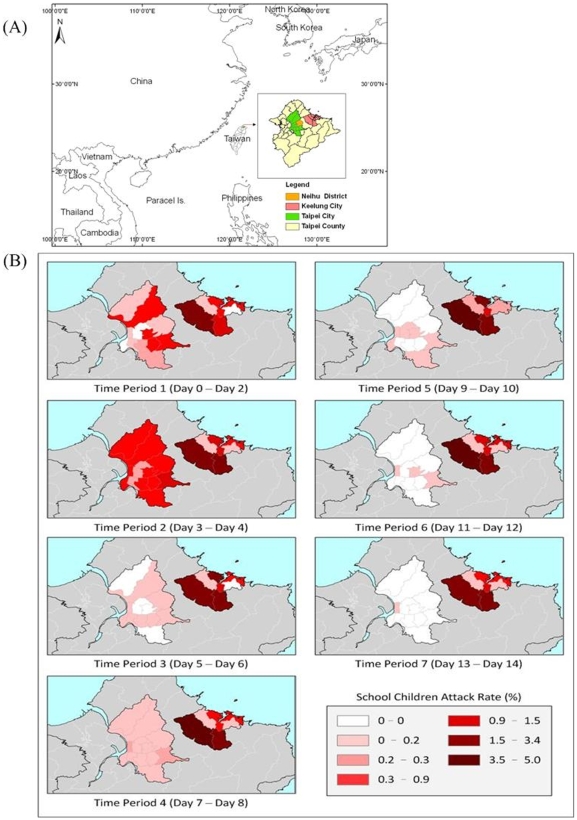
In September 2007, an outbreak of acute hemorrhagic conjunctivitis (AHC) occurred in Keelung City and spread to Taipei City. In response to the epidemic, a new crisis management program was implemented and tested in Taipei.
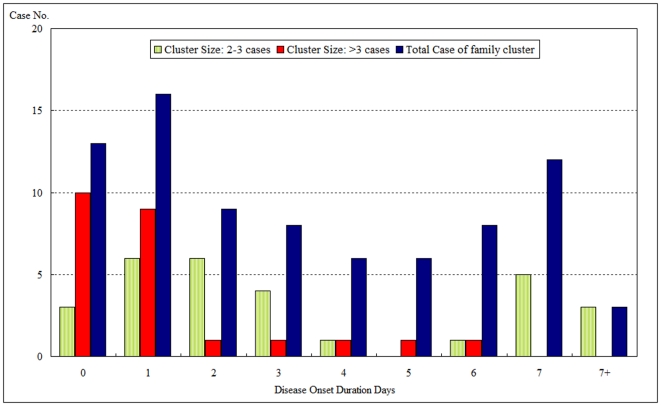
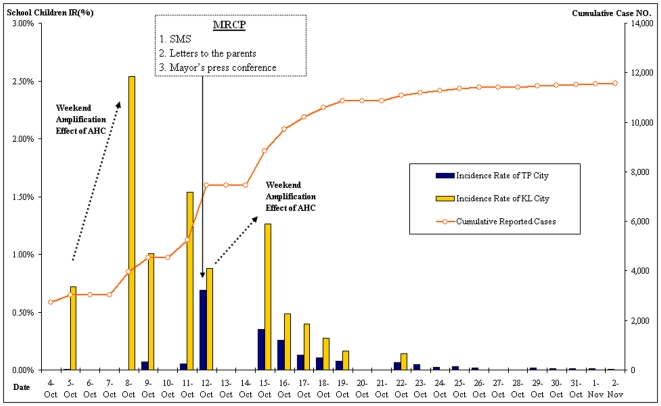
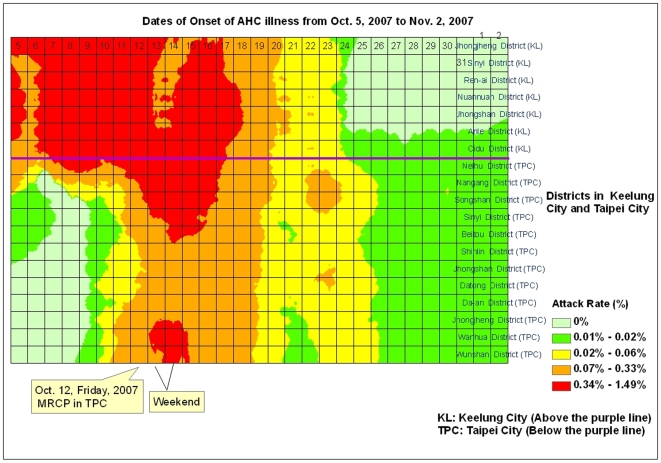
Having noticed that transmission surged on weekends during the Keelung epidemic, Taipei City launched a multi-channel mass risk communications program that included short message service (SMS) messages sent directly to approximately 2.2 million Taipei residents on Friday, October 12th, 2007. The public was told to keep symptomatic students from schools and was provided guidelines for preventing the spread of the disease at home. Epidemiological characteristics of Taipei's outbreak were analyzed from 461 sampled AHC cases. Median time from exposure to onset of the disease was 1 day. This was significantly shorter for cases occurring in family clusters than in class clusters (mean+/-SD: 2.6+/-3.2 vs. 4.39+/-4.82 days, p = 0.03), as well as for cases occurring in larger family clusters as opposed to smaller ones (1.2+/-1.7 days vs. 3.9+/-4.0 days, p<0.01). Taipei's program had a significant impact on patient compliance. Home confinement of symptomatic children increased from 10% to 60% (p<0.05) and helped curb the spread of AHC. Taipei experienced a rapid decrease in AHC cases between the Friday of the SMS announcement and the following Monday, October 15, (0.70% vs. 0.36%). By October 26, AHC cases reduced to 0.01%. The success of this risk communication program in Taipei (as compared to Keelung) is further reflected through rapid improvements in three epidemic indicators: (1) significantly lower crude attack rates (1.95% vs. 14.92%, p<0.001), (2) a short epidemic period of AHC (13 vs. 34 days), and (3) a quick drop in risk level (1 approximately 2 weeks) in Taipei districts that border Keelung (the original domestic epicenter).
The timely launch of this systematic, communication-based intervention proved effective at preventing a dangerous spike in AHC and was able to bring this high-risk disease under control. We recommend that public health officials incorporate similar methods into existing guidelines for preventing pandemic influenza and other emerging infectious diseases.
2007 年 9 月,急性出血性结膜炎(AHC)疫情在基隆市爆发,并蔓延至台北市。针对疫情,台北市实施了一项新的危机管理方案,并进行了测试。
台北市注意到,在基隆疫情期间,周末的传播速度加快,因此于 2007 年 10 月 12 日星期五向大约 220 万台北居民发送了直接短信服务(SMS)消息。公众被告知让有症状的学生不要去学校,并提供了在家预防疾病传播的指导方针。对台北疫情的 461 例 AHC 抽样病例进行了流行病学特征分析。从暴露到发病的中位数时间为 1 天。家庭聚集病例的发病时间明显短于班级聚集病例(平均+/-标准差:2.6+/-3.2 与 4.39+/-4.82 天,p=0.03),以及家庭聚集病例中较大家庭聚集病例的发病时间明显短于较小家庭聚集病例(1.2+/-1.7 天与 3.9+/-4.0 天,p<0.01)。台北市的方案对患者的依从性产生了重大影响。有症状儿童的家庭隔离率从 10%增加到 60%(p<0.05),有助于遏制 AHC 的传播。从 SMS 发布的星期五到 10 月 15 日星期一,台北的 AHC 病例迅速减少(0.70%比 0.36%)。到 10 月 26 日,AHC 病例降至 0.01%。与基隆相比,这种风险沟通方案在台北的成功(反映在以下三个方面):(1)明显较低的粗发病率(1.95%比 14.92%,p<0.001),(2)AHC 的短流行期(13 天与 34 天),以及(3)在与基隆接壤的台北地区的风险水平迅速下降(最初的国内疫区)。
及时启动这一系统的、基于沟通的干预措施,被证明可以有效防止 AHC 的危险激增,并能够控制这种高风险疾病。我们建议公共卫生官员将类似的方法纳入预防大流行性流感和其他新发传染病的现有指南中。