Clinical Research Branch, National Institute on Aging Intramural Research Program, National Institutes of Health, Baltimore, MD, USA.
Psychol Health Med. 2009 Dec;14(6):667-79. doi: 10.1080/13548500903322791.
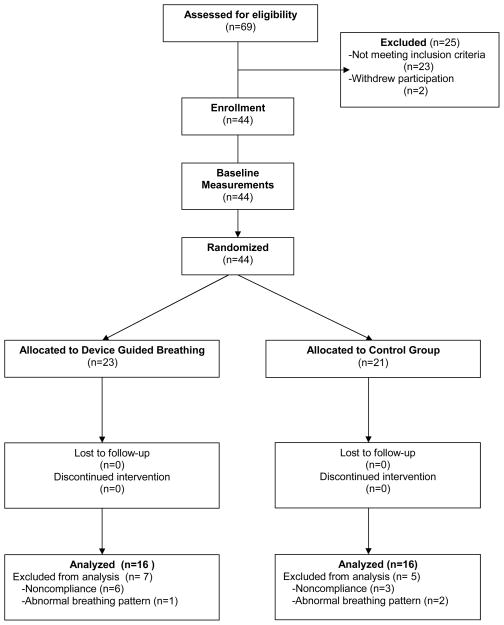
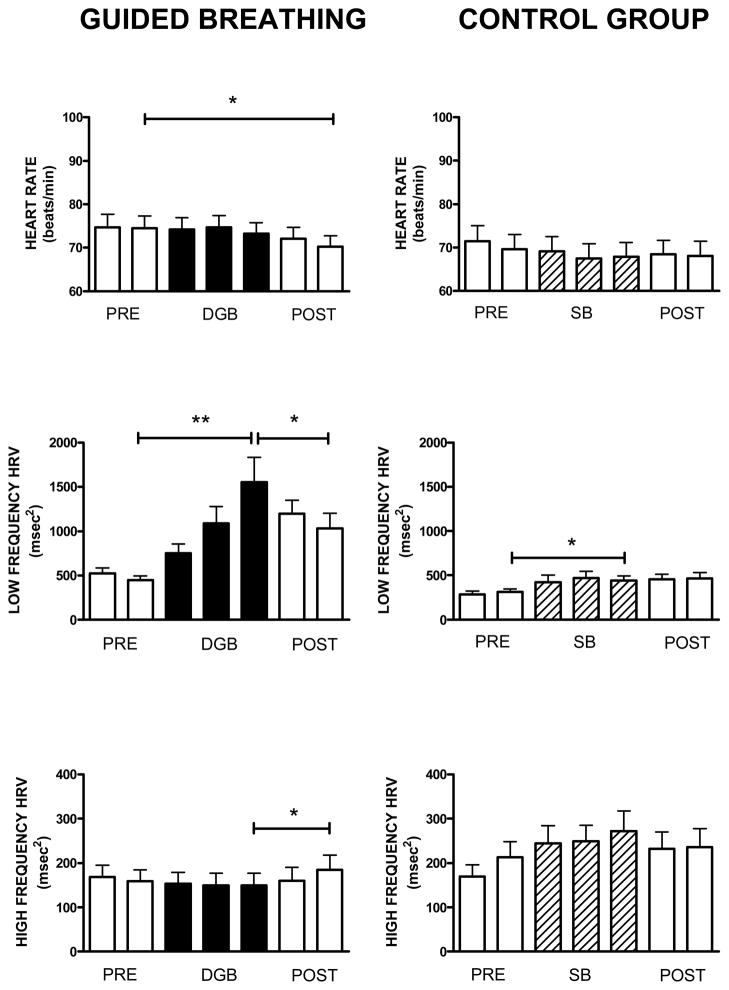
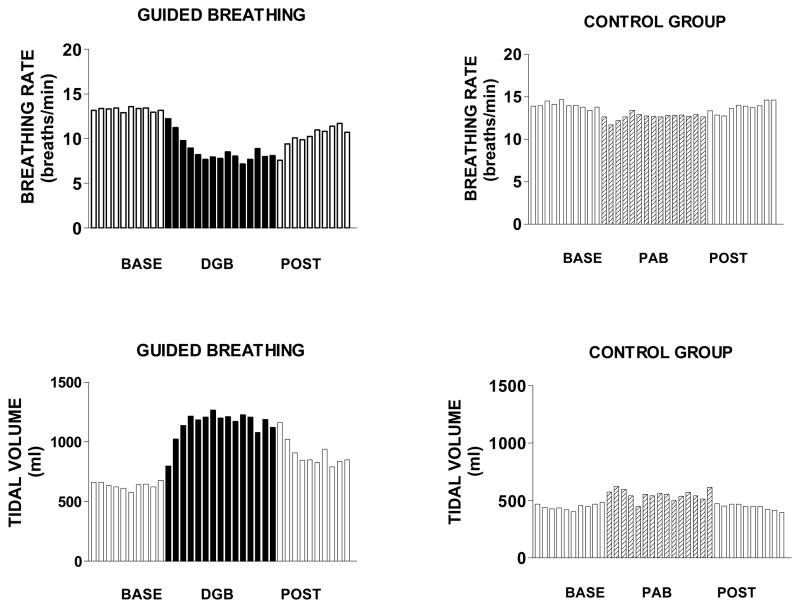
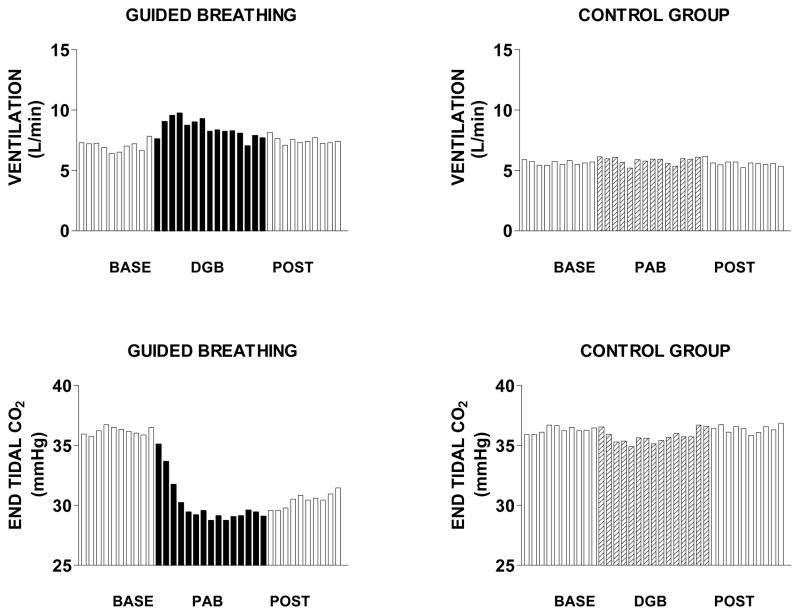
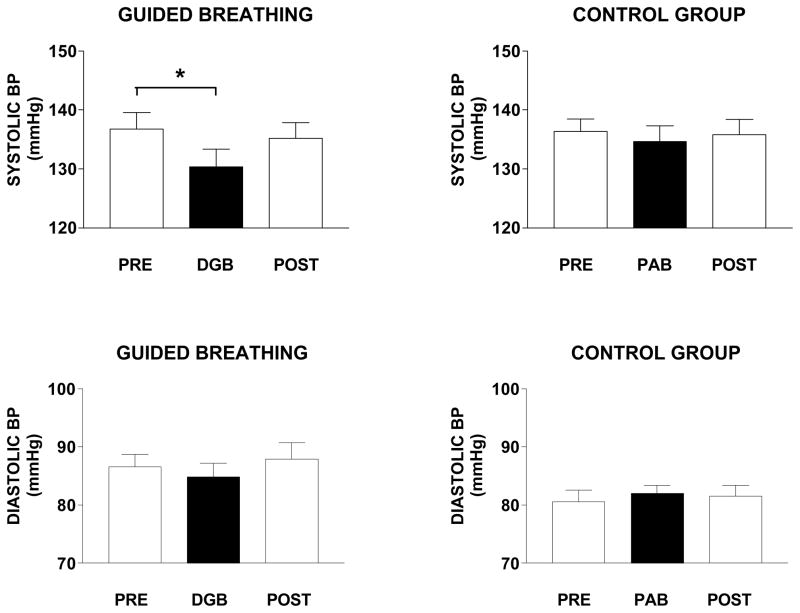
Previous studies have reported that regular practice of a device-guided slow-breathing (DGB) exercise decreases resting blood pressure (BP) in hypertensive patients. The performance of DGB is associated with acute decreases in sympathetic vascular tone, and it has been suggested that the decreases in resting BP produced by regular practice of DGB over periods of weeks are due to chronic decreases in sympathetic nervous system activity. However, the kidneys respond to sympathetically mediated changes in BP by readjusting blood volume levels within a few days. Thus, the mechanism by which DGB could produce long-term BP changes remains to be clarified. Previous research with laboratory animals and human subjects has shown that slow, shallow breathing that increases pCO(2) potentiates BP sensitivity to high sodium intake. These findings raise the possibility that deeper breathing during DGB that decreases BP might involve opposite changes in pCO(2). The present study tested the hypothesis that performance of DGB acutely decreases a marker of pCO(2), end-tidal CO(2) (PetCO(2)). Breathing rate, tidal volume, and PetCO(2) were monitored before, during, and after a 15-min session of DGB by patients with elevated BP. BP, heart rate, and heart-rate variability (HRV) were also measured under these conditions. A control group was also studied before, during, and after a 15-min session of spontaneous breathing (SB). The DGB group, but not the SB group, showed progressive and substantial increases in tidal volume and low-frequency HRV and decreases in PetCO(2) and systolic BP. The PetCO(2) effects persisted into the posttask, rest period. The findings are consistent with the hypothesis that habitual changes in breathing patterns of the kind observed during DGB could potentiate an antihypertensive adaptation via effects on pCO(2) and its role in cardiovascular homeostasis.
先前的研究报告表明,规律地进行设备引导的缓慢呼吸(DGB)练习可降低高血压患者的静息血压(BP)。DGB 的表现与交感血管张力的急性下降有关,有人认为,DGB 的规律练习在数周内产生的静息血压下降是由于交感神经系统活动的慢性下降。然而,肾脏通过在几天内重新调整血量水平来应对交感介导的血压变化。因此,DGB 产生长期血压变化的机制仍有待阐明。先前的实验室动物和人体研究表明,增加 pCO2 的缓慢、浅呼吸会增强血压对高钠摄入的敏感性。这些发现提出了一种可能性,即 DGB 期间降低血压的深呼吸可能涉及 pCO2 的相反变化。本研究检验了这样一个假设,即 DGB 的表现可急性降低 pCO2 的一个标志物,即呼气末 CO2(PetCO2)。通过患有高血压的患者,在 DGB 的 15 分钟期间,在 DGB 之前、期间和之后监测呼吸频率、潮气量和 PetCO2。在这些条件下还测量了血压、心率和心率变异性(HRV)。还对对照组在 15 分钟的自主呼吸(SB)期间进行了研究。DGB 组而非 SB 组表现出潮气量和低频 HRV 的逐渐和显著增加,PetCO2 和收缩压的降低。PetCO2 的影响持续到任务后的休息期。这些发现与以下假设一致,即 DGB 期间观察到的呼吸模式的习惯性变化可能通过对 pCO2 及其在心血管稳态中的作用的影响增强抗高血压适应。