Polymer Centre, Faculty of Technology, Tomas Bata University in Zlín, T.G.M Sq. 275, 762 72 Zlín, Czech Republic.
Molecules. 2010 Feb 23;15(2):1007-27. doi: 10.3390/molecules15021007.
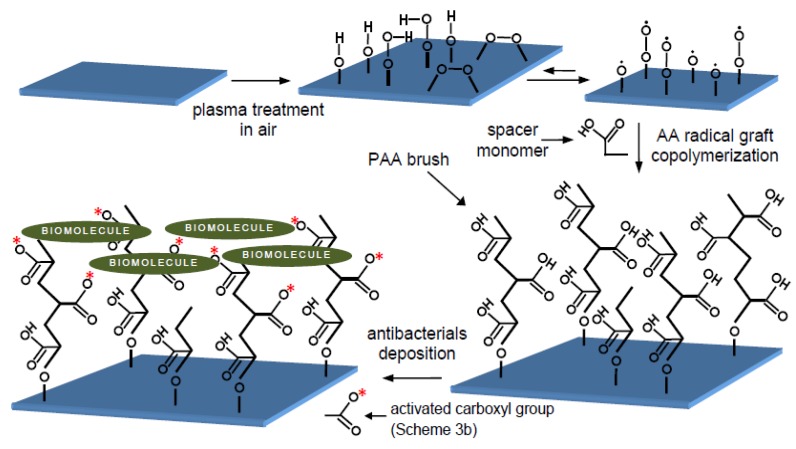
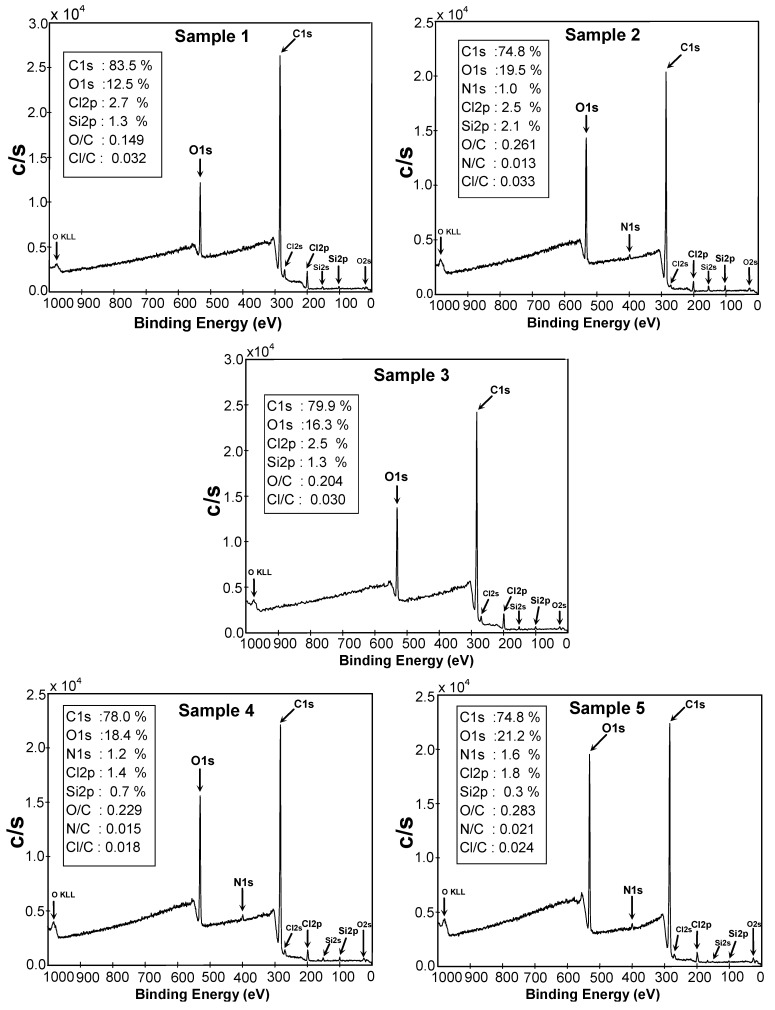
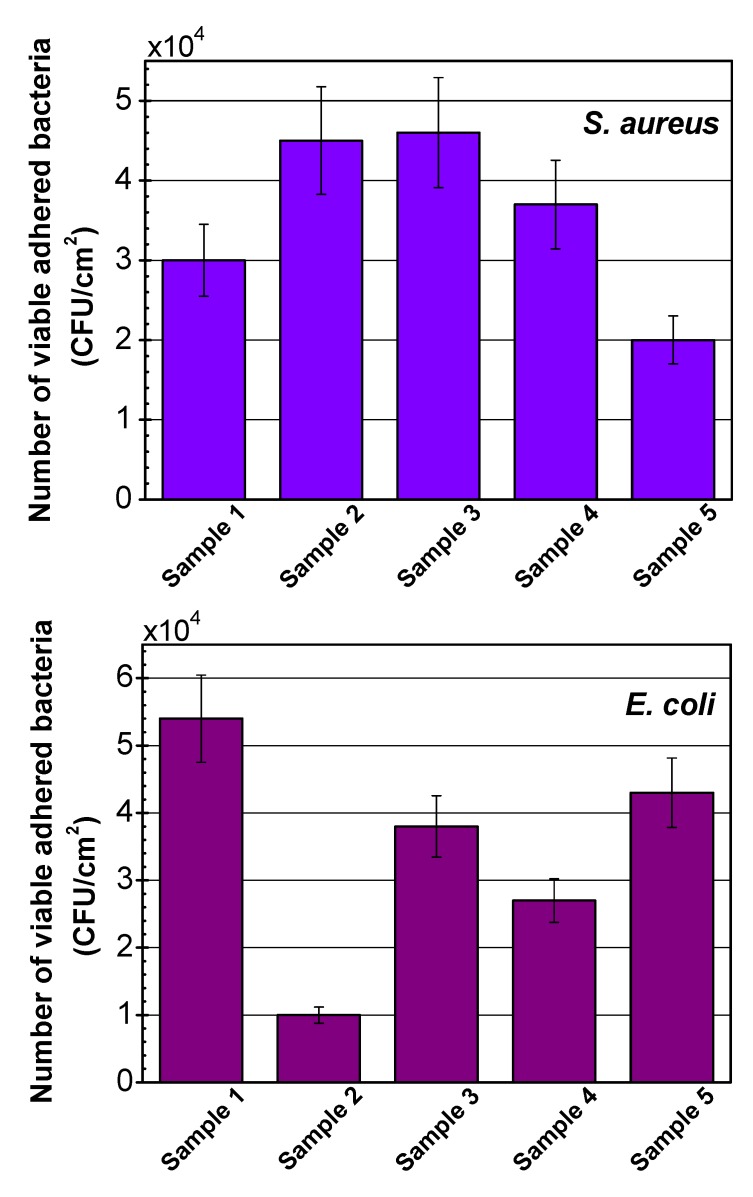
Medical-grade polyvinyl chloride was coated by polysaccharides through a novel physicochemical approach. An initial surface activation was performed foremost via diffuse coplanar surface barrier discharge plasma in air at ambient temperature and pressure. Then, radical graft copolymerization of acrylic acid through grafting-from pathway was directed to render a well-defined brush of high density, and finally a chitosan monolayer and chitosan/pectin alternating multilayer were bound onto the functionalized surfaces. Surface characteristics were systematically investigated using several probe techniques. In vitro bacterial adhesion and biofilm formation assays indicated that a single chitosan layer was incapable of hindering the adhesion of a Staphylococcus aureus bacterial strain, while up to 30% reduction was achieved by the chitosan/pectin layered assembly. On the other hand, chitosan and chitosan/pectin multilayer could retard Escherichia coli adhesion by 50% and 20%, respectively. Furthermore, plasma treated and graft copolymerized samples were also found effective to diminish the degree of adherence of Escherichia coli.
通过一种新的物理化学方法,对医用级聚氯乙烯进行了多糖涂层处理。首先,通过在环境温度和压力下的空气中的漫射共面电介质阻挡放电等离子体进行初始表面活化。然后,通过接枝途径定向进行丙烯酸的自由基接枝共聚,以赋予高密度的明确刷状结构,最后将壳聚糖单层和壳聚糖/果胶交替多层结合到功能化表面上。使用几种探针技术系统地研究了表面特性。体外细菌黏附和生物膜形成试验表明,单层壳聚糖无法阻止金黄色葡萄球菌菌株的黏附,而壳聚糖/果胶层状组装可将其减少 30%。另一方面,壳聚糖和壳聚糖/果胶多层可分别使大肠杆菌的黏附减少 50%和 20%。此外,还发现等离子体处理和接枝共聚物化的样品也能有效降低大肠杆菌的黏附程度。