Department of Plastic and Hand Surgery, Friedrich-Alexander-University of Erlangen-Nürnberg, University Hospital, Erlangen, Germany.
J Cell Mol Med. 2011 Apr;15(4):983-93. doi: 10.1111/j.1582-4934.2010.01061.x.
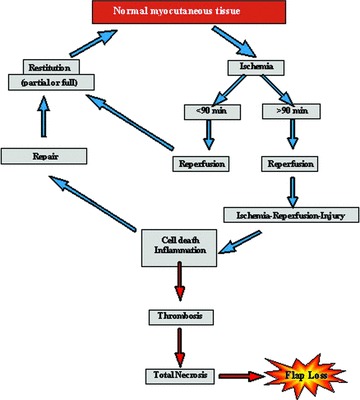
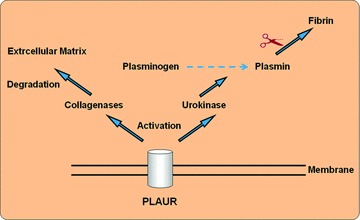
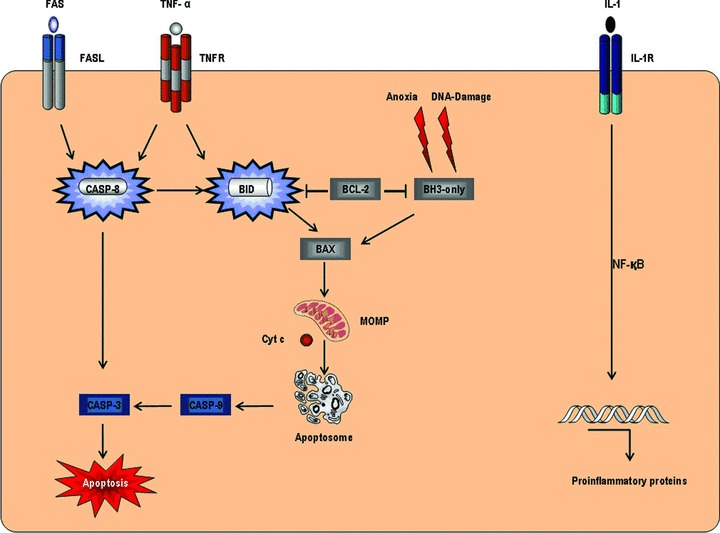
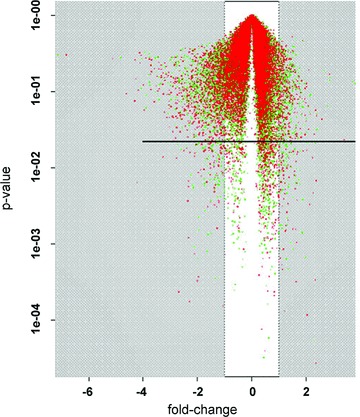
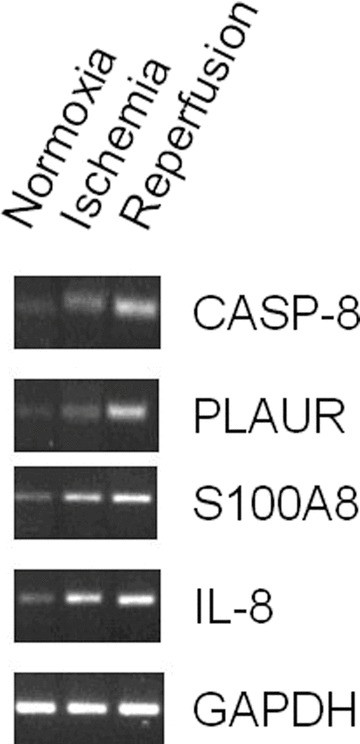
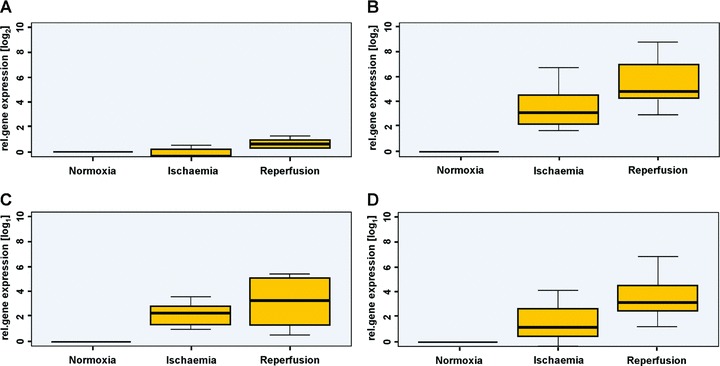
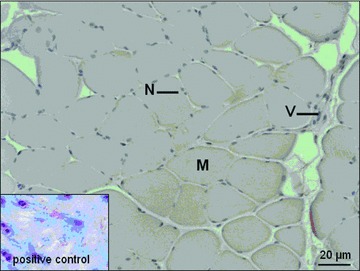
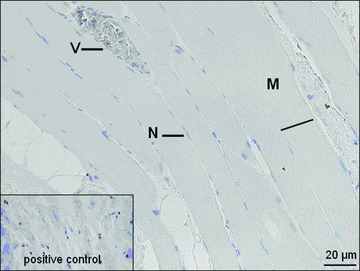
The aim of this study was to analyse various gene expression profiles of muscle tissue during normoxia, ischaemia and after reperfusion in human muscle free flaps, to gain an understanding of the occurring regulatory, inflammatory and apoptotic processes on a cellular and molecular basis. Eleven Caucasian patients with soft tissue defects needing coverage with microsurgical free muscle flaps were included in this study. In all patients, the muscle samples were taken from free myocutaneous flaps. The first sample was taken before induction of ischaemia in normoxia (I), another one after ischaemia (II), and the last one was taken after reperfusion (III). The samples were analysed using DNA-microarray, real-time-quantitative-PCR and immunohistochemistry. DNA-microarray analysis detected multiple, differentially regulated genes when comparing the different groups (I-III) with statistical significance. Comparing ischaemia (II) versus normoxia (I) educed 13 genes and comparing reperfusion (III) versus ischaemia (II) educed 19 genes. The comparison of reperfusion (III) versus normoxia (I) yielded 100 differentially regulated genes. Real-time-quantitative-PCR confirmed the results of the DNA-microarrays for a subset of four genes (CASP8, IL8, PLAUR and S100A8). This study shows that ischaemia and reperfusion induces alterations on the gene expression level in human muscle free flaps. Data may suggest that the four genes CASP8, IL8, PLAUR and S100A8 are of great importance in this context. We could not confirm the DNA-microarry and real-time-quantitative-PCR results on the protein level. Finally, these findings correspond with the surgeon's clinical experience that the accepted times of ischaemia, generally up to 90 min., are not sufficient to induce pathophysiological processes, which can ultimately lead to flap loss. When inflammatory and apoptotic proteins are expressed at high levels, flap damage might occur and flap loss is likely. The sole expression on mRNA level might explain why flap loss is unlikely.
本研究旨在分析人体肌肉游离皮瓣在常氧、缺血和再灌注过程中肌肉组织的各种基因表达谱,以了解细胞和分子基础上发生的调节、炎症和凋亡过程。本研究纳入 11 例因软组织缺损需要接受显微外科游离肌肉皮瓣覆盖的白种人患者。在所有患者中,肌肉样本均取自游离肌皮瓣。第一次取样是在常氧诱导缺血前(I 期),第二次取样是在缺血后(II 期),第三次取样是在再灌注后(III 期)。采用 DNA 微阵列、实时定量 PCR 和免疫组织化学方法对样本进行分析。DNA 微阵列分析发现,当将不同组(I-III)进行比较时,存在多个具有统计学意义的差异调节基因。与常氧(I 期)相比,缺血(II 期)比较出 13 个基因,再灌注(III 期)与缺血(II 期)比较出 19 个基因。与常氧(I 期)相比,再灌注(III 期)产生了 100 个差异调节基因。实时定量 PCR 对 DNA 微阵列的四个基因(CASP8、IL8、PLAUR 和 S100A8)子集的结果进行了验证。本研究表明,缺血和再灌注导致人体游离肌肉皮瓣基因表达水平发生改变。数据表明,在这种情况下,四个基因 CASP8、IL8、PLAUR 和 S100A8 非常重要。我们无法在蛋白质水平上证实 DNA 微阵列和实时定量 PCR 的结果。最后,这些发现与外科医生的临床经验相符,即通常接受的缺血时间为 90 分钟,不足以引起病理生理过程,最终可能导致皮瓣丧失。当炎症和凋亡蛋白高水平表达时,可能会发生皮瓣损伤,导致皮瓣丧失。仅仅在 mRNA 水平上的表达可能解释了为什么皮瓣丧失不太可能发生。