National Heart, Lung and Blood Institute, National Institutes of Health, 9000 Rockville Pike, Bethesda, MD 20892, USA.
Essays Biochem. 2010;47:85-98. doi: 10.1042/bse0470085.
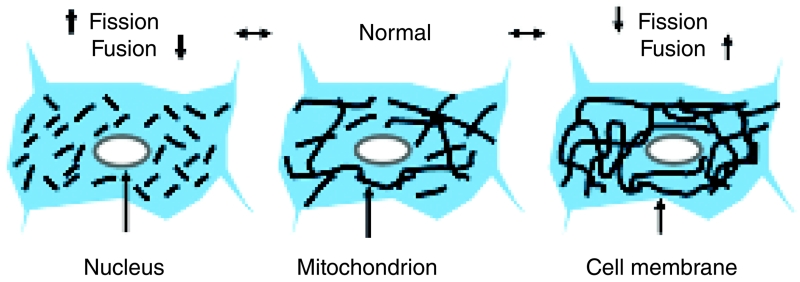
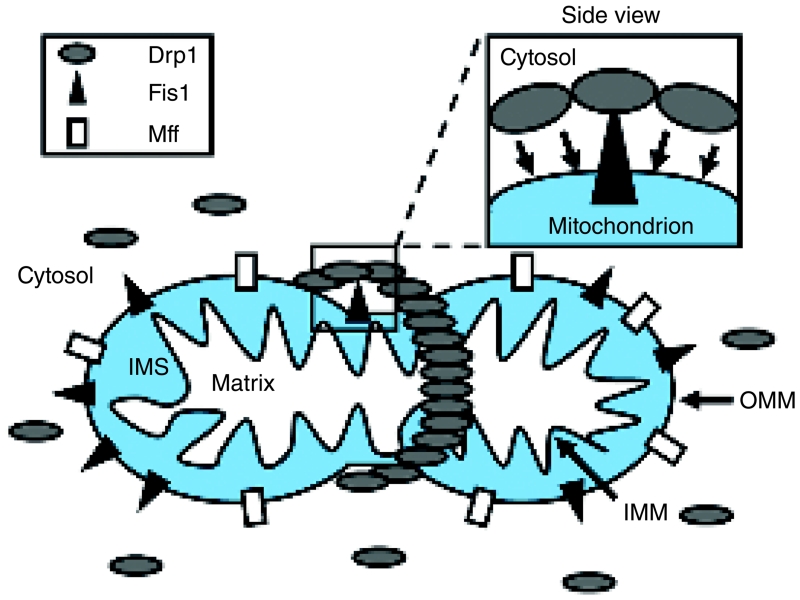
Mitochondria are highly dynamic cellular organelles, with the ability to change size, shape and position over the course of a few seconds. Many of these changes are related to the ability of mitochondria to undergo the highly co-ordinated processes of fission (division of a single organelle into two or more independent structures) or fusion (the opposing reaction). These actions occur simultaneously and continuously in many cell types, and the balance between them regulates the overall morphology of mitochondria within any given cell. Fission and fusion are active processes which require many specialized proteins, including mechanical enzymes that physically alter mitochondrial membranes, and adaptor proteins that regulate the interaction of these mechanical proteins with organelles. Although not fully understood, alterations in mitochondrial morphology appear to be involved in several activities that are crucial to the health of cells. In the present chapter we discuss the mechanisms behind mitochondrial fission and fusion, and discuss the implications of changes in organelle morphology during the life of a cell.
线粒体是高度动态的细胞细胞器,能够在几秒钟内改变大小、形状和位置。许多这些变化与线粒体能够进行高度协调的分裂(将单个细胞器分裂成两个或更多个独立结构)或融合(相反的反应)过程有关。这些动作在许多细胞类型中同时且连续地发生,它们之间的平衡调节了给定细胞内线粒体的整体形态。分裂和融合是需要许多专门蛋白质的活跃过程,包括物理改变线粒体膜的机械酶,以及调节这些机械蛋白与细胞器相互作用的衔接蛋白。尽管尚未完全理解,但线粒体形态的改变似乎与细胞健康至关重要的几种活动有关。在本章中,我们讨论了线粒体分裂和融合背后的机制,并讨论了细胞器形态在细胞生命过程中的变化的影响。