Department of Psychiatry, Yale University School of Medicine, Connecticut Mental Health Centre, Abraham Ribicoff Research Facility, 34 Park Street, New Haven, CT 06519, USA.
Prog Neurobiol. 2010 Nov;92(3):345-69. doi: 10.1016/j.pneurobio.2010.06.007. Epub 2010 Jun 15.
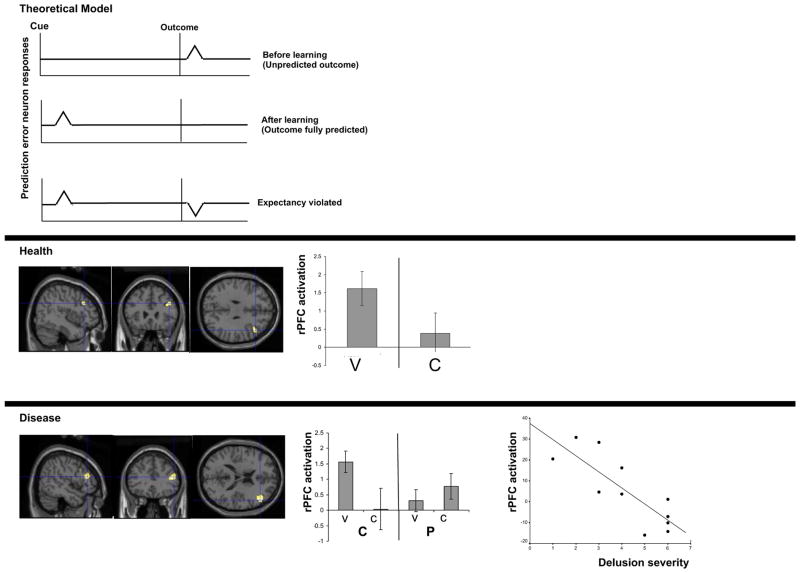
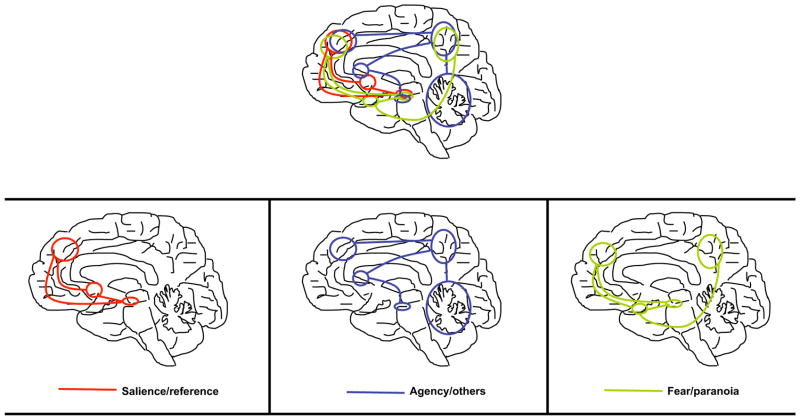
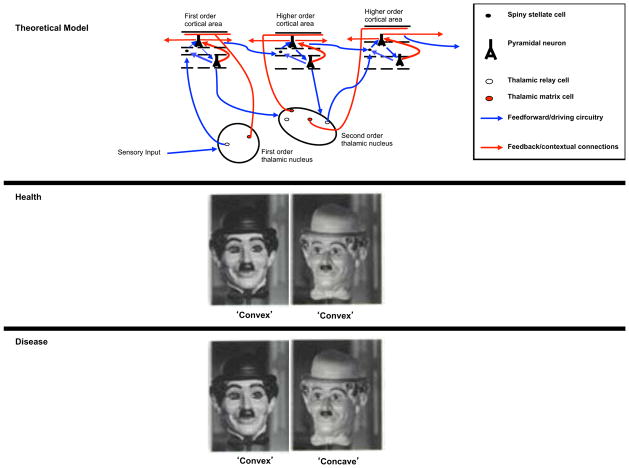
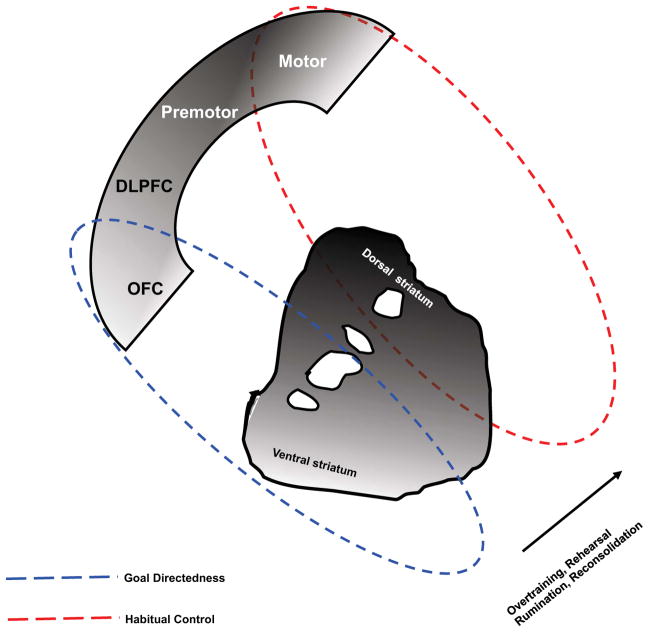
Delusions are the false and often incorrigible beliefs that can cause severe suffering in mental illness. We cannot yet explain them in terms of underlying neurobiological abnormalities. However, by drawing on recent advances in the biological, computational and psychological processes of reinforcement learning, memory, and perception it may be feasible to account for delusions in terms of cognition and brain function. The account focuses on a particular parameter, prediction error--the mismatch between expectation and experience--that provides a computational mechanism common to cortical hierarchies, fronto-striatal circuits and the amygdala as well as parietal cortices. We suggest that delusions result from aberrations in how brain circuits specify hierarchical predictions, and how they compute and respond to prediction errors. Defects in these fundamental brain mechanisms can vitiate perception, memory, bodily agency and social learning such that individuals with delusions experience an internal and external world that healthy individuals would find difficult to comprehend. The present model attempts to provide a framework through which we can build a mechanistic and translational understanding of these puzzling symptoms.
妄想是虚假的、常常不可纠正的信念,可在精神疾病中导致严重痛苦。我们目前尚无法从潜在的神经生物学异常来解释它们。但是,借助于强化学习、记忆和感知的生物学、计算和心理过程的最新进展,我们也许有可能根据认知和大脑功能来解释妄想。该解释主要关注一个特定的参数,即预测误差——期望与经验之间的不匹配,它为皮质层次结构、额纹状体回路和杏仁核以及顶叶皮层提供了一个常见的计算机制。我们认为,妄想是由于大脑回路如何指定层次化预测以及它们如何计算和响应预测误差而产生的。这些基本大脑机制的缺陷会损害感知、记忆、身体代理和社会学习,从而使妄想患者体验到健康个体难以理解的内部和外部世界。目前的模型试图提供一个框架,通过这个框架我们可以建立对这些令人困惑的症状的机制和转化理解。