Biomedical Image Computing Group, University of California San Francisco, San Francisco, CA 94143, USA.
Neuroimage. 2010 Nov 1;53(2):460-70. doi: 10.1016/j.neuroimage.2010.06.054. Epub 2010 Jun 30.
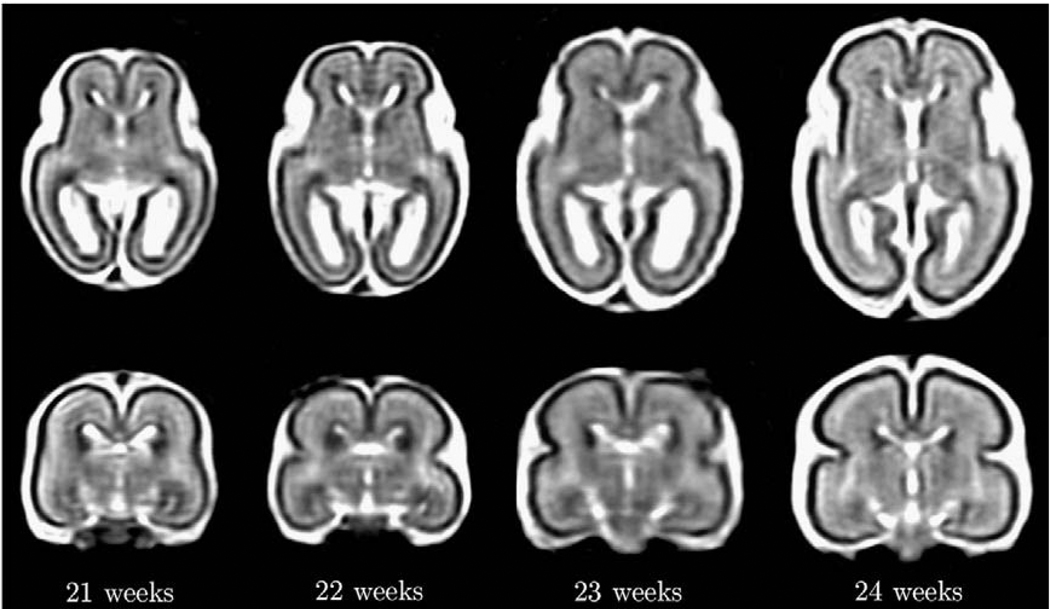
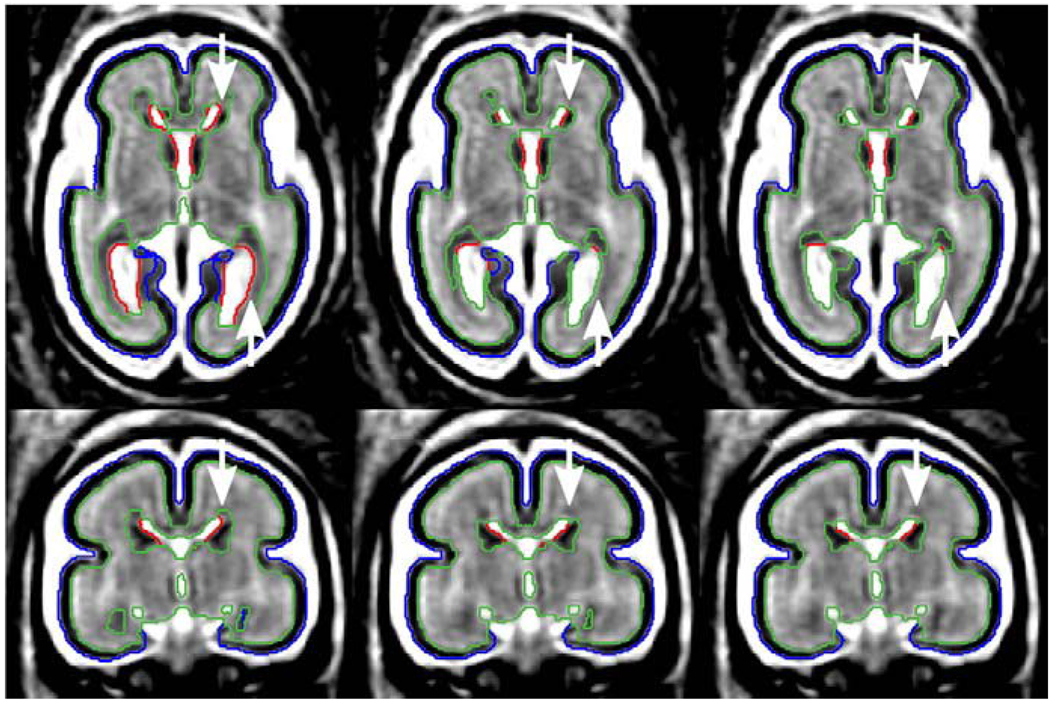
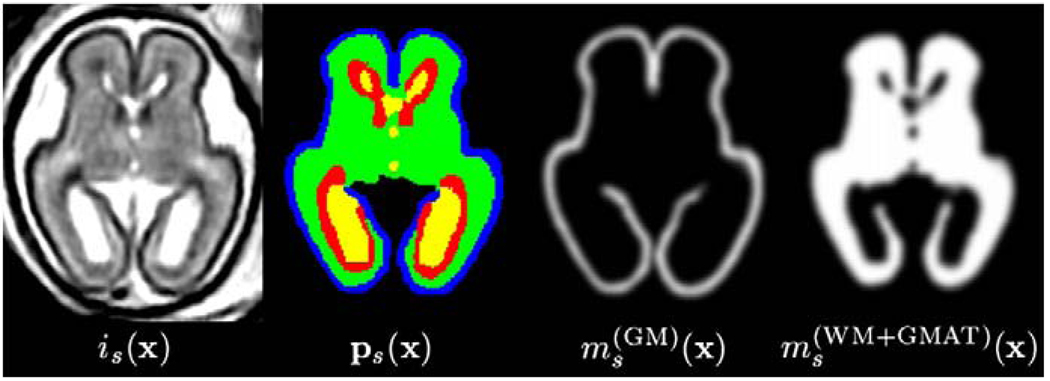
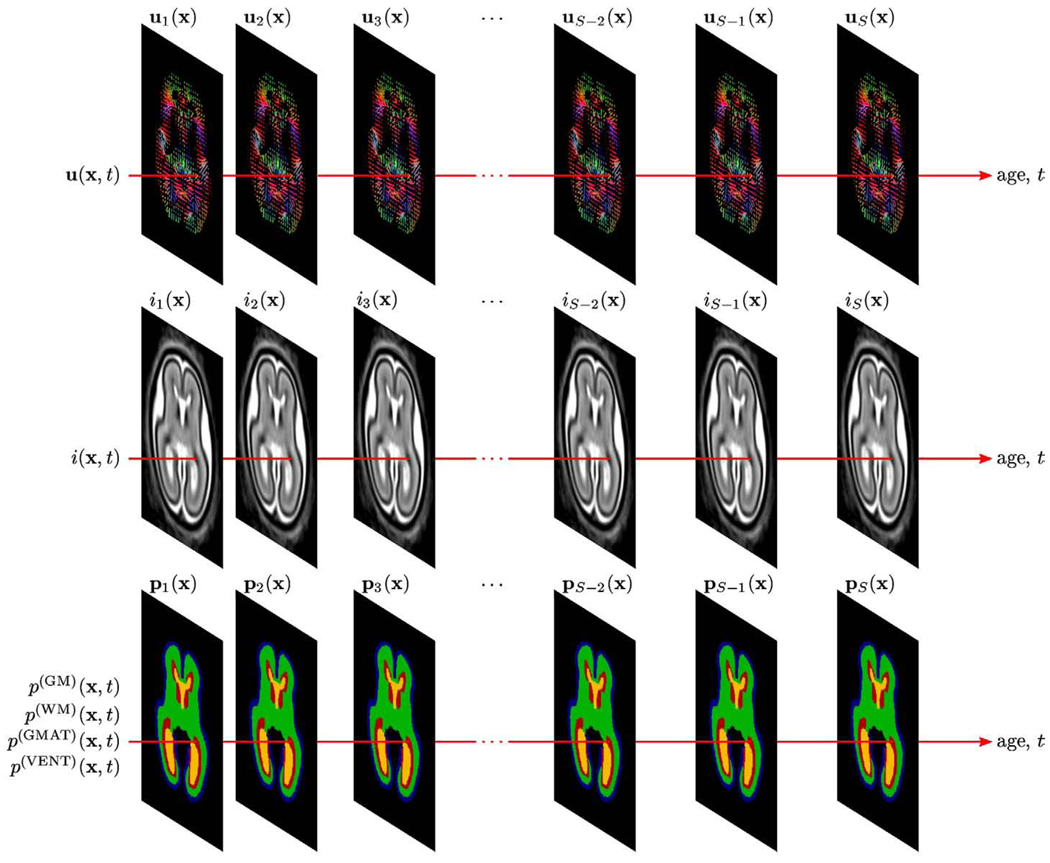
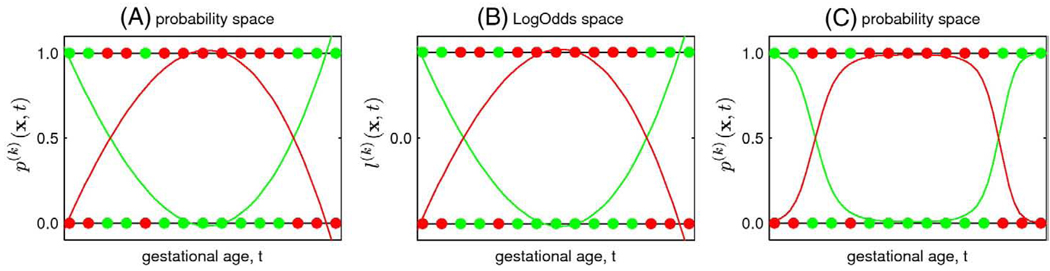
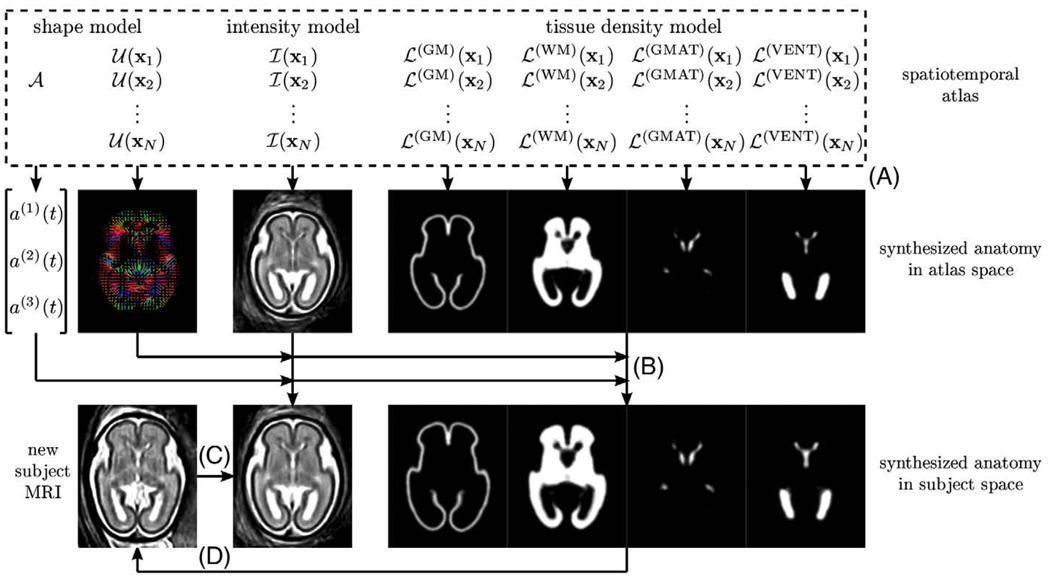
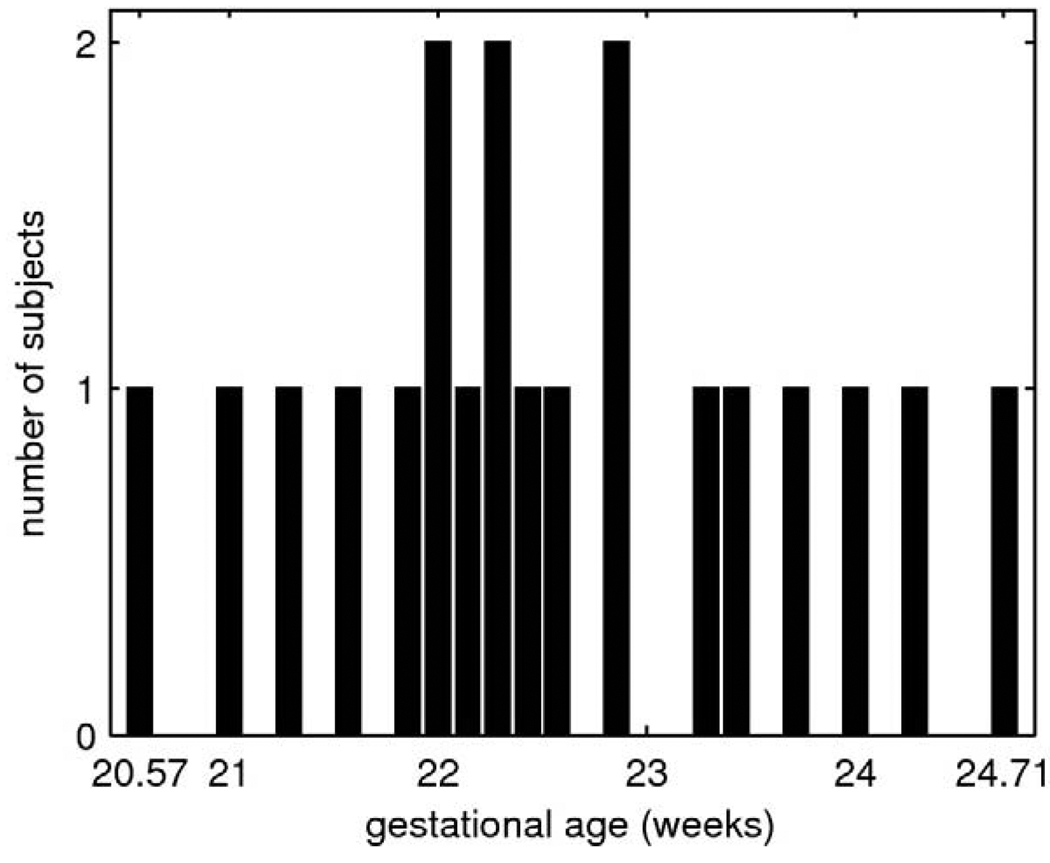
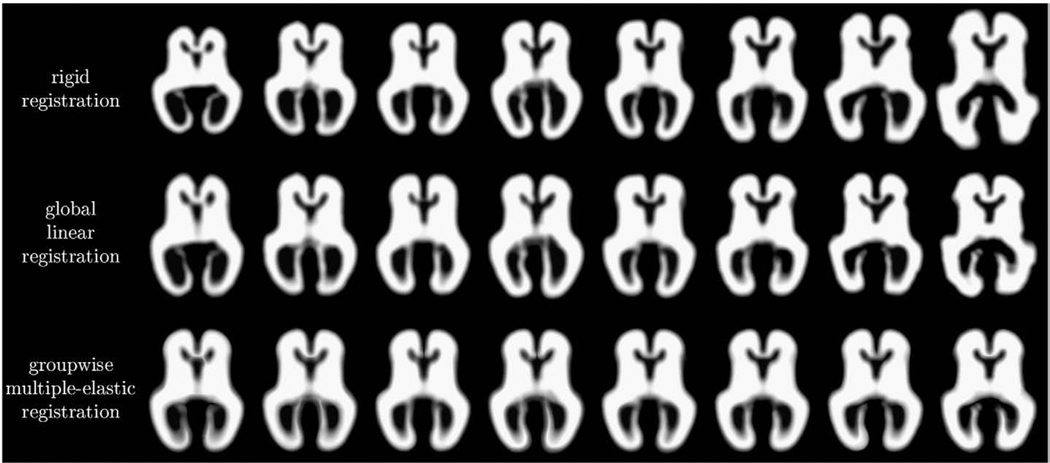
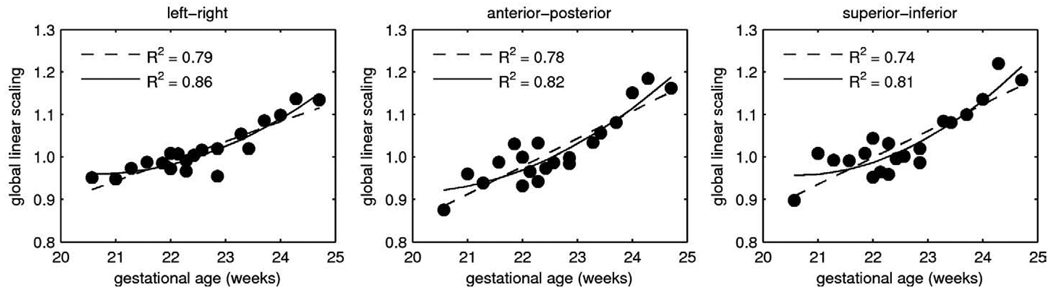
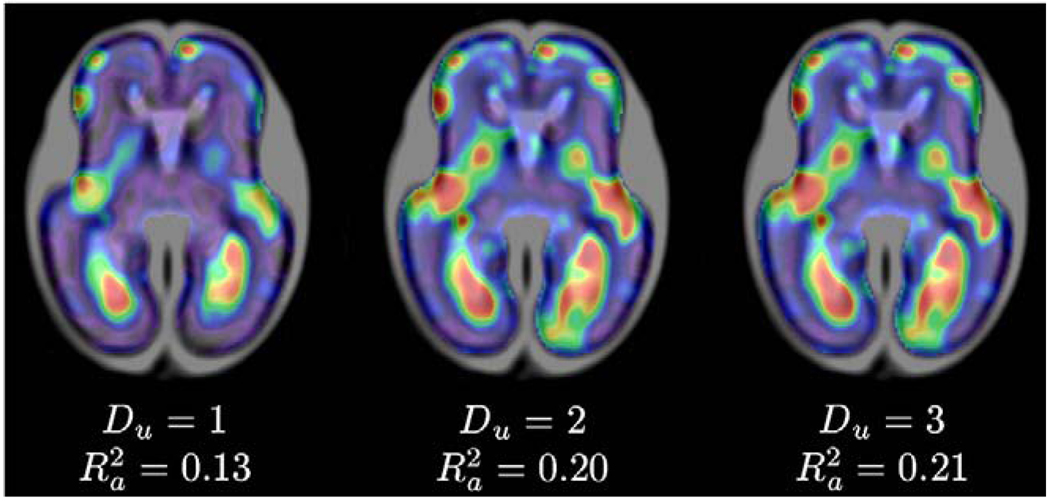
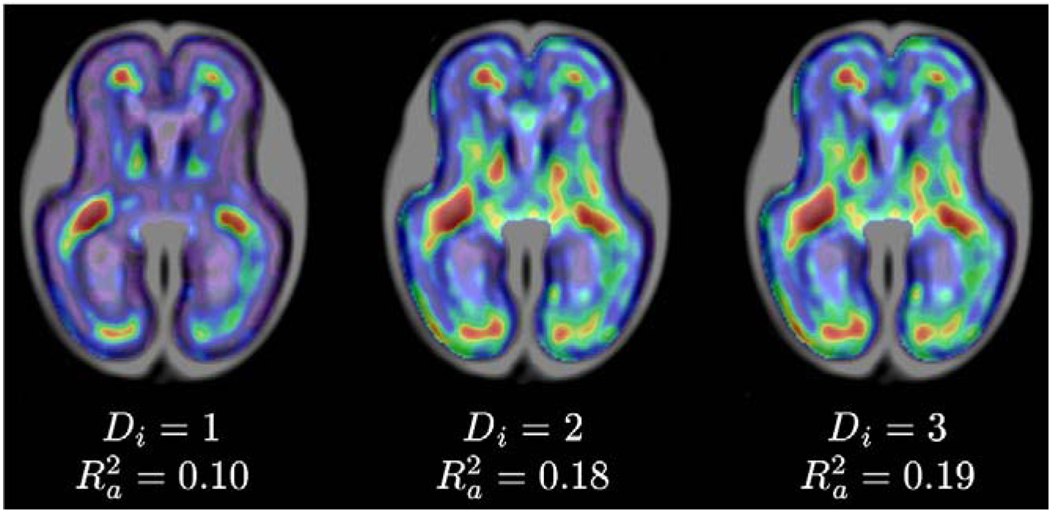
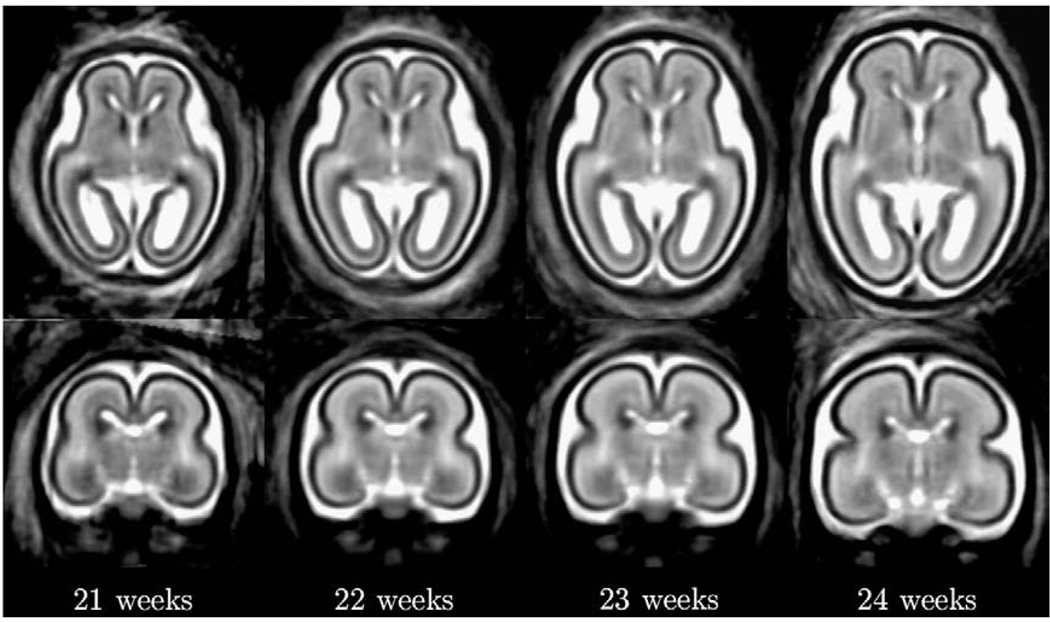
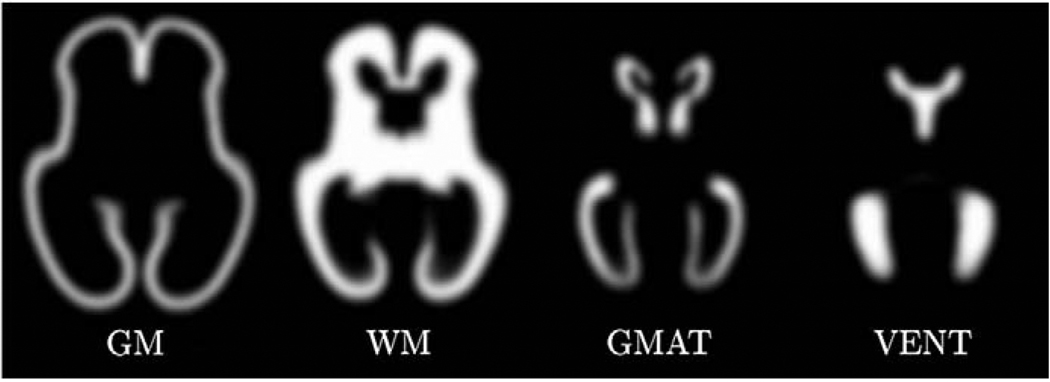
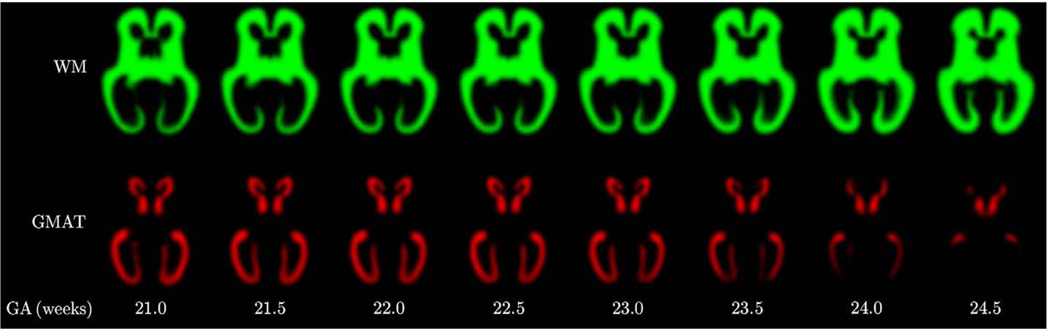
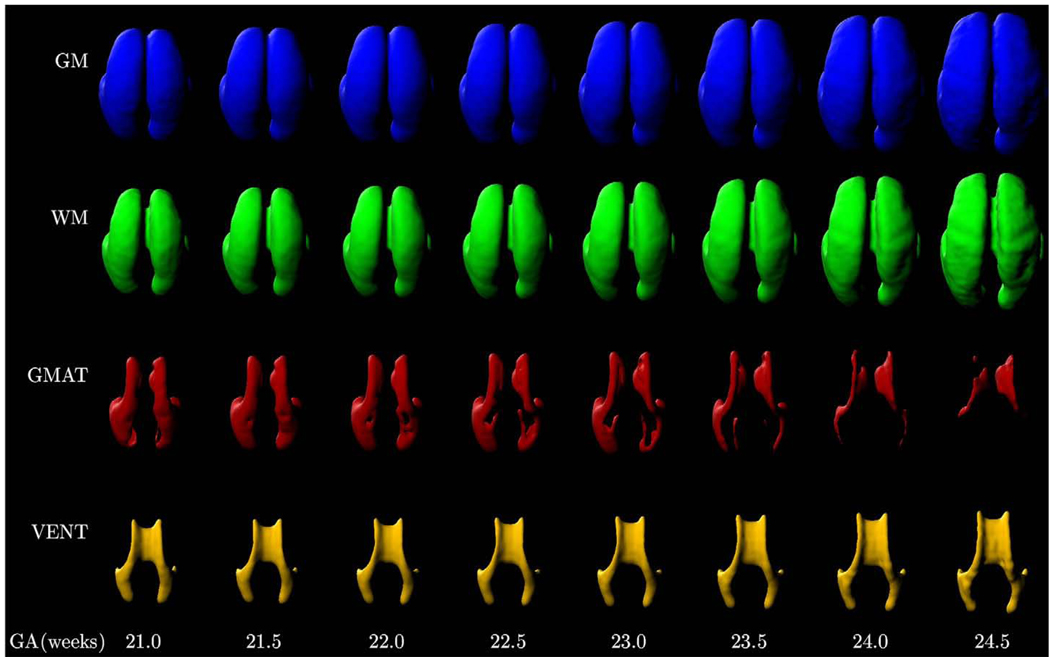
Modeling and analysis of MR images of the developing human brain is a challenge due to rapid changes in brain morphology and morphometry. We present an approach to the construction of a spatiotemporal atlas of the fetal brain with temporal models of MR intensity, tissue probability and shape changes. This spatiotemporal model is created from a set of reconstructed MR images of fetal subjects with different gestational ages. Groupwise registration of manual segmentations and voxelwise nonlinear modeling allow us to capture the appearance, disappearance and spatial variation of brain structures over time. Applying this model to atlas-based segmentation, we generate age-specific MR templates and tissue probability maps and use them to initialize automatic tissue delineation in new MR images. The choice of model parameters and the final performance are evaluated using clinical MR scans of young fetuses with gestational ages ranging from 20.57 to 24.71 weeks. Experimental results indicate that quadratic temporal models can correctly capture growth-related changes in the fetal brain anatomy and provide improvement in accuracy of atlas-based tissue segmentation.
由于人脑形态和形态测量学的快速变化,对发育中人类大脑的磁共振成像进行建模和分析是一项挑战。我们提出了一种构建胎儿大脑时空图谱的方法,该方法使用磁共振强度、组织概率和形状变化的时间模型。这个时空模型是由一组具有不同胎龄的胎儿受试者的重建磁共振图像创建的。手动分割的分组配准和体素非线性建模允许我们随时间捕获脑结构的出现、消失和空间变化。将该模型应用于基于图谱的分割,我们生成特定年龄的磁共振模板和组织概率图,并将其用于初始化新磁共振图像中的自动组织描绘。使用胎龄为 20.57 至 24.71 周的年轻胎儿的临床磁共振扫描评估模型参数的选择和最终性能。实验结果表明,二次时间模型可以正确捕获胎儿大脑解剖结构的生长相关变化,并提高基于图谱的组织分割的准确性。