Center for Human Nutrition, University of California Los Angeles, 90095, USA.
Cancer Prev Res (Phila). 2010 Aug;3(8):985-93. doi: 10.1158/1940-6207.CAPR-09-0210. Epub 2010 Jul 13.
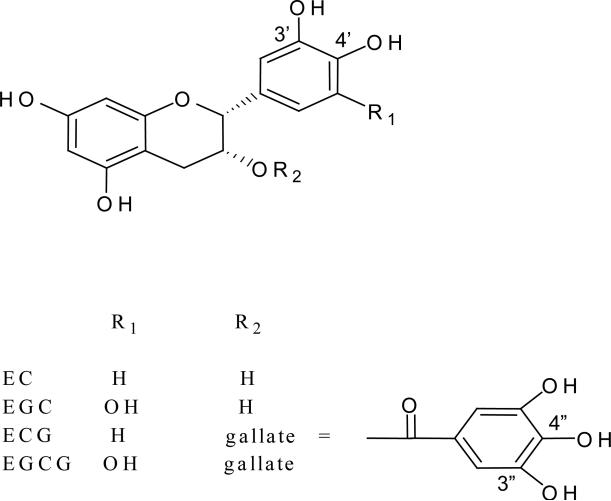
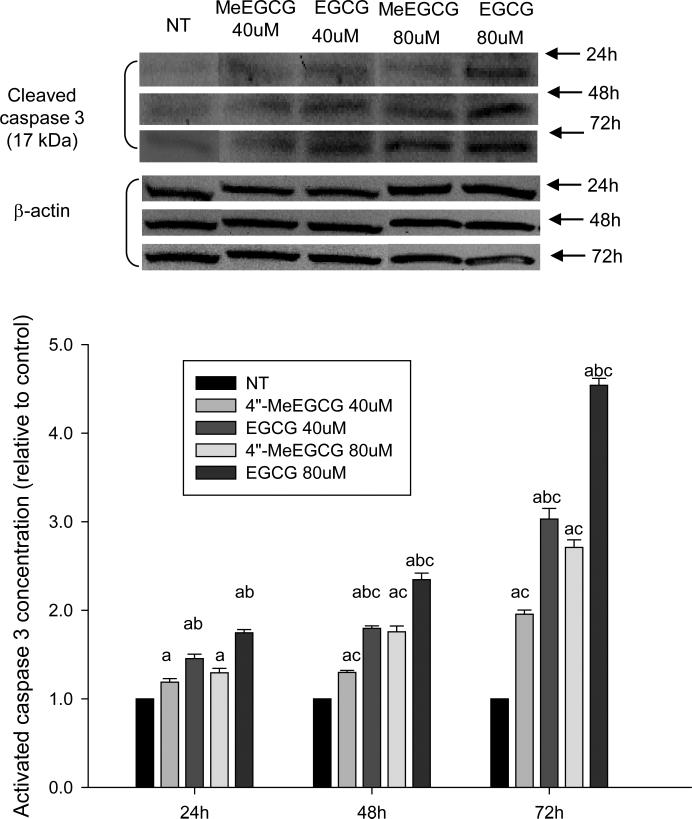
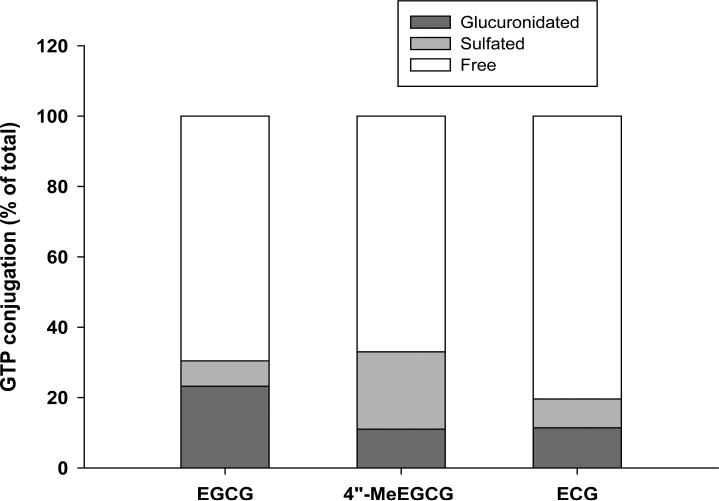
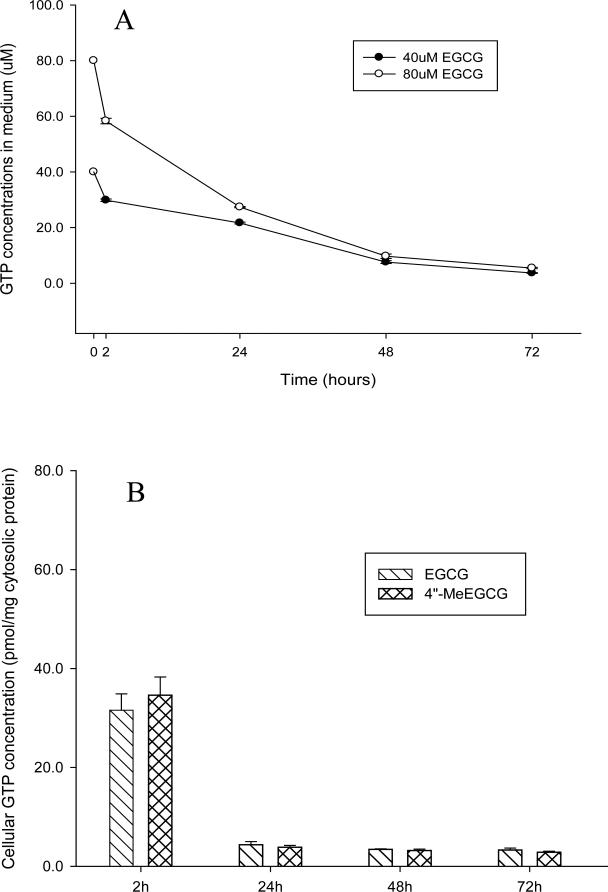
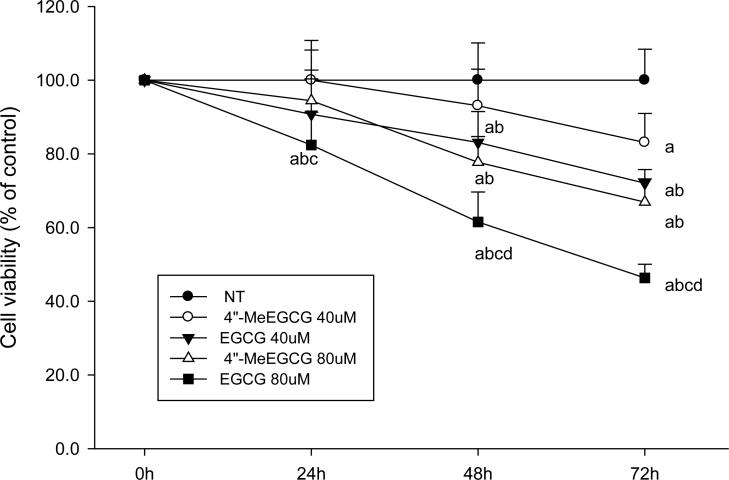
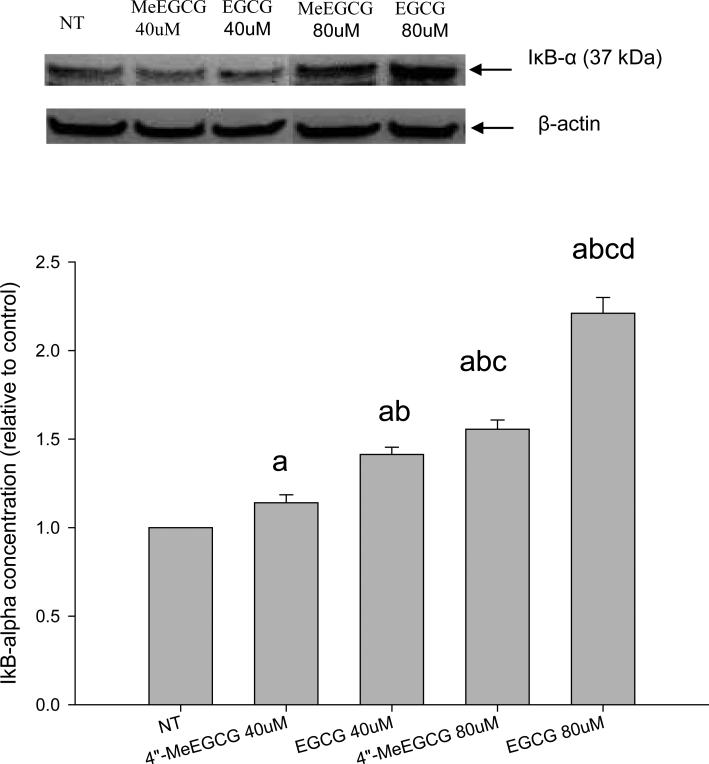
Epidemiologic, preclinical, and clinical trials suggest that green tea consumption may prevent prostate cancer through the action of green tea polyphenols including (-)-epigallocatechin-3-gallate (EGCG). To study the metabolism and bioactivity of green tea polyphenols in human prostate tissue, men with clinically localized prostate cancer consumed six cups of green tea (n = 8) daily or water (n = 9) for 3 to 6 weeks before undergoing radical prostatectomy. Using high-performance liquid chromatography, 4''-O-methyl EGCG (4''-MeEGCG) and EGCG were identified in comparable amounts, and (-)-epicatechin-3-gallate was identified in lower amounts in prostatectomy tissue from men consuming green tea (38.9 +/- 19.5, 42.1 +/- 32.4, and 17.8 +/- 10.1 pmol/g tissue, respectively). The majority of EGCG and other green tea polyphenols were not conjugated. Green tea polyphenols were not detected in prostate tissue or urine from men consuming water preoperatively. In the urine of men consuming green tea, 50% to 60% of both (-)-epigallocatechin and (-)-epicatechin were present in methylated form with 4'-O-MeEGC being the major methylated form of (-)-epigallocatechin. When incubated with EGCG, LNCaP prostate cancer cells were able to methylate EGCG to 4''-MeEGCG. The capacity of 4''-MeEGCG to inhibit proliferation and NF-kappaB activation and induce apoptosis in LNCaP cells was decreased significantly compared with EGCG. In summary, methylated and nonmethylated forms of EGCG are detectable in prostate tissue following a short-term green tea intervention, and the methylation status of EGCG may potentially modulate its preventive effect on prostate cancer, possibly based on genetic polymorphisms of catechol O-methyltransferase.
流行病学、临床前和临床试验表明,绿茶的消费可能通过绿茶多酚的作用预防前列腺癌,包括(-)-表没食子儿茶素-3-没食子酸酯(EGCG)。为了研究绿茶多酚在人前列腺组织中的代谢和生物活性,8 名患有局限性前列腺癌的男性在接受根治性前列腺切除术之前,连续 3 至 6 周每天饮用 6 杯绿茶(n = 8)或水(n = 9)。使用高效液相色谱法,在饮用绿茶的男性的前列腺组织中,以类似的量鉴定出 4''-O-甲基 EGCG(4''-MeEGCG)和 EGCG,并且以较低的量鉴定出(-)-表儿茶素-3-没食子酸酯(17.8 ± 10.1 pmol/g 组织)。EGCG 和其他绿茶多酚的大部分没有被共轭。在术前饮用绿茶的男性的前列腺组织或尿液中未检测到绿茶多酚。在饮用绿茶的男性的尿液中,50%至 60%的(-)-表没食子儿茶素和(-)-表儿茶素以甲基化形式存在,其中 4'-O-MeEGC 是(-)-表没食子儿茶素的主要甲基化形式。当用 EGCG 孵育时,LNCaP 前列腺癌细胞能够将 EGCG 甲基化为 4''-MeEGCG。与 EGCG 相比,4''-MeEGCG 抑制 LNCaP 细胞增殖和 NF-kappaB 激活并诱导细胞凋亡的能力显著降低。总之,在短期绿茶干预后可在前列腺组织中检测到 EGCG 的甲基化和非甲基化形式,EGCG 的甲基化状态可能潜在地调节其对前列腺癌的预防作用,这可能基于儿茶酚-O-甲基转移酶的遗传多态性。