Cellular and Developmental Neurobiology Section, National Institute of Neurological Disorders and Stroke, National Institutes of Health, Bethesda, MD 20892, USA.
J Neuroendocrinol. 2010 Jul;22(7):743-53. doi: 10.1111/j.1365-2826.2010.02034.x.
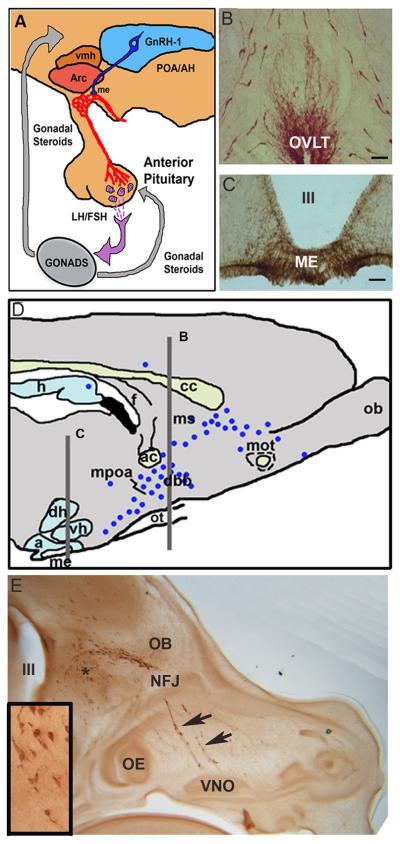
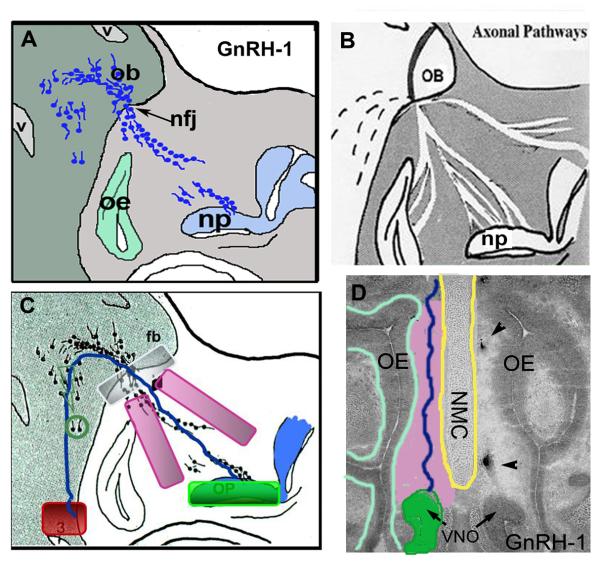
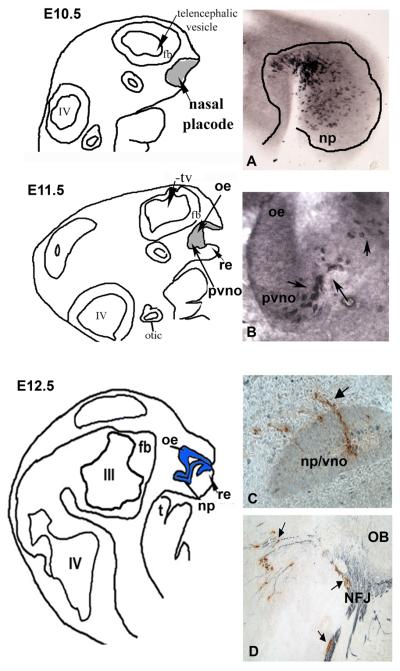
Gonadotrophin-releasing hormone-1 (GnRH-1) is essential for mammalian reproduction, controlling release of gonadotrophins from the anterior pituitary. GnRH-1 neurones migrate from the nasal placode into the forebrain during development. Although first located within the nasal placode, the embryonic origin/lineage of GnRH-1 neurones is still unclear. The migration of GnRH-1 cells is the best characterised example of neurophilic/axophilic migration, with the cells using a subset of olfactory-derived vomeronasal axons as their pathway and numerous molecules to guide their movement into the forebrain. Exciting work in this area is beginning to identify intersecting pathways that orchestrate the movement of these critical neuroendocrine cells into the central nervous system, both spatially and temporally, through a diverse and changing terrain. Once within the forebrain, little is known about how the axons target the median eminence and ultimately secrete GnRH-1 in a pulsatile fashion.
促性腺激素释放激素 1(GnRH-1)对于哺乳动物的生殖至关重要,它可以控制垂体前叶释放促性腺激素。GnRH-1 神经元在发育过程中从鼻板迁移到前脑。尽管 GnRH-1 神经元最初位于鼻板内,但它们的胚胎起源/谱系仍不清楚。GnRH-1 细胞的迁移是神经亲和性/轴突亲和性迁移的最佳特征范例,细胞使用嗅球衍生的嗅球轴突的子集作为其途径,并使用许多分子来引导它们进入前脑的运动。这一领域令人兴奋的工作开始确定交叉途径,通过多样化和不断变化的地形,在空间和时间上协调这些关键神经内分泌细胞进入中枢神经系统的运动。一旦进入前脑,就很少有人知道轴突如何靶向正中隆起,以及最终如何以脉冲方式分泌 GnRH-1。