Cellular Neurology Unit, Neurogenetics Branch, National Institute of Neurological Disorders and Stroke and Laboratory of Molecular Biology, National Institute of Diabetes and Digestive and Kidney Diseases, National Institutes of Health, Bethesda, MD 20892, USA.
Mol Biol Cell. 2010 Oct 1;21(19):3293-303. doi: 10.1091/mbc.E09-10-0879. Epub 2010 Aug 18.
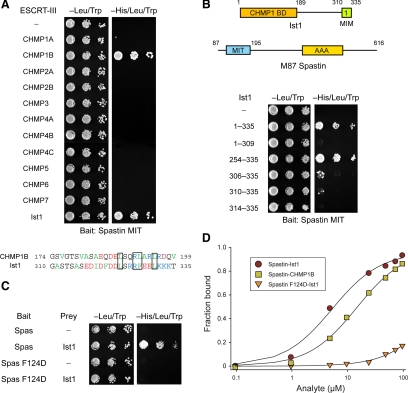
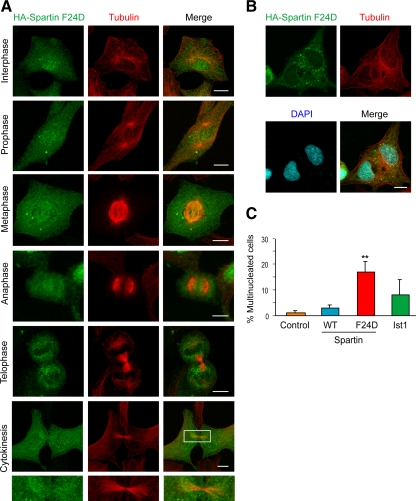
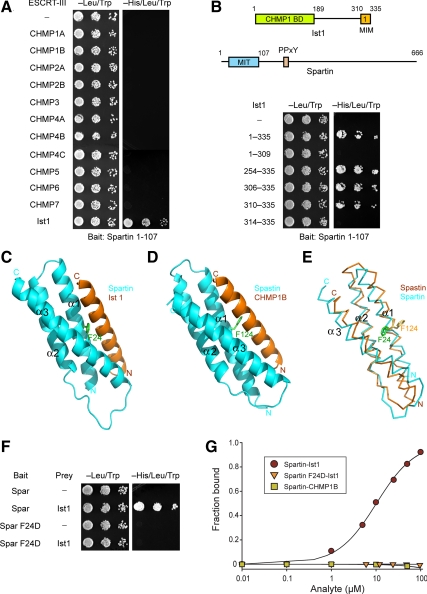
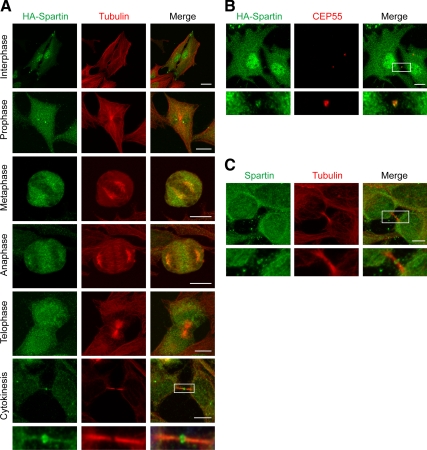
Hereditary spastic paraplegias (HSPs, SPG1-46) are inherited neurological disorders characterized by lower extremity spastic weakness. Loss-of-function SPG20 gene mutations cause an autosomal recessive HSP known as Troyer syndrome. The SPG20 protein spartin localizes to lipid droplets and endosomes, and it interacts with tail interacting protein 47 (TIP47) as well as the ubiquitin E3 ligases atrophin-1-interacting protein (AIP)4 and AIP5. Spartin harbors a domain contained within microtubule-interacting and trafficking molecules (MIT) at its N-terminus, and most proteins with MIT domains interact with specific ESCRT-III proteins. Using yeast two-hybrid and in vitro surface plasmon resonance assays, we demonstrate that the spartin MIT domain binds with micromolar affinity to the endosomal sorting complex required for transport (ESCRT)-III protein increased sodium tolerance (Ist)1 but not to ESCRT-III proteins charged multivesicular body proteins 1-7. Spartin colocalizes with Ist1 at the midbody, and depletion of Ist1 in cells by small interfering RNA significantly decreases the number of cells where spartin is present at midbodies. Depletion of spartin does not affect Ist1 localization to midbodies but markedly impairs cytokinesis. A structure-based amino acid substitution in the spartin MIT domain (F24D) blocks the spartin-Ist1 interaction. Spartin F24D does not localize to the midbody and acts in a dominant-negative manner to impair cytokinesis. These data suggest that Ist1 interaction is important for spartin recruitment to the midbody and that spartin participates in cytokinesis.
遗传性痉挛性截瘫(HSPs,SPG1-46)是一种遗传性神经系统疾病,其特征为下肢痉挛性无力。失活功能的 SPG20 基因突变导致常染色体隐性遗传 HSP,即 Troyer 综合征。SPG20 蛋白 spartin 定位于脂滴和内体,与尾相互作用蛋白 47(TIP47)以及泛素 E3 连接酶 atrophin-1 相互作用蛋白(AIP)4 和 AIP5 相互作用。Spartin 在其 N 端包含一个微管相互作用和运输分子(MIT)结构域,大多数具有 MIT 结构域的蛋白质与特定的 ESCRT-III 蛋白相互作用。通过酵母双杂交和体外表面等离子体共振分析,我们证明 spartin MIT 结构域以微摩尔亲和力与内体分选复合物必需的运输蛋白(ESCRT-III)蛋白 Ist1 结合,但不与 ESCRT-III 蛋白 charged multivesicular body proteins 1-7 结合。Spartin 与 Ist1 在中体共定位,并用小干扰 RNA 耗竭细胞中的 Ist1 会显著减少 spartin 存在于中体的细胞数量。Spartin 的耗竭不影响 Ist1 向中体的定位,但显著损害胞质分裂。基于结构的 spartin MIT 结构域(F24D)氨基酸取代会阻断 spartin-Ist1 相互作用。Spartin F24D 不会定位于中体,并且以显性负性方式作用,从而损害胞质分裂。这些数据表明,Ist1 相互作用对于 spartin 向中体的募集很重要,并且 spartin 参与胞质分裂。