Molecular Cell Biomechanics Laboratory, Department of Bioengineering, University of California, Berkeley, California, United States of America.
PLoS One. 2010 Aug 10;5(8):e12097. doi: 10.1371/journal.pone.0012097.
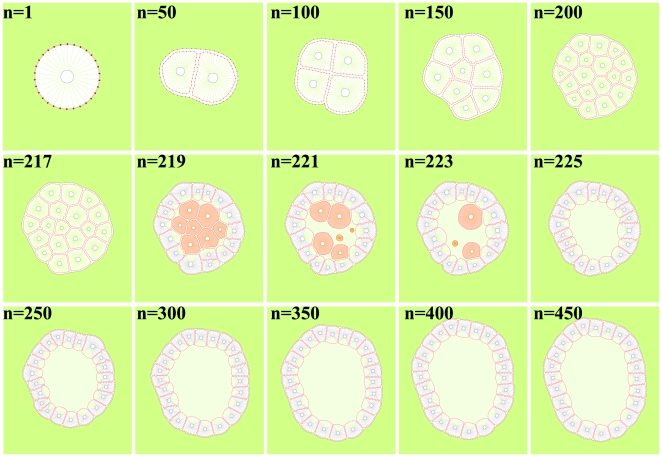
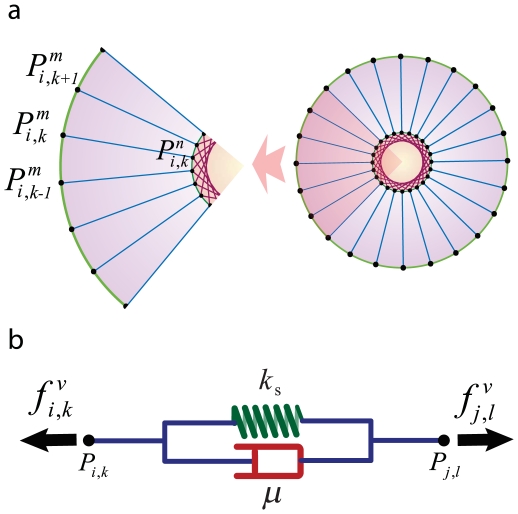
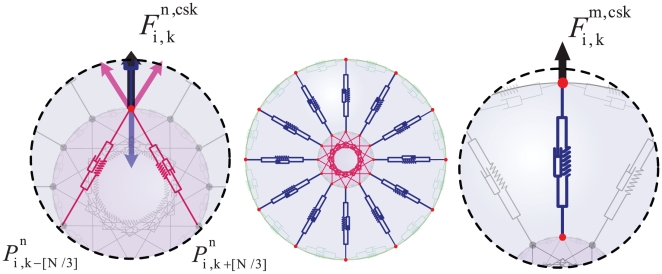
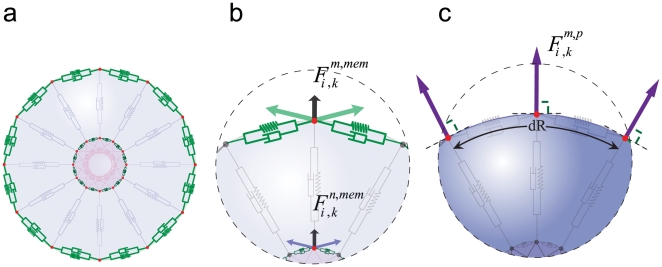
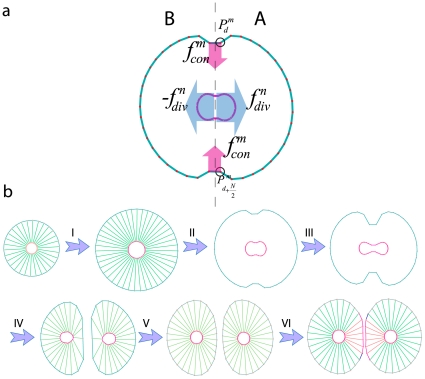
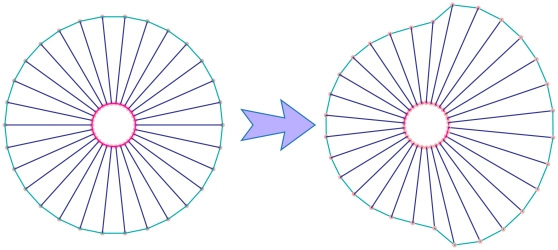
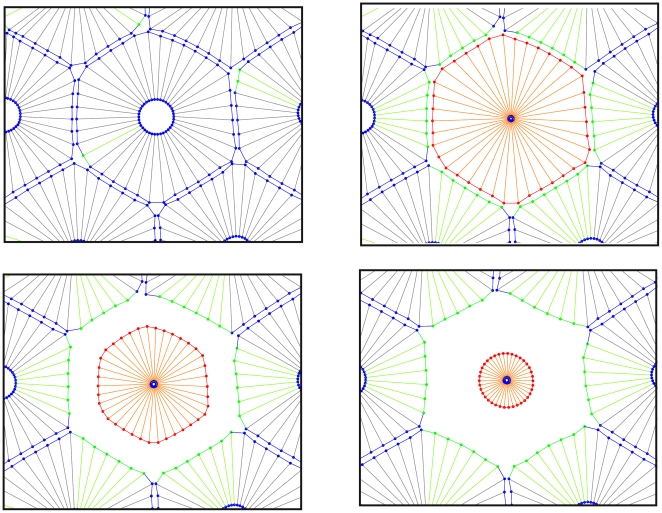
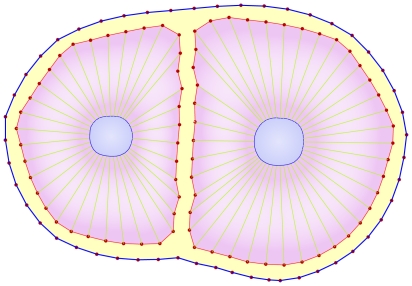
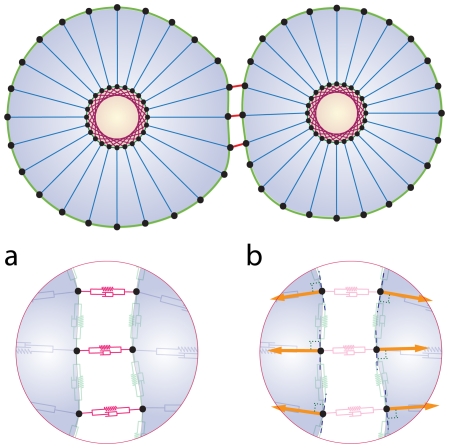
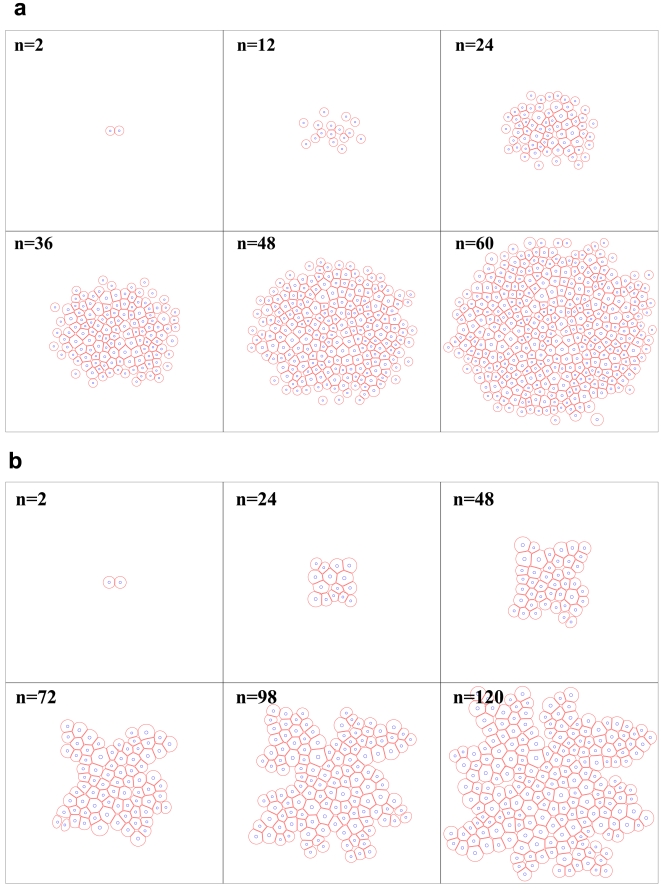
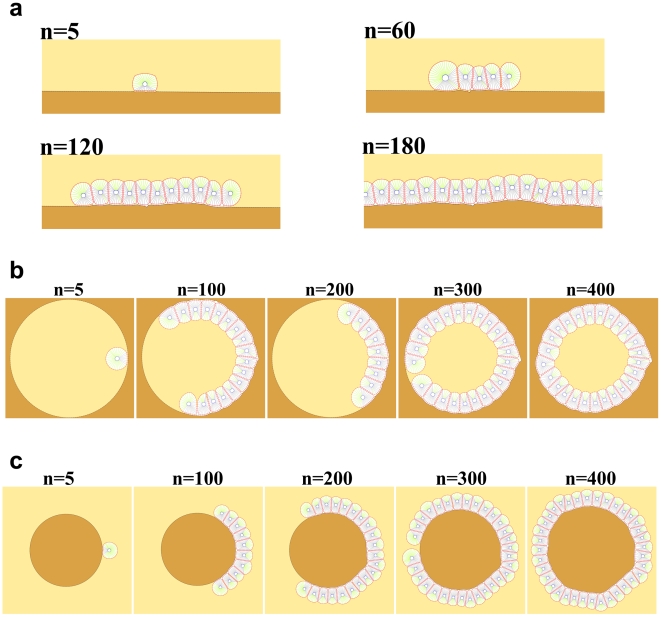
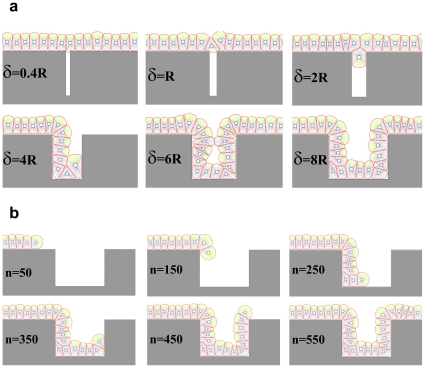
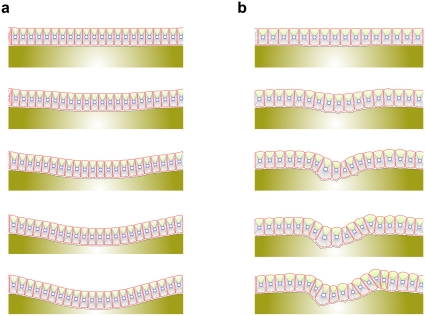
Understanding the biomechanical properties and the effect of biomechanical force on epithelial cells is key to understanding how epithelial cells form uniquely shaped structures in two or three-dimensional space. Nevertheless, with the limitations and challenges posed by biological experiments at this scale, it becomes advantageous to use mathematical and 'in silico' (computational) models as an alternate solution. This paper introduces a single-cell-based model representing the cross section of a typical tissue. Each cell in this model is an individual unit containing several sub-cellular elements, such as the elastic plasma membrane, enclosed viscoelastic elements that play the role of cytoskeleton, and the viscoelastic elements of the cell nucleus. The cell membrane is divided into segments where each segment (or point) incorporates the cell's interaction and communication with other cells and its environment. The model is capable of simulating how cells cooperate and contribute to the overall structure and function of a particular tissue; it mimics many aspects of cellular behavior such as cell growth, division, apoptosis and polarization. The model allows for investigation of the biomechanical properties of cells, cell-cell interactions, effect of environment on cellular clusters, and how individual cells work together and contribute to the structure and function of a particular tissue. To evaluate the current approach in modeling different topologies of growing tissues in distinct biochemical conditions of the surrounding media, we model several key cellular phenomena, namely monolayer cell culture, effects of adhesion intensity, growth of epithelial cell through interaction with extra-cellular matrix (ECM), effects of a gap in the ECM, tensegrity and tissue morphogenesis and formation of hollow epithelial acini. The proposed computational model enables one to isolate the effects of biomechanical properties of individual cells and the communication between cells and their microenvironment while simultaneously allowing for the formation of clusters or sheets of cells that act together as one complex tissue.
了解生物力学特性以及生物力学对上皮细胞的影响对于理解上皮细胞如何在二维或三维空间中形成独特形状的结构至关重要。然而,由于在这种规模的生物学实验中存在限制和挑战,使用数学和“计算机模拟”(计算)模型作为替代解决方案变得具有优势。本文引入了一个基于单细胞的模型,代表了典型组织的横截面。该模型中的每个细胞都是一个包含几个亚细胞元件的独立单元,例如弹性质膜、起细胞骨架作用的粘性弹性元件以及细胞核的粘性弹性元件。细胞膜被分为若干段,每段(或点)都包含细胞与其他细胞及其环境的相互作用和通讯。该模型能够模拟细胞如何合作并为特定组织的整体结构和功能做出贡献;它模拟了细胞行为的许多方面,例如细胞生长、分裂、凋亡和极化。该模型允许研究细胞的生物力学特性、细胞-细胞相互作用、环境对细胞簇的影响,以及单个细胞如何协同工作并为特定组织的结构和功能做出贡献。为了评估当前在建模不同拓扑结构的生长组织的方法,我们模拟了几种关键的细胞现象,即单层细胞培养、附着强度的影响、通过与细胞外基质(ECM)相互作用生长的上皮细胞、ECM 中的间隙的影响、张力整合和组织形态发生以及中空上皮腺泡的形成。所提出的计算模型能够分离单个细胞的生物力学特性以及细胞与其微环境之间的通讯的影响,同时允许形成作为一个复杂组织一起作用的细胞簇或薄片。