Medical Genetics Division, Shizuoka Cancer Center Research Institute, Shizuoka, Japan.
PLoS One. 2010 Oct 8;5(10):e13247. doi: 10.1371/journal.pone.0013247.
Exosomes play a major role in cell-to-cell communication, targeting cells to transfer exosomal molecules including proteins, mRNAs, and microRNAs (miRNAs) by an endocytosis-like pathway. miRNAs are small noncoding RNA molecules on average 22 nucleotides in length that regulate numerous biological processes including cancer pathogenesis and mediate gene down-regulation by targeting mRNAs to induce RNA degradation and/or interfering with translation. Recent reports imply that miRNAs can be stably detected in circulating plasma and serum since miRNAs are packaged by exosomes to be protected from RNA degradation. Thus, profiling exosomal miRNAs are in need to clarify intercellular signaling and discover a novel disease marker as well.
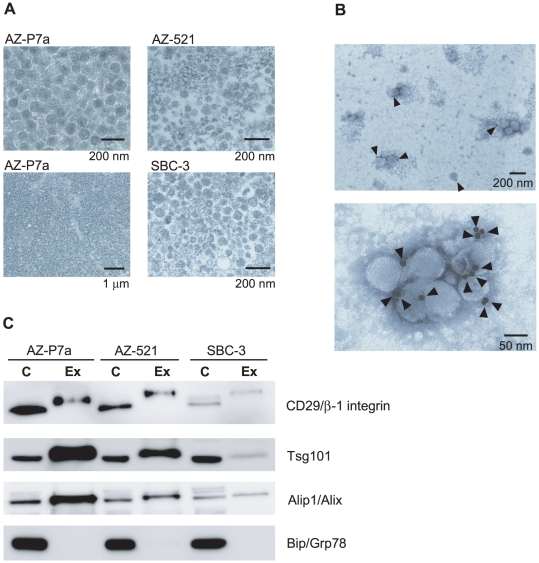
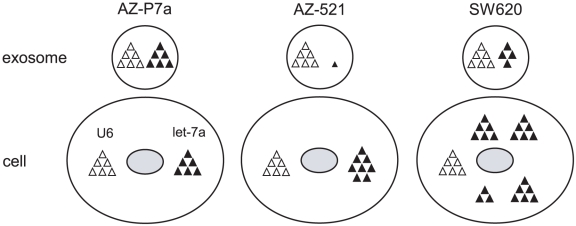
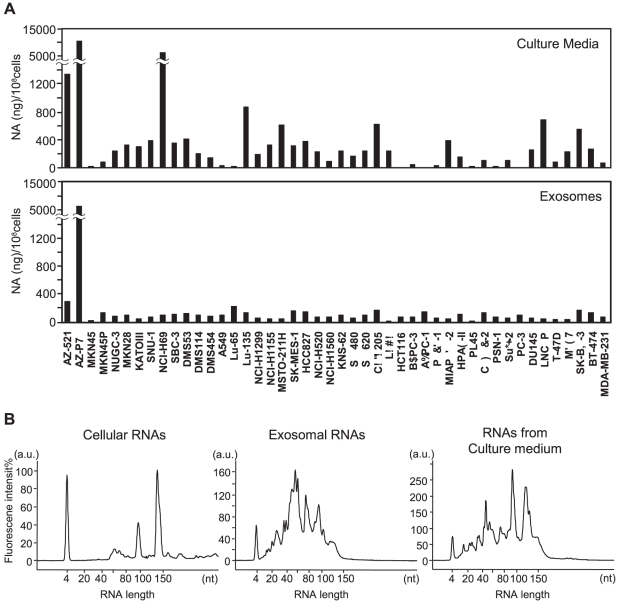
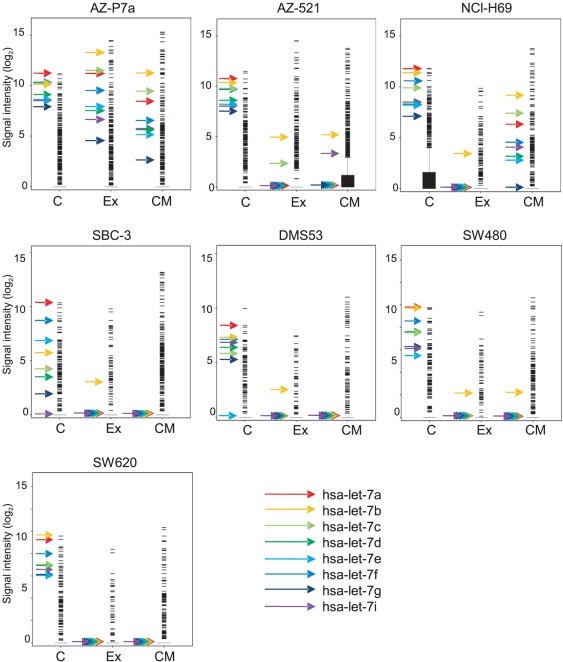
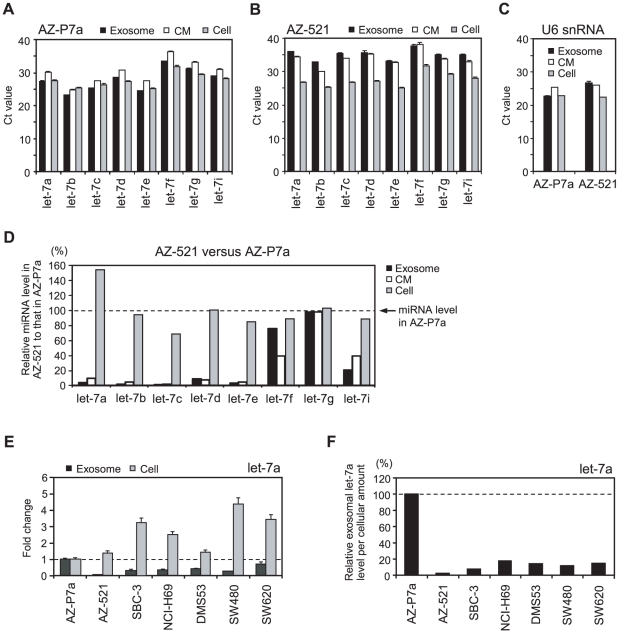
METHODOLOGY/PRINCIPAL FINDINGS: Exosomes were isolated from cultured cancer cell lines and their quality was validated by analyses of transmission electron microscopy and western blotting. One of the cell lines tested, a metastatic gastric cancer cell line, AZ-P7a, showed the highest RNA yield in the released exosomes and distinctive shape in morphology. In addition, RNAs were isolated from cells and culture media, and profiles of these three miRNA fractions were obtained using microarray analysis. By comparing signal intensities of microarray data and the following validation using RT-PCR analysis, we found that let-7 miRNA family was abundant in both the intracellular and extracellular fractions from AZ-P7a cells, while low metastatic AZ-521, the parental cell line of AZ-P7a, as well as other cancer cell lines showed no such propensity.
CONCLUSIONS/SIGNIFICANCE: The enrichment of let-7 miRNA family in the extracellular fractions, particularly, in the exosomes from AZ-P7a cells may reflect their oncogenic characteristics including tumorigenesis and metastasis. Since let-7 miRNAs generally play a tumor-suppressive role as targeting oncogenes such as RAS and HMGA2, our results suggest that AZ-P7a cells release let-7 miRNAs via exosomes into the extracellular environment to maintain their oncogenesis.
外泌体在细胞间通讯中发挥着重要作用,通过类似内吞作用的途径靶向细胞传递包括蛋白质、mRNA 和 microRNAs(miRNAs)在内的外泌体分子。miRNAs 是平均长度为 22 个核苷酸的小非编码 RNA 分子,可调节包括癌症发病机制在内的多种生物学过程,并通过靶向 mRNAs 诱导 RNA 降解和/或干扰翻译来调节基因下调。最近的报告表明,miRNAs 可以在循环血浆和血清中稳定检测到,因为 miRNA 被外泌体包裹以防止 RNA 降解。因此,对 exosomal miRNAs 的分析有助于阐明细胞间信号传递并发现新的疾病标志物。
方法/主要发现:从培养的癌细胞系中分离出外泌体,并通过透射电子显微镜和 Western blot 分析验证其质量。在测试的细胞系之一,转移性胃癌细胞系 AZ-P7a 中,释放的外泌体中显示出最高的 RNA 产量和独特的形态。此外,从细胞和培养介质中分离出 RNA,并使用微阵列分析获得这三种 miRNA 馏分的图谱。通过比较微阵列数据的信号强度和随后使用 RT-PCR 分析的验证,我们发现 let-7 miRNA 家族在 AZ-P7a 细胞的细胞内和细胞外部分都很丰富,而低转移性 AZ-521(AZ-P7a 的亲本细胞系)以及其他癌细胞系则没有这种倾向。
结论/意义:AZ-P7a 细胞的细胞外部分,特别是外泌体中 let-7 miRNA 家族的富集可能反映了它们的致癌特征,包括肿瘤发生和转移。由于 let-7 miRNAs 通常作为靶向癌基因(如 RAS 和 HMGA2)的肿瘤抑制因子发挥作用,我们的结果表明,AZ-P7a 细胞通过外泌体将 let-7 miRNAs 释放到细胞外环境中,以维持其肿瘤发生。