Department of Biology, Universidade Federal de São Paulo, Rua Arthur Ridel, 275 CEP, 09941-510, Diadema, SP, Brazil.
J Ethnobiol Ethnomed. 2010 Oct 29;6:29. doi: 10.1186/1746-4269-6-29.
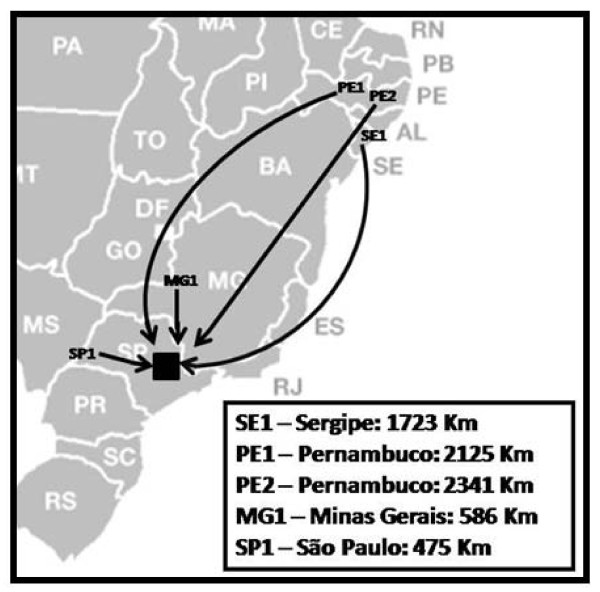
Understanding how people of diverse cultural backgrounds have traditionally used plants and animals as medicinal substances during displacements is one of the most important objectives of ethnopharmacological studies. An ethnopharmacological survey conducted among migrants living in the Southeast Atlantic Forest remnants (Diadema, São Paulo, Brazil) is presented herein.
Ethnographical methods were used to select and interview the migrants, and botanical and zoological techniques were employed to collect the indicated resources.
We interviewed five migrants who described knowledge on 12 animals and 85 plants. Only 78 plants were present in Diadema, they belong to 37 taxonomic families; 68 were used exclusively for medicinal purposes, whereas 10 were reported to be toxic and/or presented some restriction of use. These taxa were grouped into 12 therapeutic categories (e.g., gastrointestinal disturbances, inflammatory processes or respiratory problems) based on the 41 individual complaints cited by the migrants. While the twelve animal species were used by the migrants to treat nine complaints; these were divided into six categories, the largest of which related to respiratory problems. None of the animal species and only 57 of the 78 plant species analysed in the present study were previously reported in the pharmacological literature; the popular knowledge concurred with academic findings for 30 of the plants. The seven plants [Impatiens hawkeri W. Bull., Artemisia canphorata Vill., Equisetum arvensis L., Senna pendula (Humb. & Bonpl. ex Willd.) H.S. Irwin & Barneby, Zea mays L., Fevillea passiflora Vell. and Croton fuscescens Spreng)] and the two animals (Atta sexdens and Periplaneta americana) that showed maintenance of use among migrants during their displacement in Brazilian territory, have not been studied by pharmacologists yet.
Thus, they should be highlighted and focused in further pharmacology and phytochemical studies, since the persistence of their uses can be indicative of bioactive potentials.
了解不同文化背景的人在迁移过程中如何传统地将动植物用作药用物质,是民族药理学研究的最重要目标之一。本文介绍了在东南大西洋森林残余地(巴西圣保罗迪亚代马)居住的移民中进行的民族药理学调查。
采用民族学方法选择和采访移民,采用植物学和动物学技术收集指定资源。
我们采访了五名移民,他们描述了 12 种动物和 85 种植物的知识。迪亚代马只有 78 种植物,它们属于 37 个分类科;68 种植物仅用于药用目的,而 10 种植物被报告为有毒和/或使用受限。这些类群根据移民报告的 41 个个体投诉分为 12 个治疗类别(例如,胃肠道紊乱、炎症过程或呼吸道问题)。12 种动物物种被移民用于治疗 9 种疾病;这些被分为六个类别,最大的类别与呼吸道问题有关。在本研究中分析的 12 种动物物种和 78 种植物物种中,没有一种被动物物种和只有 57 种植物物种之前在药理学文献中报道过;民间知识与植物学研究结果一致的有 30 种。七种植物[Impatiens hawkeri W. Bull.,Artemisia canphorata Vill.,Equisetum arvensis L.,Senna pendula (Humb. & Bonpl. ex Willd.) H.S. Irwin & Barneby,Zea mays L.,Fevillea passiflora Vell.和Croton fuscescens Spreng]和两种动物(Atta sexdens 和 Periplaneta americana)在巴西境内移民迁移期间仍被使用,尚未被药理学家研究过。
因此,它们应该在进一步的药理学和植物化学研究中得到强调和关注,因为它们的使用持续存在可能表明具有生物活性潜力。