Department of Genetics and Biotechnology, Faculty of Agricultural Sciences, Aarhus University, Thorvaldsensvej 40, 1871 Frederiksberg C, Denmark.
Plant Methods. 2010 Nov 30;6:26. doi: 10.1186/1746-4811-6-26.
Gene silencing vectors based on Barley stripe mosaic virus (BSMV) are used extensively in cereals to study gene function, but nearly all studies have been limited to genes expressed in leaves of barley and wheat. However since many important aspects of plant biology are based on root-expressed genes we wanted to explore the potential of BSMV for silencing genes in root tissues. Furthermore, the newly completed genome sequence of the emerging cereal model species Brachypodium distachyon as well as the increasing amount of EST sequence information available for oat (Avena species) have created a need for tools to study gene function in these species.
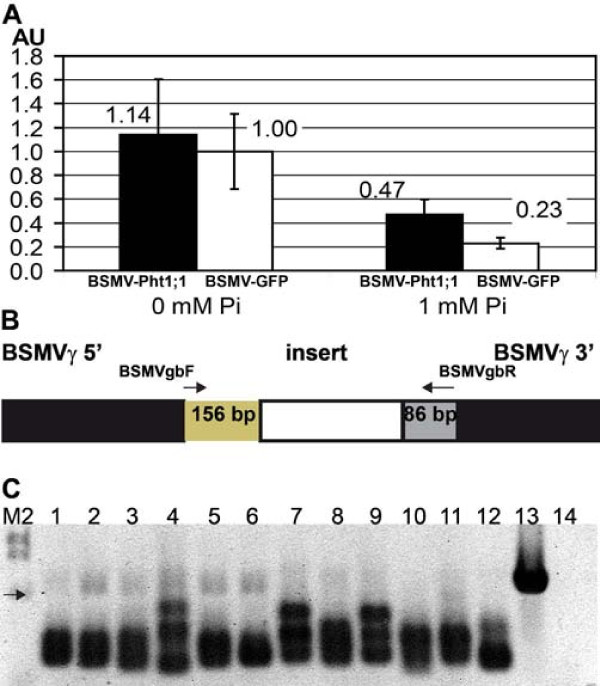
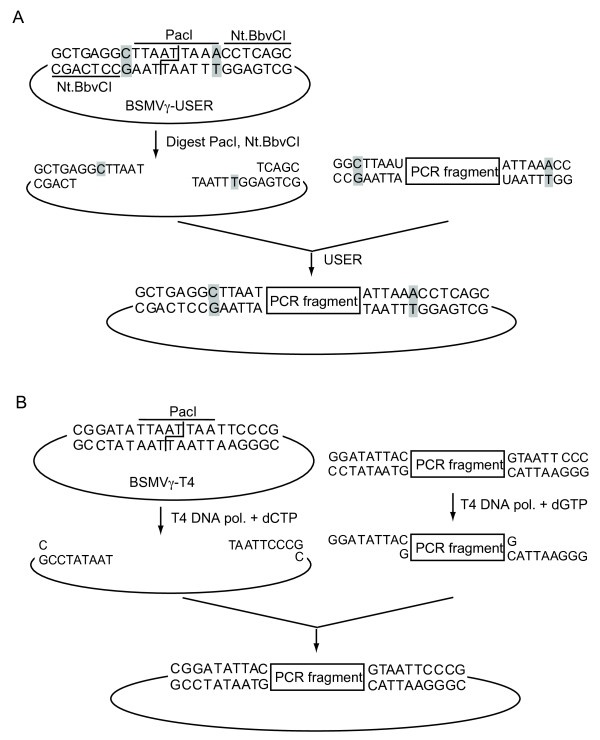
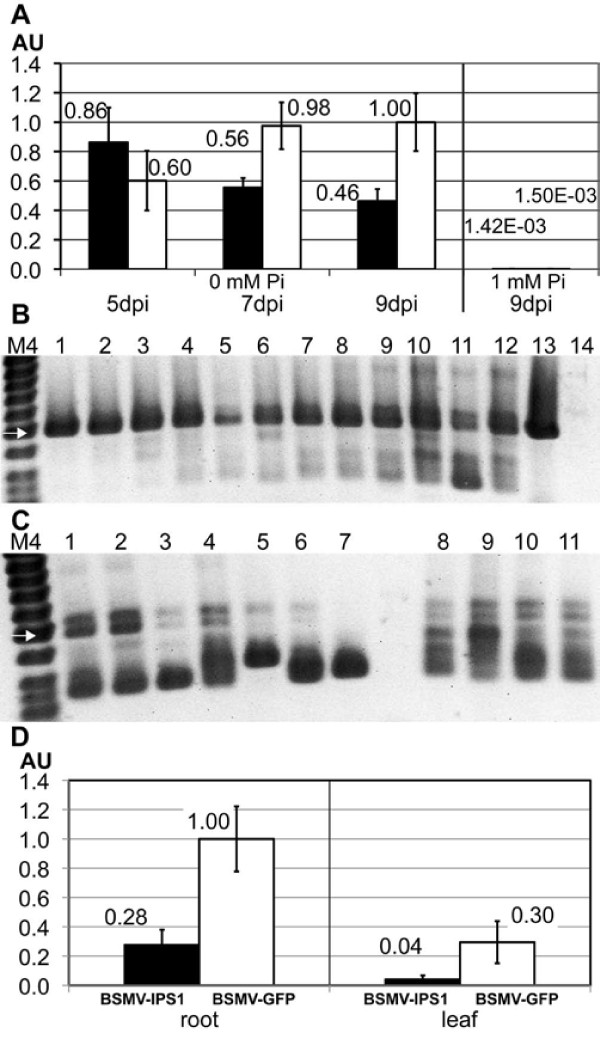
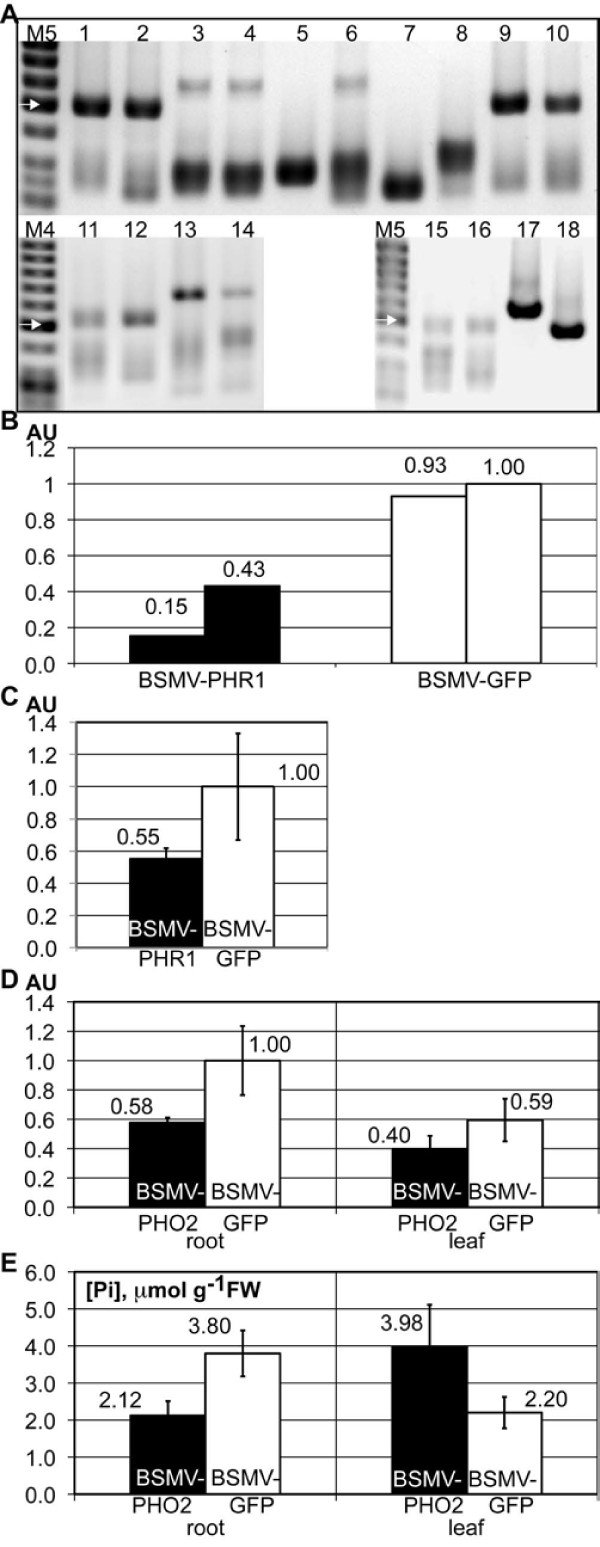
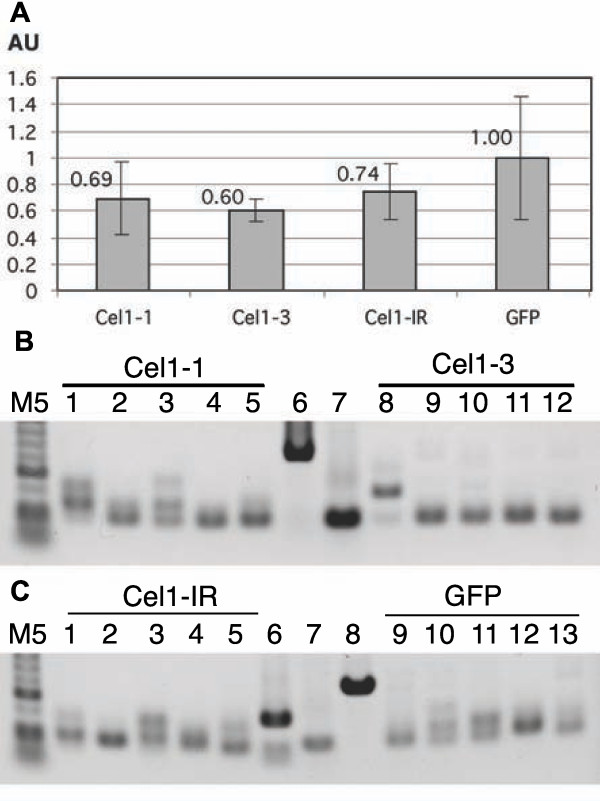
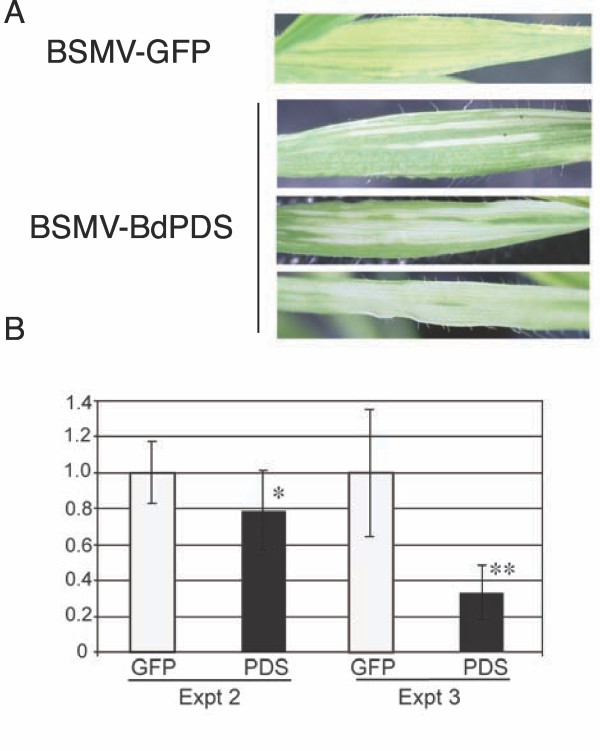
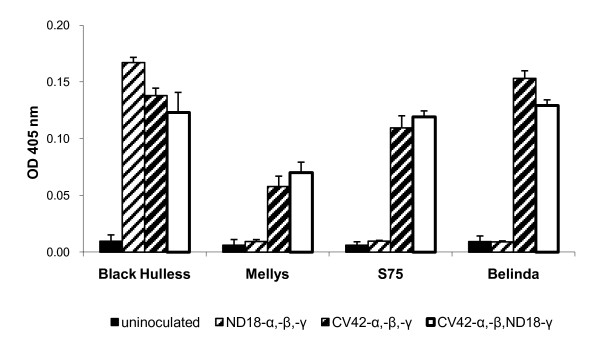
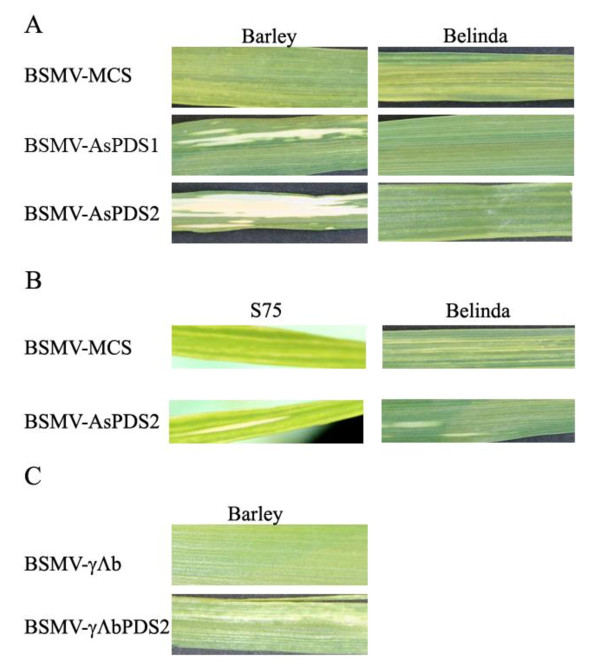
Here we demonstrate the successful BSMV-mediated virus induced gene silencing (VIGS) of three different genes in barley roots, i.e. the barley homologues of the IPS1, PHR1, and PHO2 genes known to participate in Pi uptake and reallocation in Arabidopsis. Attempts to silence two other genes, the Pi transporter gene HvPht1;1 and the endo-β-1,4-glucanase gene HvCel1, in barley roots were unsuccessful, probably due to instability of the plant gene inserts in the viral vector. In B. distachyon leaves, significant silencing of the PHYTOENE DESATURASE (BdPDS) gene was obtained as shown by photobleaching as well as quantitative RT-PCR analysis. On the other hand, only very limited silencing of the oat AsPDS gene was observed in both hexaploid (A. sativa) and diploid (A. strigosa) oat. Finally, two modifications of the BSMV vector are presented, allowing ligation-free cloning of DNA fragments into the BSMV-γ component.
Our results show that BSMV can be used as a vector for gene silencing in barley roots and in B. distachyon leaves and possibly roots, opening up possibilities for using VIGS to study cereal root biology and to exploit the wealth of genome information in the new cereal model plant B. distachyon. On the other hand, the silencing induced by BSMV in oat seemed too weak to be of practical use. The new BSMV vectors modified for ligation-free cloning will allow rapid insertion of plant gene fragments for future experiments.
基于大麦条纹花叶病毒(BSMV)的基因沉默载体被广泛应用于谷类作物以研究基因功能,但几乎所有的研究都仅限于大麦和小麦叶片中表达的基因。然而,由于植物生物学的许多重要方面都基于根表达的基因,因此我们希望探索 BSMV 对根组织中基因沉默的潜力。此外,新兴的谷类模式物种短柄草(Brachypodium distachyon)的全基因组序列以及越来越多的燕麦(Avena 种)EST 序列信息的出现,为这些物种的基因功能研究创造了对工具的需求。
本研究在大麦根中成功地进行了 BSMV 介导的病毒诱导基因沉默(VIGS),验证了三个不同基因,即参与拟南芥磷吸收和再分配的 IPS1、PHR1 和 PHO2 基因的大麦同源基因。在大麦根中沉默另外两个基因,磷转运蛋白基因 HvPht1;1 和内-β-1,4-葡聚糖酶基因 HvCel1 的尝试均未成功,这可能是由于植物基因在病毒载体中的插入不稳定。在短柄草叶片中,通过光漂白和定量 RT-PCR 分析显示,phytoene desaturase(BdPDS)基因的显著沉默。另一方面,仅在六倍体(A. sativa)和二倍体(A. strigosa)燕麦中观察到对 oat AsPDS 基因的非常有限的沉默。最后,提出了两种 BSMV 载体的改进方法,允许在 BSMV-γ 组件中无连接克隆 DNA 片段。
本研究结果表明,BSMV 可用于大麦根和短柄草叶片以及可能的根中的基因沉默,为利用 VIGS 研究谷类作物根生物学和利用新的谷类模式植物短柄草丰富的基因组信息开辟了可能性。另一方面,BSMV 在燕麦中诱导的沉默似乎太弱,没有实际用途。改进的用于无连接克隆的新 BSMV 载体将允许快速插入植物基因片段进行未来的实验。