The Picower Institute for Learning and Memory, RIKEN-MIT Center for Neural Circuit Genetics, Department of Biology, Massachusetts Institute of Technology, Cambridge, Massachusetts 02139, USA.
Nature. 2011 Jan 20;469(7330):397-401. doi: 10.1038/nature09633. Epub 2010 Dec 22.
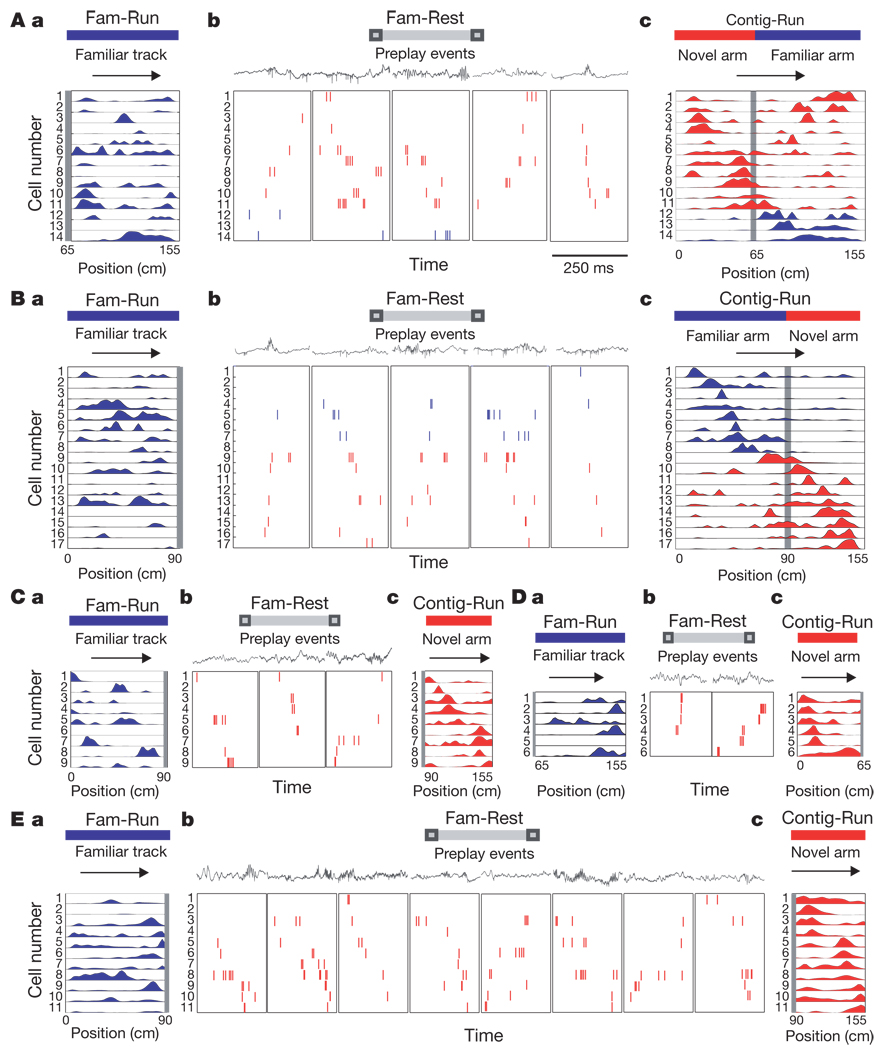
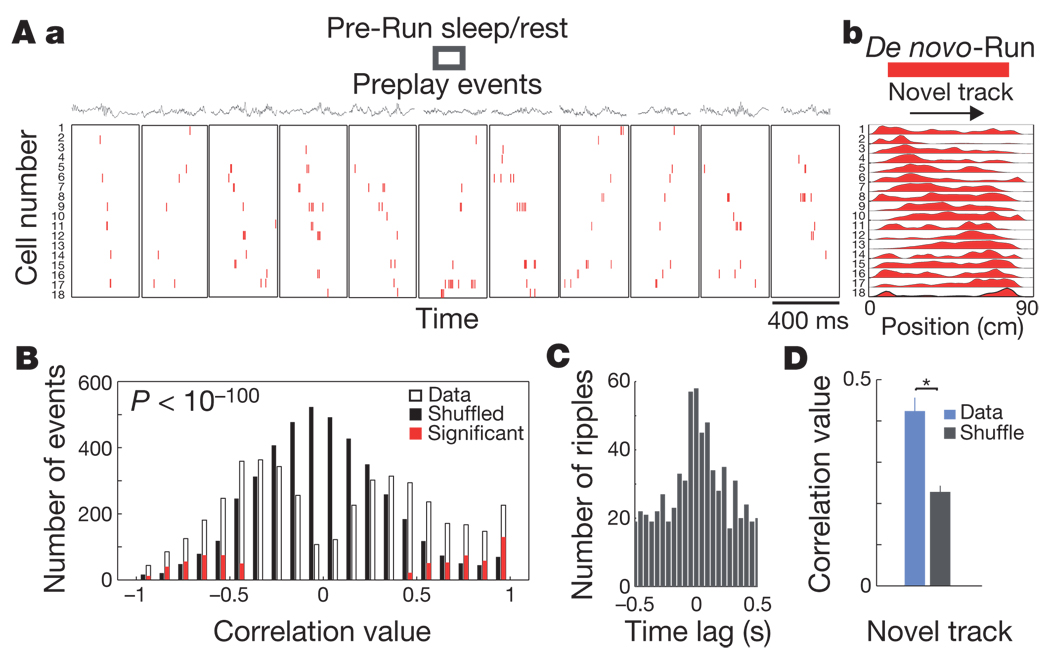
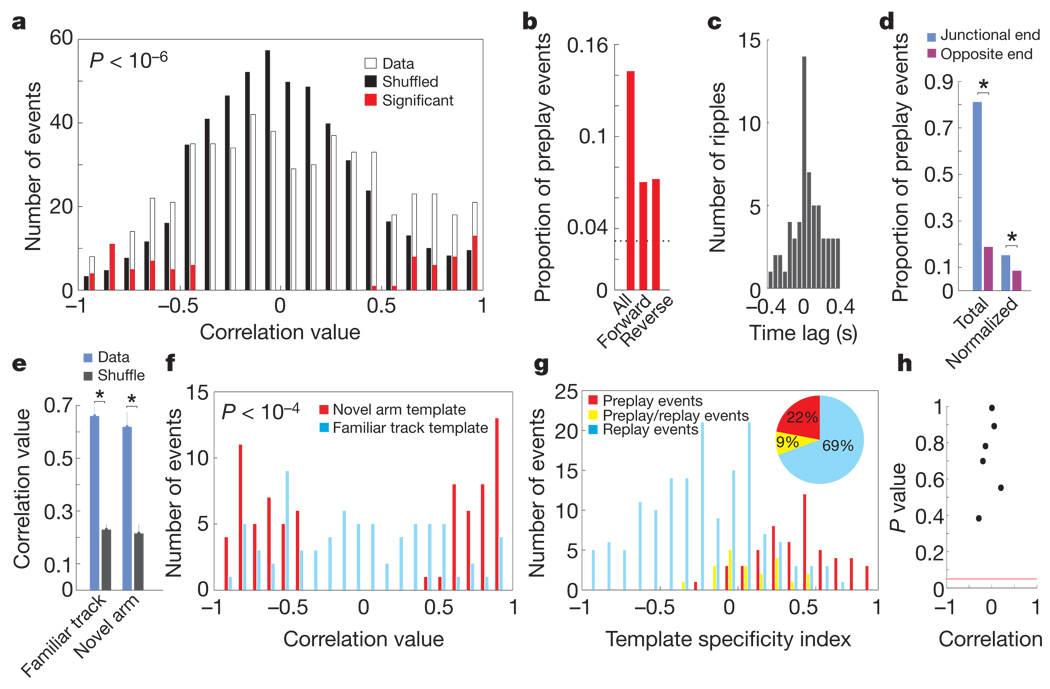
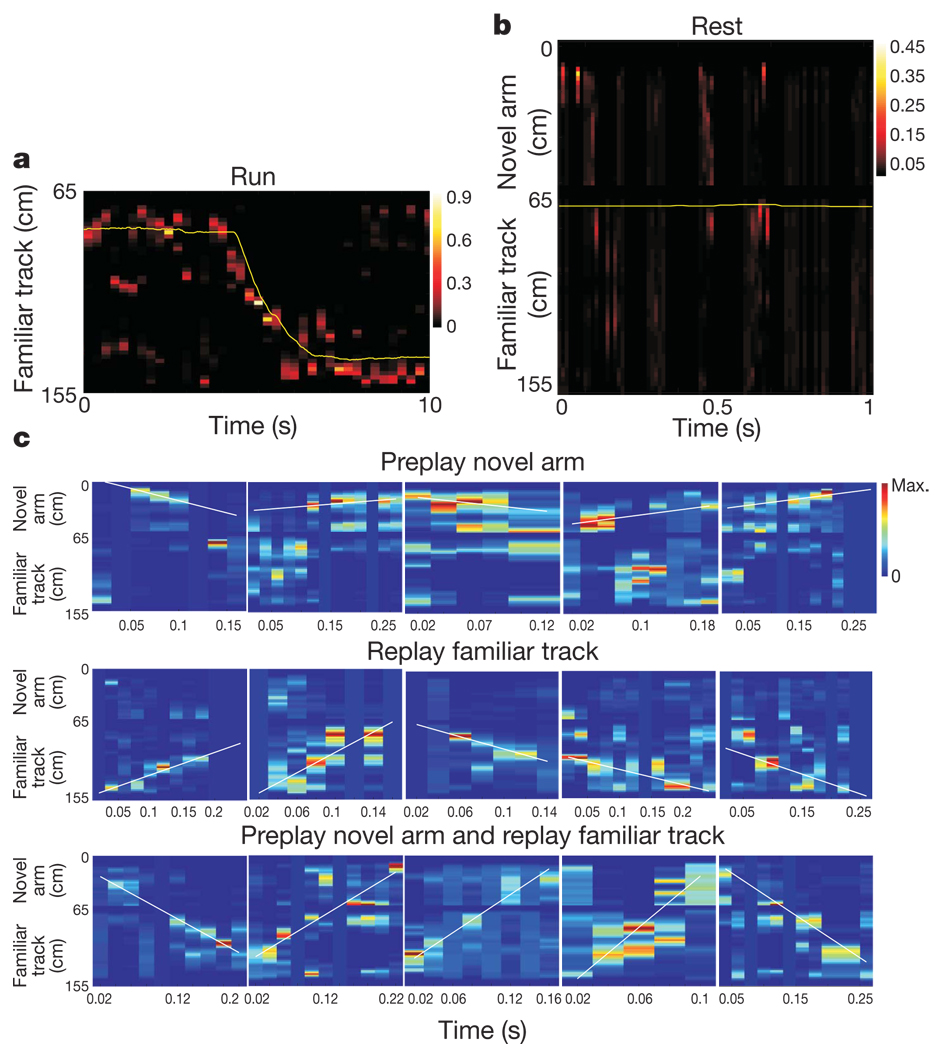
During spatial exploration, hippocampal neurons show a sequential firing pattern in which individual neurons fire specifically at particular locations along the animal's trajectory (place cells). According to the dominant model of hippocampal cell assembly activity, place cell firing order is established for the first time during exploration, to encode the spatial experience, and is subsequently replayed during rest or slow-wave sleep for consolidation of the encoded experience. Here we report that temporal sequences of firing of place cells expressed during a novel spatial experience occurred on a significant number of occasions during the resting or sleeping period preceding the experience. This phenomenon, which is called preplay, occurred in disjunction with sequences of replay of a familiar experience. These results suggest that internal neuronal dynamics during resting or sleep organize hippocampal cellular assemblies into temporal sequences that contribute to the encoding of a related novel experience occurring in the future.
在空间探索过程中,海马体神经元表现出一种顺序发射模式,即单个神经元在动物轨迹的特定位置(位置细胞)特异性地发射。根据海马体细胞集合活动的主导模型,位置细胞的发射顺序是在探索过程中首次建立的,以编码空间体验,并在休息或慢波睡眠期间进行回放,以巩固编码的体验。在这里,我们报告说,在经历之前的休息或睡眠期间,在一个新的空间体验中表达的位置细胞的发射时间序列在许多情况下发生。这种现象被称为预演,与熟悉经验的回放序列同时发生。这些结果表明,休息或睡眠期间的内部神经元动力学将海马体细胞集合组织成时间序列,这些序列有助于对未来发生的相关新体验进行编码。