Henagan Tara M, Phillips Melody D, Cheek Dennis J, Kirk K Michelle, Barbee James J, Stewart Laura K
Department of Kinesiology, Louisiana State University, 112 Long Fieldhouse, Baton Rouge, LA 70803, USA.
J Aging Res. 2011 Jan 4;2011:512593. doi: 10.4061/2011/512593.
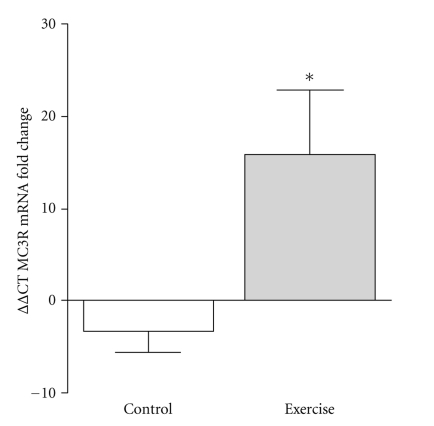
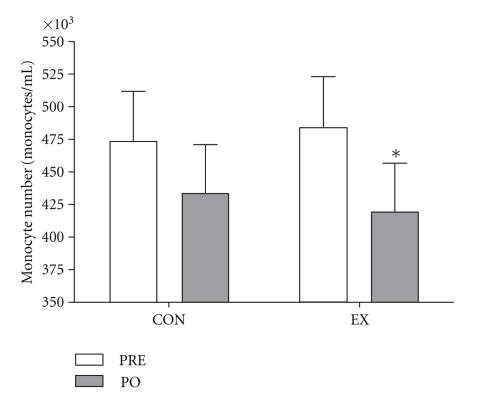
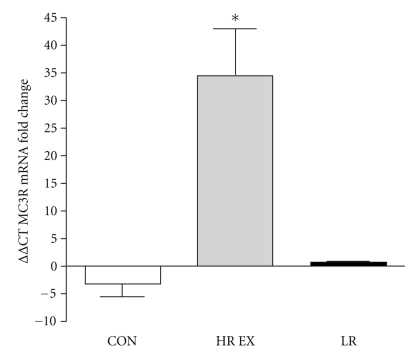
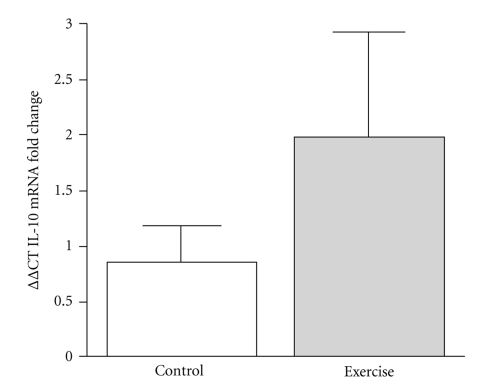
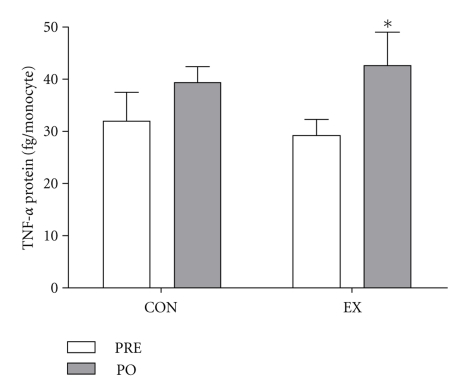
The purpose of this study was to determine whether resistance exercise training-induced reductions in inflammation are mediated via melanocortin 3 receptor expression in obese (BMI 32.7 ± 3.7) women (65.6 ± 2.8 yrs) randomized to either a control (N = 11) or resistance training group (N = 12). The resistance trained group performed resistance training 3 days/week for 12 weeks. Resting blood samples were collected before and after the training intervention in both resistance trained and control groups. Resistance training upregulated melanocortin 3 receptor mRNA by 16-fold (P = .035) and decreased monocyte count, without changing leukocyte number, body composition, or body weight. Resistance trained individuals exhibited increased sensitivity to inflammatory stimuli, whereas control individuals exhibited no change. While there was no change in whole blood tumor necrosis factor alpha mRNA between the groups, whole blood interleukin 10 mRNA was higher in the resistance trained group following the intervention period. In summary, it appears that resistance training may modulate melanocortin 3 receptor expression, providing a possible mechanism for the anti-inflammatory effects of exercise training.
本研究旨在确定抗阻运动训练引起的炎症减轻是否通过黑素皮质素3受体表达介导,该研究将肥胖(BMI 32.7±3.7)女性(65.6±2.8岁)随机分为对照组(N = 11)或抗阻训练组(N = 12)。抗阻训练组每周进行3天抗阻训练,共12周。在训练干预前后,收集抗阻训练组和对照组的静息血样。抗阻训练使黑素皮质素3受体mRNA上调16倍(P = .035),并使单核细胞计数降低,而白细胞数量、身体成分或体重未发生变化。抗阻训练个体对炎症刺激的敏感性增加,而对照组个体无变化。虽然两组间全血肿瘤坏死因子α mRNA无变化,但干预期后抗阻训练组的全血白细胞介素10 mRNA更高。总之,抗阻训练似乎可能调节黑素皮质素3受体表达,为运动训练的抗炎作用提供了一种可能的机制。