
影响基于尿液的 BSE 生物标志物准确性的因素。
Factors affecting the accuracy of urine-based biomarkers of BSE.
机构信息
Prion Diseases Program, Public Health Agency of Canada, Winnipeg, R3E 3P6, Canada.
出版信息
Proteome Sci. 2011 Feb 7;9(1):6. doi: 10.1186/1477-5956-9-6.
BACKGROUND
Transmissible spongiform encephalopathy diseases are untreatable, uniformly fatal degenerative syndromes of the central nervous system that can be transmitted both within as well as between species. The bovine spongiform encephalopathy (BSE) epidemic and the emergence of a new human variant of Creutzfeldt-Jakob disease (vCJD), have profoundly influenced beef production processes as well as blood donation and surgical procedures. Simple, robust and cost effective diagnostic screening and surveillance tools are needed for both the preclinical and clinical stages of TSE disease in order to minimize both the economic costs and zoonotic risk of BSE and to further reduce the risk of secondary vCJD.
OBJECTIVE
Urine is well suited as the matrix for an ante-mortem test for TSE diseases because it would permit non-invasive and repeated sampling. In this study urine samples collected from BSE infected and age matched control cattle were screened for the presence of individual proteins that exhibited disease specific changes in abundance in response to BSE infection that might form the basis of such an ante-mortem test.
RESULTS
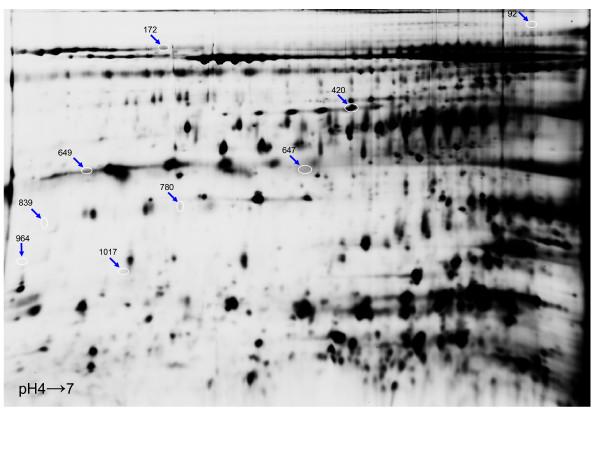
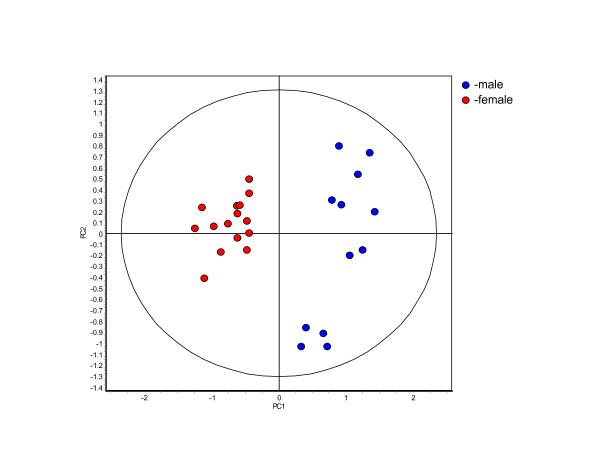
Two-dimensional differential gel electrophoresis (2D-DIGE) was used to identify proteins exhibiting differential abundance in two sets of cattle. The known set consisted of BSE infected steers and age matched controls throughout the course of the disease. The blinded unknown set was composed of BSE infected and control samples of both genders, a wide range of ages and two different breeds. Multivariate analyses of individual protein abundance data generated classifiers comprised of the proteins best able to discriminate between the samples based on disease state, breed, age and gender.
CONCLUSION
Despite the presence of confounding factors, the disease specific changes in abundance exhibited by a panel of urine proteins permitted the creation of classifiers able to discriminate between control and infected cattle with a high degree of accuracy.
背景
传染性海绵状脑病是中枢神经系统无法治疗的、普遍致命的退行性综合征,可在同种和种间传播。牛海绵状脑病(BSE)疫情和新型克雅氏病(vCJD)的出现,极大地影响了牛肉生产过程以及献血和外科手术。为了最小化 BSE 的经济成本和人畜共患病风险,并进一步降低继发性 vCJD 的风险,需要用于 TSE 疾病临床前和临床阶段的简单、稳健和具有成本效益的诊断筛查和监测工具。
目的
尿液非常适合作为 TSE 疾病的生前检测基质,因为它可以进行非侵入性和重复采样。在这项研究中,从 BSE 感染和年龄匹配的对照牛中收集尿液样本,筛选出存在个体蛋白的样本,这些蛋白在数量上表现出对 BSE 感染的疾病特异性变化,这些变化可能成为这种生前检测的基础。
结果
二维差异凝胶电泳(2D-DIGE)用于鉴定两组牛中表现出丰度差异的蛋白质。已知组由 BSE 感染的牛和整个疾病过程中的年龄匹配对照组成。未知的盲组由 BSE 感染和对照的雌雄样本、广泛的年龄和两种不同品种组成。对个体蛋白丰度数据的多元分析生成了基于疾病状态、品种、年龄和性别对样本进行最佳区分的分类器。
结论
尽管存在混杂因素,但一组尿液蛋白丰度的疾病特异性变化允许创建能够以高精度区分对照和感染牛的分类器。



 Zotero 插件