Yunnan Province 2nd Hospital, Kunming, PR China.
Oxid Med Cell Longev. 2010 Nov-Dec;3(6):392-403. doi: 10.4161/oxim.3.6.14786. Epub 2010 Nov 1.
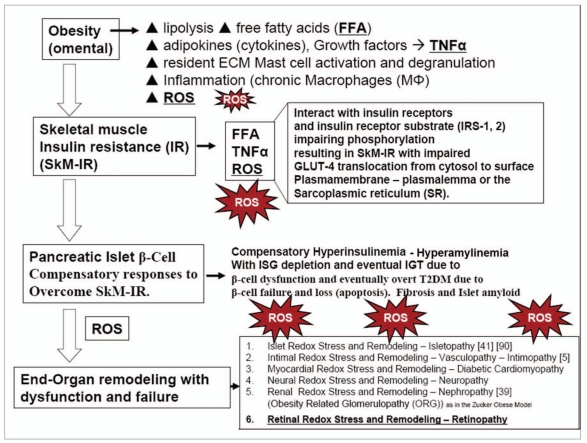
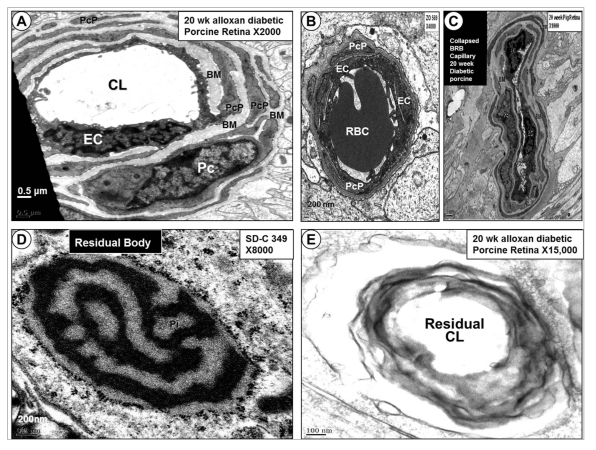
Diabetic retinopathy (DR) is a significant cause of global blindness; a major cause of blindness in the United States in people aged between 20-74. There is emerging evidence that retinopathy is initiated and propagated by multiple metabolic toxicities associated with excess production of reactive oxygen species (ROS). The four traditional metabolic pathways involved in the development of DR include: increased polyol pathway flux, advanced glycation end-product formation, activation of protein kinase C isoforms, and hexosamine pathway flux. These pathways individually and synergistically contribute to redox stress with excess ROS resulting in retinal tissue injury resulting in significant microvascular blood retinal barrier remodeling. The toxicity of hyperinsulinemia, hyperglycemia, hypertension, dyslipidemia, increased cytokines and growth factors, in conjunction with redox stress, contribute to the development and progression of DR. Redox stress contributes to the development and progression of abnormalities of endothelial cells and pericytes in DR. This review focuses on the ultrastructural observations of the blood retinal barrier including the relationship between the endothelial cell and pericyte remodeling in young nine week old Zucker obese (fa/fa) rat model of obesity; cardiometabolic syndrome, and the 20 week old alloxan induced diabetic porcine model. Preventing or delaying the blindness associated with these intersecting abnormal metabolic pathways may be approached through strategies targeted to reduction of tissue inflammation and oxidative - redox stress. Understanding these abnormal metabolic pathways and the accompanying redox stress and remodeling may provide both the clinician and researcher a new concept of approaching this complicated disease process.
糖尿病性视网膜病变(DR)是全球失明的主要原因;也是美国 20-74 岁人群失明的主要原因。有新的证据表明,视网膜病变是由与活性氧(ROS)过量产生相关的多种代谢毒性引发和传播的。涉及 DR 发展的四个传统代谢途径包括:多元醇途径通量增加、晚期糖基化终产物形成、蛋白激酶 C 同工型激活和己糖胺途径通量。这些途径单独和协同作用导致氧化应激,过量的 ROS 导致视网膜组织损伤,从而导致显著的微血管血液视网膜屏障重塑。高胰岛素血症、高血糖、高血压、血脂异常、细胞因子和生长因子增加的毒性,加上氧化应激,导致 DR 的发生和进展。氧化应激导致 DR 中内皮细胞和周细胞的异常发展和进展。这篇综述重点介绍了血液视网膜屏障的超微结构观察,包括肥胖症、心血管代谢综合征的 9 周龄 Zucker 肥胖(fa/fa)大鼠模型和 20 周龄链脲佐菌素诱导的糖尿病猪模型中内皮细胞和周细胞重塑之间的关系。通过针对减少组织炎症和氧化-还原应激的策略,可能可以预防或延迟与这些交叉代谢途径相关的失明。了解这些异常代谢途径以及随之而来的氧化应激和重塑,可能为临床医生和研究人员提供一种新的方法来研究这种复杂的疾病过程。