Palchevskiy Vyacheslav, Hashemi Nastran, Weigt Stephen S, Xue Ying Ying, Derhovanessian Ariss, Keane Michael P, Strieter Robert M, Fishbein Michael C, Deng Jane C, Lynch Joseph P, Elashoff Robert, Belperio John A
Division of Pulmonary and Critical Care Medicine, Department of Medicine, David Geffen School of Medicine at UCLA, Los Angeles, CA, USA.
Department of Medicine, St Vincent's University Hospital and University College Dublin, Dublin, Ireland.
Fibrogenesis Tissue Repair. 2011 Apr 4;4:10. doi: 10.1186/1755-1536-4-10.
Pulmonary sarcoidosis involves an intense leukocyte infiltration of the lung with the formation of non-necrotizing granulomas. CC chemokines (chemokine (C-C motif) ligand 2 (CCL2)-CCL5) are chemoattractants of mononuclear cells and act through seven transmembrane G-coupled receptors. Previous studies have demonstrated conflicting results with regard to the associations of these chemokines with sarcoidosis. In an effort to clarify previous discrepancies, we performed the largest observational study to date of CC chemokines in bronchoalveolar lavage fluid (BALF) from patients with pulmonary sarcoidosis.
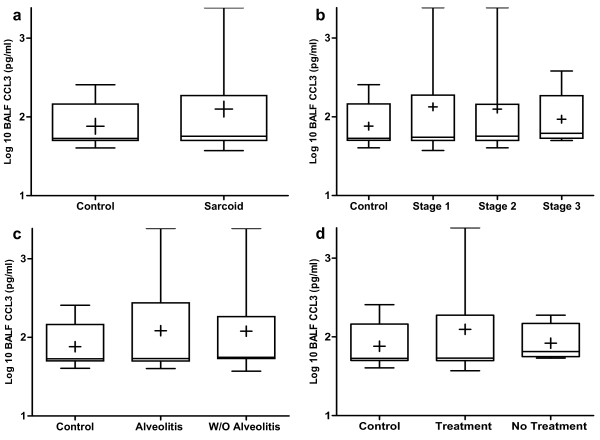
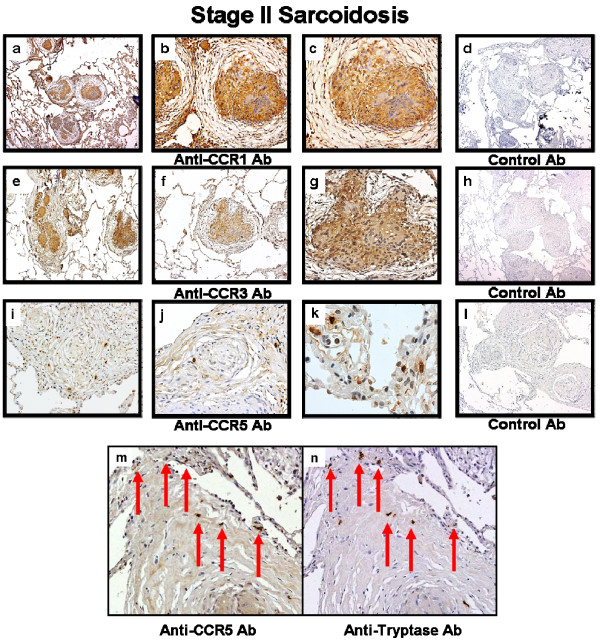
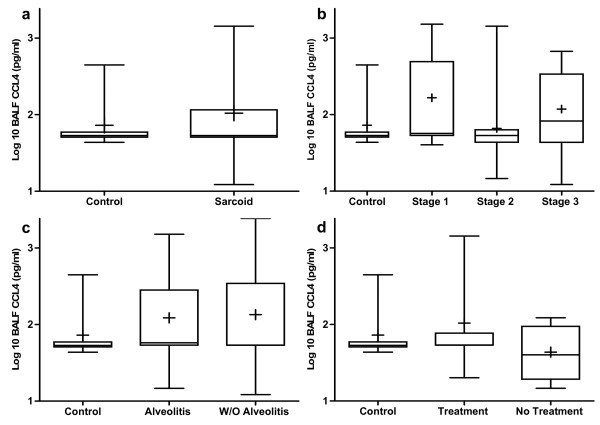
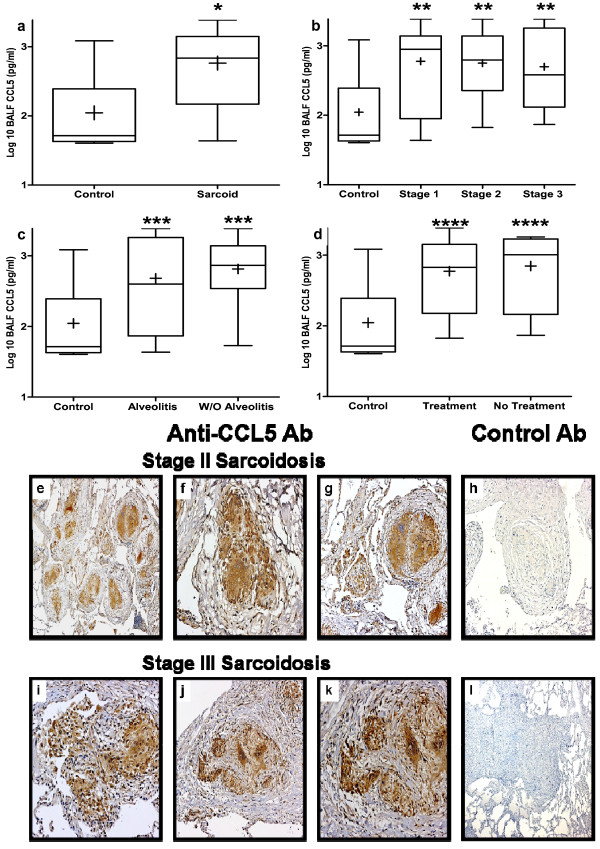
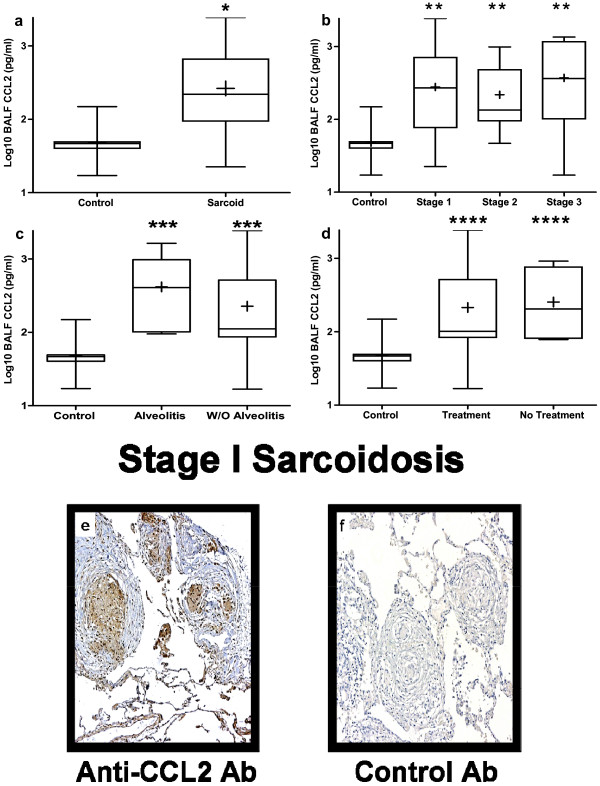
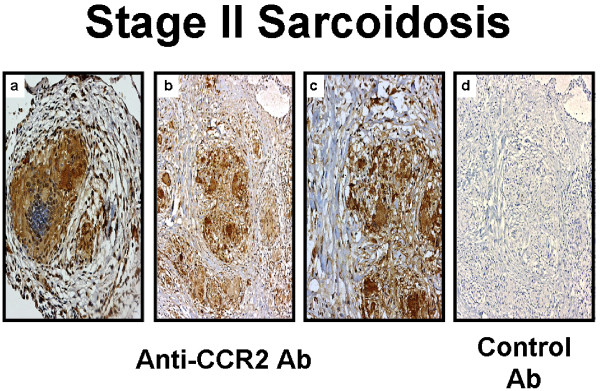
BALF chemokine levels from 72 patients affected by pulmonary sarcoidosis were analyzed by enzyme-linked immunosorbent assay (ELISA) and compared to 8 healthy volunteers. BALF CCL3 and CCL4 levels from pulmonary sarcoidosis patients were not increased compared to controls. However, CCL2 and CCL5 levels were elevated, and subgroup analysis showed higher levels of both chemokines in all stages of pulmonary sarcoidosis. CCL2, CCL5, CC chemokine receptor type 1 (CCR1), CCR2 and CCR3 were expressed from mononuclear cells forming the lung granulomas, while CCR5 was only found on mast cells.
These data suggest that CCL2 and CCL5 are important mediators in recruiting CCR1, CCR2, and CCR3 expressing mononuclear cells as well as CCR5-expressing mast cells during all stages of pulmonary sarcoidosis.
肺结节病表现为肺部有强烈的白细胞浸润,并形成非坏死性肉芽肿。CC趋化因子(趋化因子(C-C基序)配体2(CCL2)-CCL5)是单核细胞的趋化剂,通过七个跨膜G偶联受体发挥作用。先前的研究在这些趋化因子与结节病的关联方面得出了相互矛盾的结果。为了澄清先前的差异,我们进行了迄今为止关于肺结节病患者支气管肺泡灌洗液(BALF)中CC趋化因子的最大规模观察性研究。
通过酶联免疫吸附测定(ELISA)分析了72例肺结节病患者的BALF趋化因子水平,并与8名健康志愿者进行了比较。与对照组相比,肺结节病患者的BALF CCL3和CCL4水平没有升高。然而,CCL2和CCL5水平升高,亚组分析显示在肺结节病的所有阶段这两种趋化因子的水平都更高。CCL2、CCL5、CC趋化因子受体1型(CCR1)、CCR2和CCR3在形成肺肉芽肿的单核细胞中表达,而CCR5仅在肥大细胞上发现。
这些数据表明,在肺结节病的所有阶段,CCL2和CCL5是招募表达CCR1、CCR2和CCR3的单核细胞以及表达CCR5的肥大细胞的重要介质。