Department of Family and Community Medicine, Al Fateh University, Tripoli, Libya.
Libyan J Med. 2008 Jun 1;3(2):113-21. doi: 10.4176/080301.
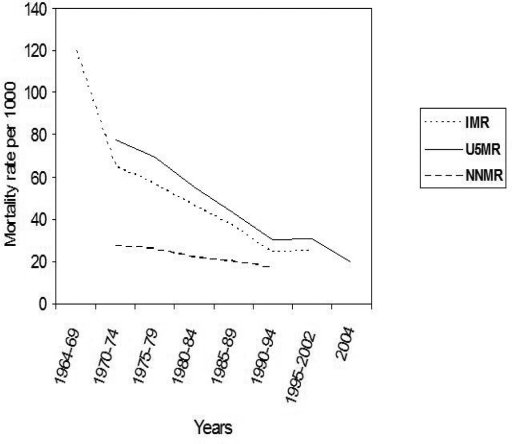
In the last four decades, there has been a substantial horizontal expansion of health services in Libya. This resulted in improvement in morbidity and mortality, in particularly those related to infectious disease. However, measures such as the national performance gap indicator reveal an underperforming health system. In this article, we discuss aspects related to the Libyan health system and its current status including areas of weakness. Overcoming current failures and further improvement are unlikely to occur spontaneously without proper planning. Defining community health problems, identifying unmet needs, surveying resources to meet them, establishing SMART (specific, measurable, achievable, and realistic and time specific) objectives, and projecting administrative action to accomplish the proposed programs, are a must. The health system should rely on newer approaches such as management-by-objectives and risk-management rather than the prevailing crisis-management attitude.
在过去的四十年里,利比亚的卫生服务有了实质性的横向扩展。这导致了发病率和死亡率的改善,特别是那些与传染病有关的疾病。然而,国家绩效差距指标等措施显示出卫生系统表现不佳。在本文中,我们讨论了与利比亚卫生系统及其现状相关的方面,包括薄弱环节。如果没有适当的规划,就不可能自发地克服当前的失败并进一步改进。必须确定社区卫生问题、确定未满足的需求、调查满足这些需求的资源、制定具体、可衡量、可实现、现实和有时限的目标,并规划行政行动来完成拟议的方案。卫生系统应该依赖于更现代的方法,如目标管理和风险管理,而不是目前流行的危机管理态度。