Hôspital Necker Enfants Malades, Paris, France.
Libyan J Med. 2008 Mar 1;3(1):13-9. doi: 10.4176/071006.
To describe the nutritional status of children under-five years of age in Libya.
A secondary analysis of data of 5348 children taken from a national representative, two-stage, cluster-sample survey that was performed in 1995.
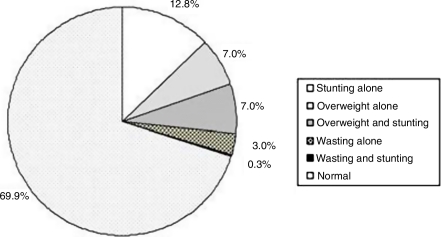
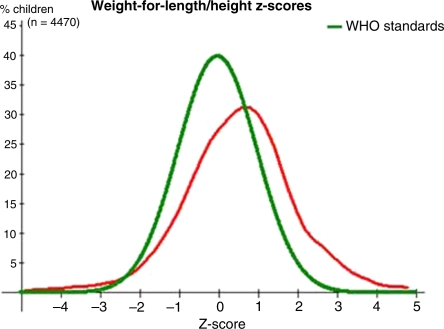
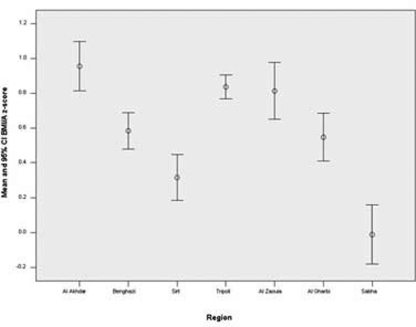
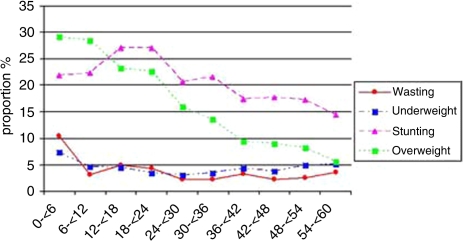
Prevalence rates of underweight, wasting, stunting, and overweight were determined using standard definitions in reference to newly established WHO growth charts. The study revealed that 4.3% of children were underweight, 3.7% wasted, 20.7% stunted, and 16.2% overweight. Seventy percent of children had normal weight. Undernutrition was more likely to be found in males, in rural areas, and in underprivileged groups. Overweight was more likely found in urban, privileged groups. Wasting was more common in arid regions; stunting was more common in mountainous regions of Al-Akhdar, Al-Gharbi, and in Sirt. Al-Akhdar had the highest prevalence of overweight.
The country had a low prevalence of underweight and wasting, moderate prevalence of stunting, and high prevalence of overweight. The country is in the early stages of transition with evidence of dual-burden in some regions. Similar surveys are needed to verify secular trends of these nutritional problems, particularly overweight.
描述利比亚五岁以下儿童的营养状况。
对 1995 年进行的一项全国代表性、两阶段、聚类抽样调查中 5348 名儿童的数据进行二次分析。
使用新建立的世卫组织生长图表的标准定义确定了消瘦、消瘦、发育迟缓、超重的患病率。研究表明,4.3%的儿童体重不足,3.7%消瘦,20.7%发育迟缓,16.2%超重。70%的儿童体重正常。营养不良更可能发生在男性、农村地区和贫困群体中。超重更可能发生在城市、特权群体中。消瘦更常见于干旱地区;发育迟缓更常见于阿赫达尔、盖尔比和锡尔特的山区。阿赫达尔地区超重的患病率最高。
该国消瘦和消瘦的患病率较低,发育迟缓的患病率中等,超重的患病率较高。该国正处于转型的早期阶段,一些地区存在双重负担的证据。需要进行类似的调查来验证这些营养问题,特别是超重的长期趋势。