Tada H, Rappaport J, Lashgari M, Amini S, Wong-Staal F, Khalili K
Department of Biochemistry and Molecular Biology, Jefferson Institute of Molecular Medicine, Jefferson Medical College, Thomas Jefferson University, Philadelphia, PA 19107.
Proc Natl Acad Sci U S A. 1990 May;87(9):3479-83. doi: 10.1073/pnas.87.9.3479.
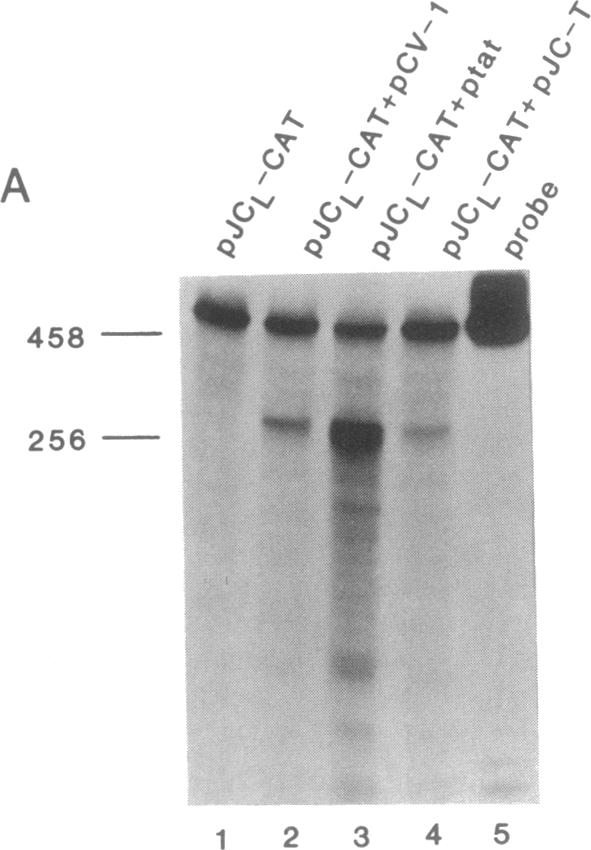
Progressive multifocal leukoencephalopathy (PML) is a demyelinating disease of the central nervous system caused by the JC virus (JCV), a human papovavirus. PML is a relatively rare disease seen predominantly in immunocompromised individuals and is a frequent complication observed in AIDS patients. The significantly higher incidence of PML in AIDS patients than in other immunosuppressive disorders has suggested that the presence of human immunodeficiency virus type 1 (HIV-1) in the brain may directly or indirectly contribute to the pathogenesis of this disease. In the present study we have examined the expression of the JCV genome in both glial and non-glial cells in the presence of HIV-1 regulatory proteins. We find that the HIV-1-encoded trans-regulatory protein tat increases the basal activity of the JCV late promoter, JCVL, in glial cells. In a reciprocal experiment, the JCV early protein, the large tumor antigen, stimulates expression from JCVL and HIV-1 long terminal repeat promoter in both glial and non-glial cells. This trans-activation occurs at the level of RNA synthesis, as measured by the rate of transcription, stability of the message, and translation. We conclude that the presence of the HIV-1-encoded tat protein may positively affect the JCV lytic cycle in glial cells by stimulating JCV gene expression. Our results suggest a mechanism for the relatively high incidence of PML in AIDS patients than in other immunosuppressive disorders. Furthermore, our findings indicate that the HIV-1 regulatory protein tat may stimulate other viral and perhaps cellular promoters, in addition to its own.
进行性多灶性白质脑病(PML)是一种由人乳头多瘤空泡病毒JC病毒(JCV)引起的中枢神经系统脱髓鞘疾病。PML是一种相对罕见的疾病,主要见于免疫功能低下的个体,是艾滋病患者中常见的并发症。艾滋病患者中PML的发病率明显高于其他免疫抑制性疾病,这表明脑内1型人类免疫缺陷病毒(HIV-1)的存在可能直接或间接促进了该疾病的发病机制。在本研究中,我们检测了在存在HIV-1调节蛋白的情况下JCV基因组在神经胶质细胞和非神经胶质细胞中的表达。我们发现,HIV-1编码的反式调节蛋白tat可增加神经胶质细胞中JCV晚期启动子JCVL的基础活性。在一项反向实验中,JCV早期蛋白,即大肿瘤抗原,可刺激神经胶质细胞和非神经胶质细胞中JCVL和HIV-1长末端重复启动子的表达。这种反式激活发生在RNA合成水平,通过转录速率、信使稳定性和翻译来衡量。我们得出结论,HIV-1编码的tat蛋白的存在可能通过刺激JCV基因表达而对神经胶质细胞中的JCV裂解周期产生积极影响。我们的结果提示了艾滋病患者中PML发病率相对高于其他免疫抑制性疾病的一种机制。此外,我们的研究结果表明,HIV-1调节蛋白tat除了刺激自身启动子外,还可能刺激其他病毒甚至细胞启动子。