Center for Molecular Imaging Research, Massachusetts General Hospital, Boston, MA 02114, USA.
Sci Transl Med. 2011 May 25;3(84):84ra45. doi: 10.1126/scitranslmed.3001577.
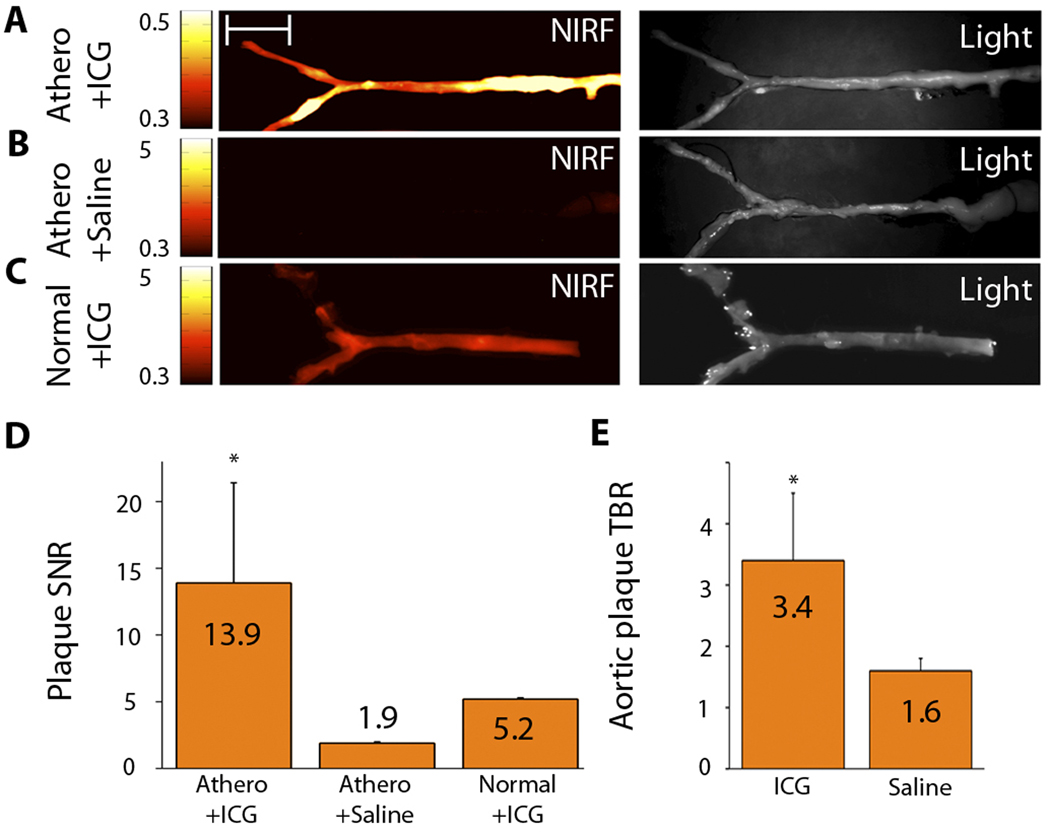
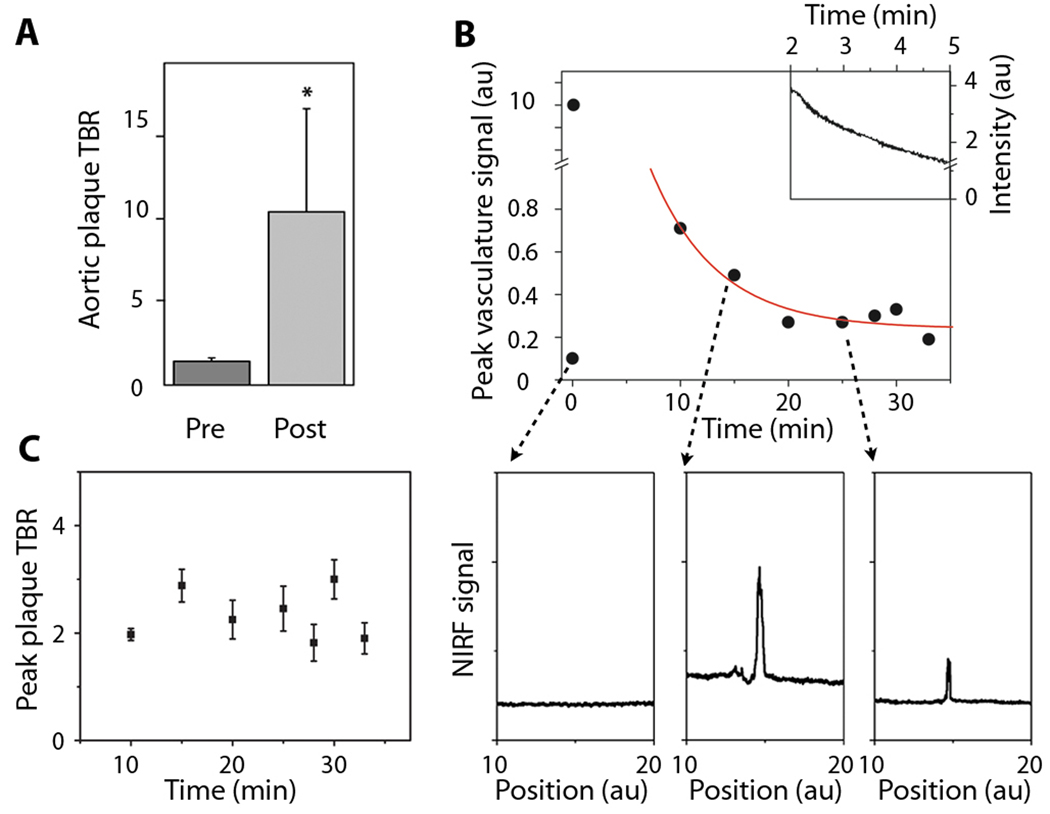
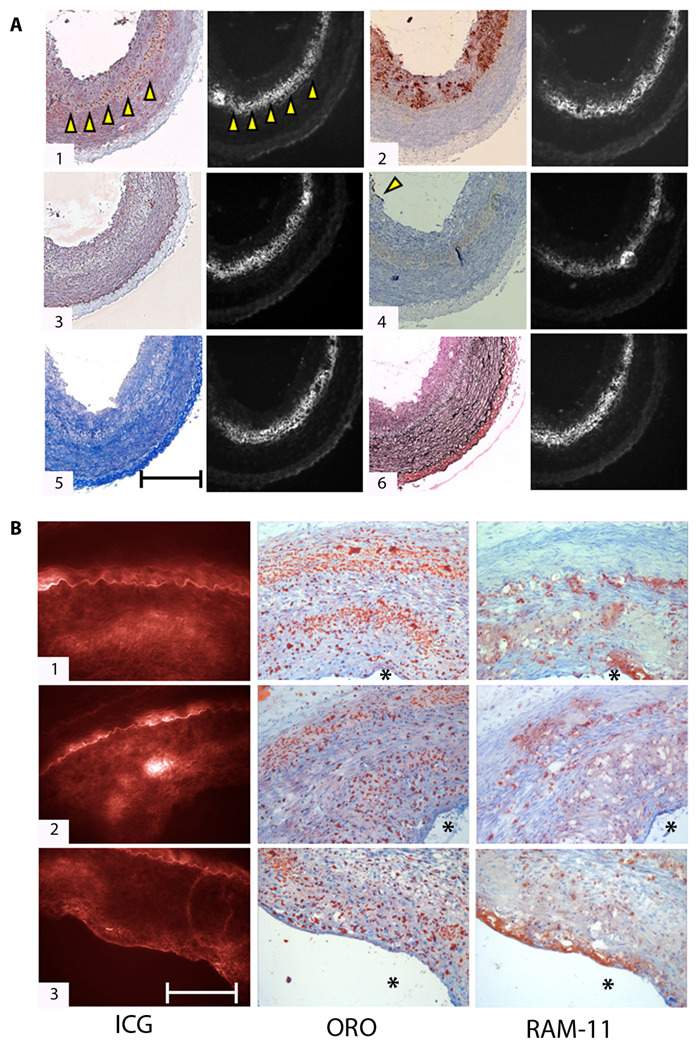
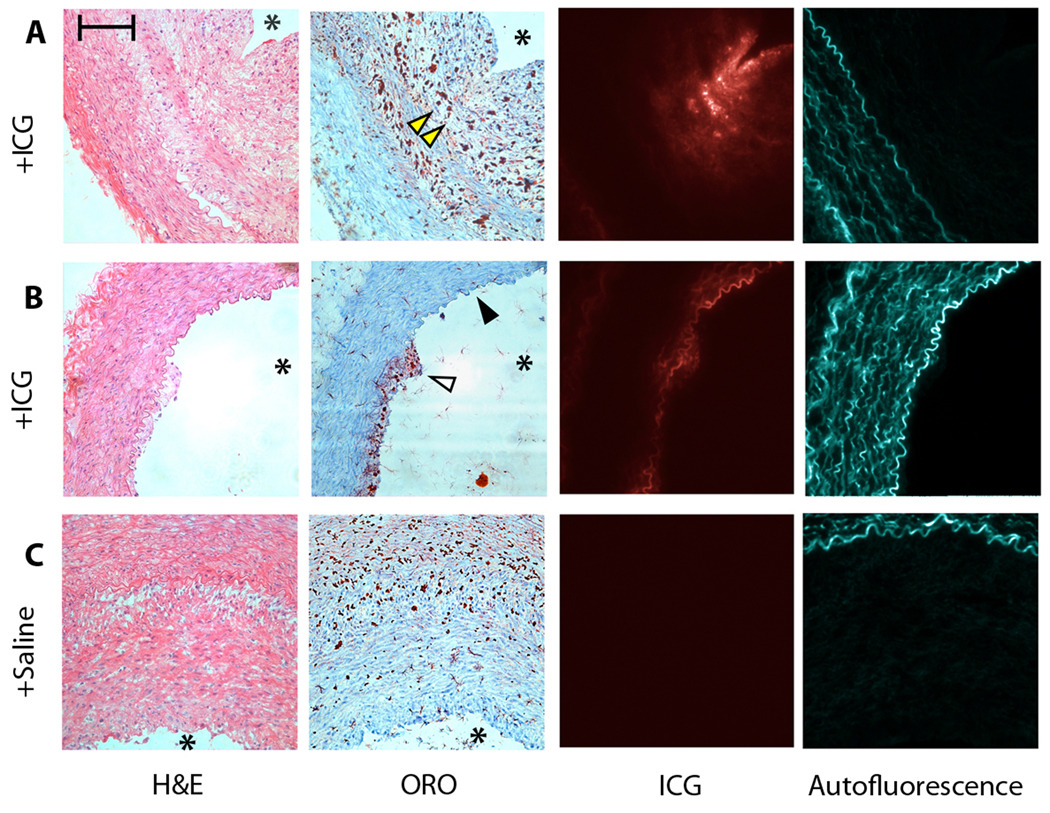
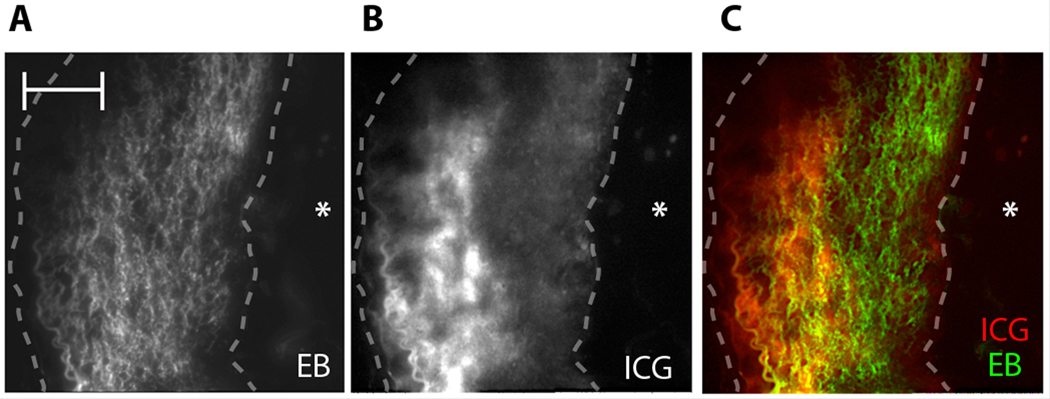
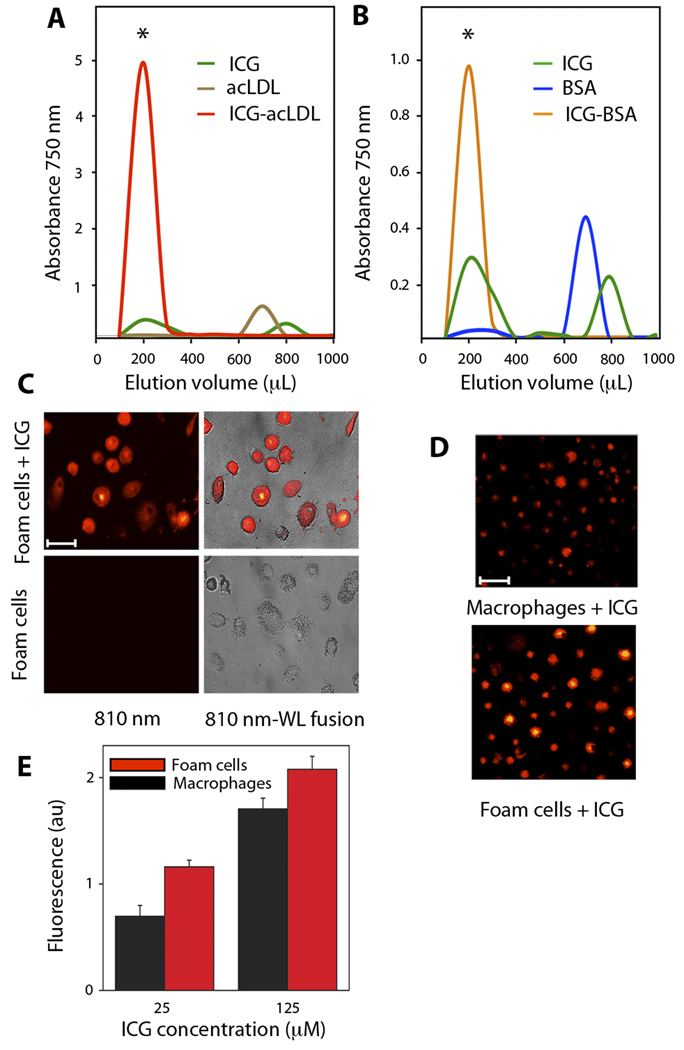
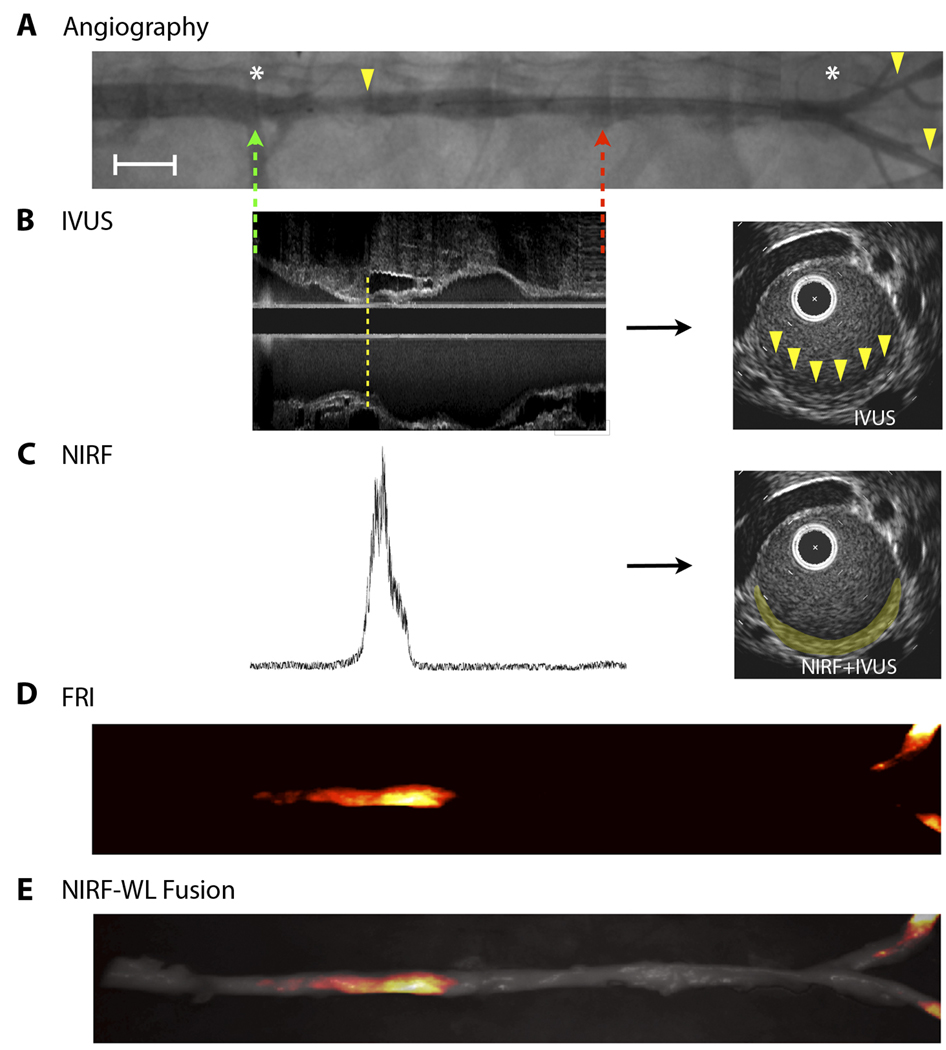
New high-resolution molecular and structural imaging strategies are needed to visualize high-risk plaques that are likely to cause acute myocardial infarction, because current diagnostic methods do not reliably identify at-risk subjects. Although molecular imaging agents are available for low-resolution detection of atherosclerosis in large arteries, a lack of imaging agents coupled to high-resolution modalities has limited molecular imaging of atherosclerosis in the smaller coronary arteries. Here, we have demonstrated that indocyanine green (ICG), a Food and Drug Administration-approved near-infrared fluorescence (NIRF)-emitting compound, targets atheromas within 20 min of injection and provides sufficient signal enhancement for in vivo detection of lipid-rich, inflamed, coronary-sized plaques in atherosclerotic rabbits. In vivo NIRF sensing was achieved with an intravascular wire in the aorta, a vessel of comparable caliber to human coronary arteries. Ex vivo fluorescence reflectance imaging showed high plaque target-to-background ratios in atheroma-bearing rabbits injected with ICG compared to atheroma-bearing rabbits injected with saline. In vitro studies using human macrophages established that ICG preferentially targets lipid-loaded macrophages. In an early clinical study of human atheroma specimens from four patients, we found that ICG colocalized with plaque macrophages and lipids. The atheroma-targeting capability of ICG has the potential to accelerate the clinical development of NIRF molecular imaging of high-risk plaques in humans.
需要新的高分辨率分子和结构成像策略来可视化可能导致急性心肌梗死的高危斑块,因为当前的诊断方法不能可靠地识别高危人群。尽管有用于大动脉粥样硬化低分辨率检测的分子成像剂,但缺乏与高分辨率方式相结合的成像剂限制了较小冠状动脉粥样硬化的分子成像。在这里,我们已经证明,吲哚菁绿(ICG)是一种获得美国食品和药物管理局批准的近红外荧光(NIRF)发射化合物,在注射后 20 分钟内即可靶向动脉粥样硬化斑块,并提供足够的信号增强,可用于在活体检测动脉粥样硬化兔的富含脂质、炎症、冠状动脉大小的斑块。在主动脉中的血管内导丝上实现了体内 NIRF 检测,主动脉的口径与人类冠状动脉相当。与注射生理盐水的动脉粥样硬化兔相比,注射 ICG 的动脉粥样硬化兔的离体荧光反射成像显示出更高的斑块靶标与背景比。使用负载脂质的人类巨噬细胞进行的体外研究表明,ICG 优先靶向载脂巨噬细胞。在对来自四名患者的人类动脉粥样硬化标本的早期临床研究中,我们发现 ICG 与斑块巨噬细胞和脂质共定位。ICG 的动脉粥样硬化靶向能力有可能加速人类高危斑块的 NIRF 分子成像的临床发展。