University of Queensland Diamantina Institute, Princess Alexandra Hospital, Brisbane, Queensland, Australia.
PLoS One. 2011;6(5):e20057. doi: 10.1371/journal.pone.0020057. Epub 2011 May 24.
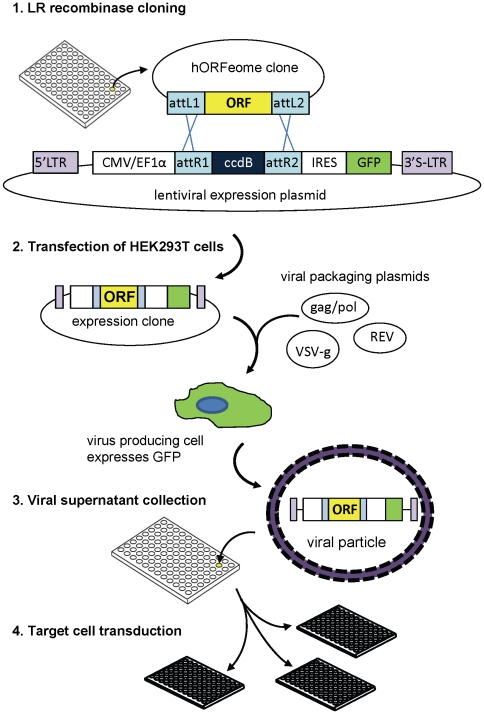
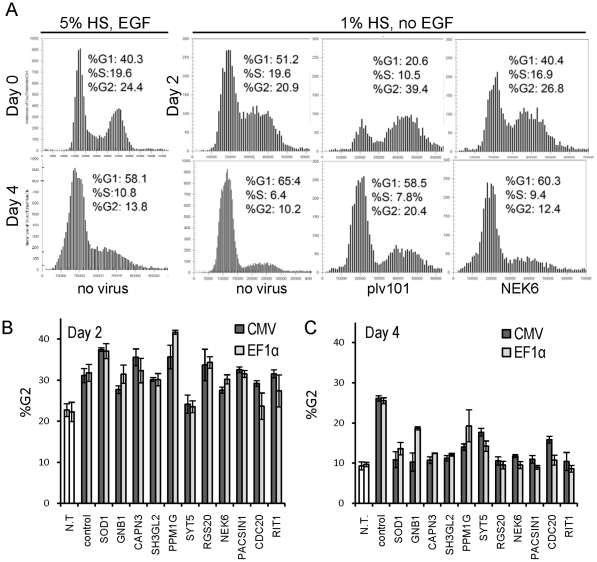
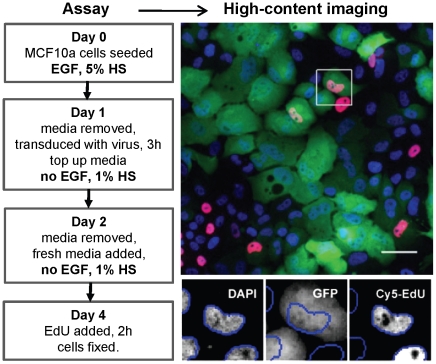
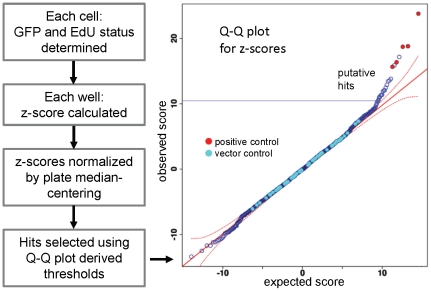
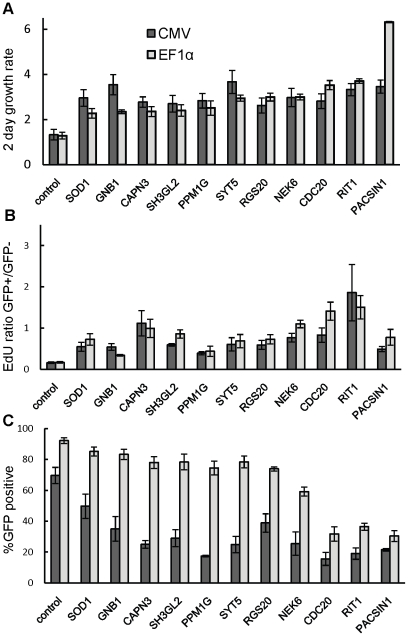
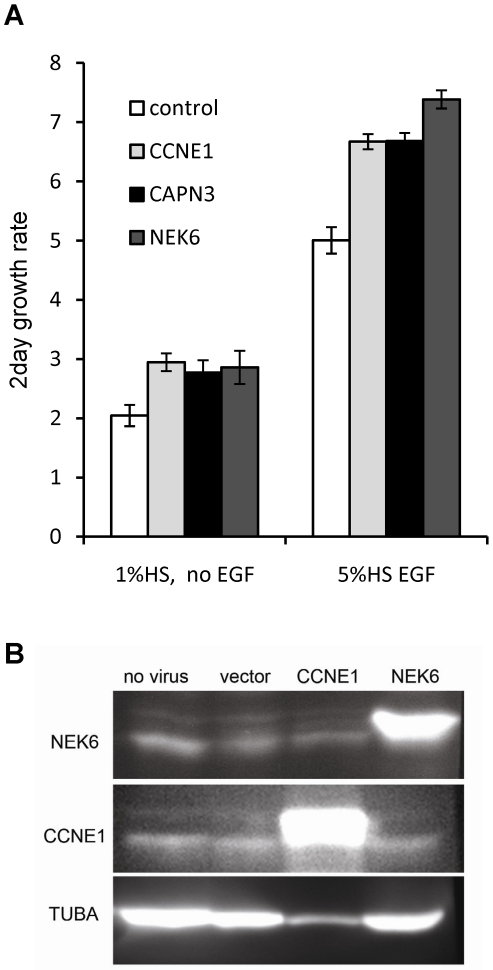
In response to the growing need for functional analysis of the human genome, we have developed a platform for high-throughput functional screening of genes overexpressed from lentiviral vectors. Protein-coding human open reading frames (ORFs) from the Mammalian Gene Collection were transferred into lentiviral expression vector using the highly efficient Gateway recombination cloning. Target ORFs were inserted into the vector downstream of a constitutive promoter and upstream of an IRES controlled GFP reporter, so that their transfection, transduction and expression could be monitored by fluorescence. The expression plasmids and viral packaging plasmids were combined and transfected into 293T cells to produce virus, which was then used to transduce the screening cell line. We have optimised the transfection and transduction procedures so that they can be performed using robotic liquid handling systems in arrayed 96-well microplate, one-gene-per-well format, without the need to concentrate the viral supernatant. Since lentiviruses can infect both dividing and non-dividing cells, this system can be used to overexpress human ORFs in a broad spectrum of experimental contexts. We tested the platform in a 1990 gene pilot screen for genes that can increase proliferation of the non-tumorigenic mammary epithelial cell line MCF-10A after removal of growth factors. Transduced cells were labelled with the nucleoside analogue 5-ethynyl-2'-deoxyuridine (EdU) to detect cells progressing through S phase. Hits were identified using high-content imaging and statistical analysis and confirmed with vectors using two different promoters (CMV and EF1α). The screen demonstrates the reliability, versatility and utility of our screening platform, and identifies novel cell cycle/proliferative activities for a number of genes.
为了满足对人类基因组功能分析日益增长的需求,我们开发了一种高通量筛选过表达慢病毒载体的基因的功能筛选平台。哺乳动物基因集中的蛋白编码人类开放阅读框(ORF)通过高效的 Gateway 重组克隆技术转移到慢病毒表达载体中。靶 ORF 插入载体的组成型启动子下游和 IRES 控制的 GFP 报告基因上游,因此可以通过荧光监测它们的转染、转导和表达。将表达质粒和病毒包装质粒组合并转染 293T 细胞以产生病毒,然后用该病毒转导筛选细胞系。我们已经优化了转染和转导程序,以便可以在 96 孔微板的阵列中使用机器人液体处理系统以每孔一个基因的格式进行,而无需浓缩病毒上清液。由于慢病毒可以感染分裂和非分裂细胞,因此该系统可用于在广泛的实验环境中过表达人类 ORF。我们在一个针对 1990 个基因的先导筛选中测试了该平台,这些基因可以在去除生长因子后增加非肿瘤性乳腺上皮细胞系 MCF-10A 的增殖。用核苷类似物 5-乙炔基-2'-脱氧尿苷(EdU)标记转导细胞,以检测处于 S 期的细胞。使用高内涵成像和统计分析来识别命中,并使用两种不同的启动子(CMV 和 EF1α)的载体进行确认。该筛选证明了我们的筛选平台的可靠性、多功能性和实用性,并确定了许多基因的新的细胞周期/增殖活性。