Department of Energy, Great Lakes Bioenergy Research Center, Michigan State University, East Lansing, MI, USA.
Biotechnol Biofuels. 2011 Jun 9;4(1):16. doi: 10.1186/1754-6834-4-16.
Pretreatment is a critical step in the conversion of lignocellulose to fermentable sugars. Although many pretreatment processes are currently under investigation, none of them are entirely satisfactory in regard to effectiveness, cost, or environmental impact. The use of hydrogen peroxide at pH 11.5 (alkaline hydrogen peroxide (AHP)) was shown by Gould and coworkers to be an effective pretreatment of grass stovers and other plant materials in the context of animal nutrition and ethanol production. Our earlier experiments indicated that AHP performed well when compared against two other alkaline pretreatments. Here, we explored several key parameters to test the potential of AHP for further improvement relevant to lignocellulosic ethanol production.
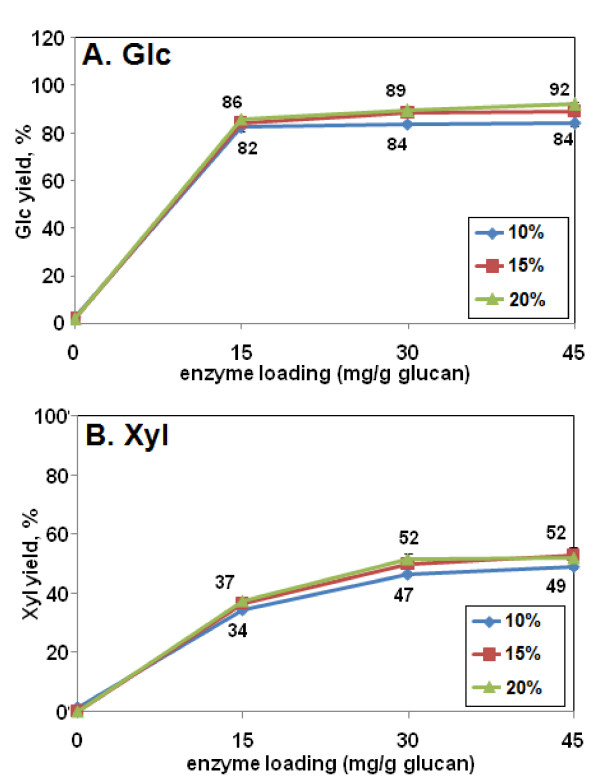
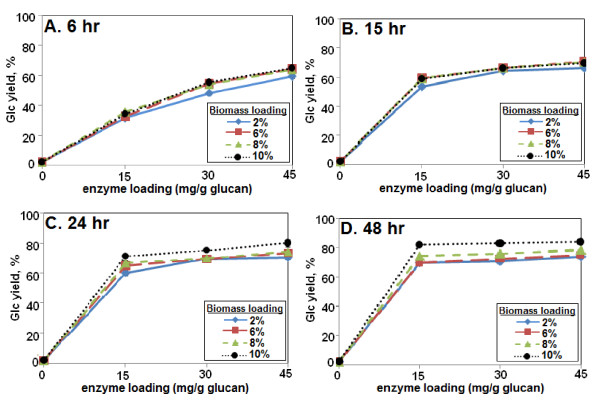
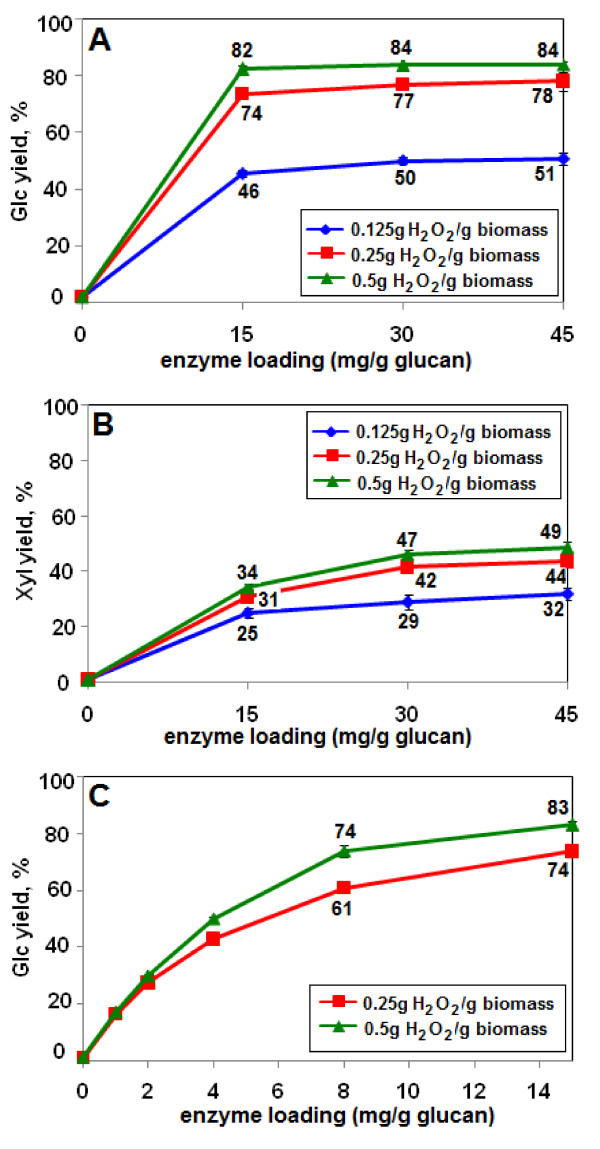
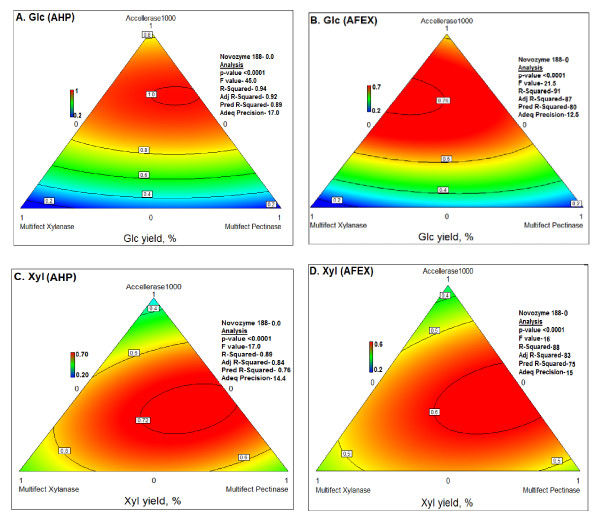
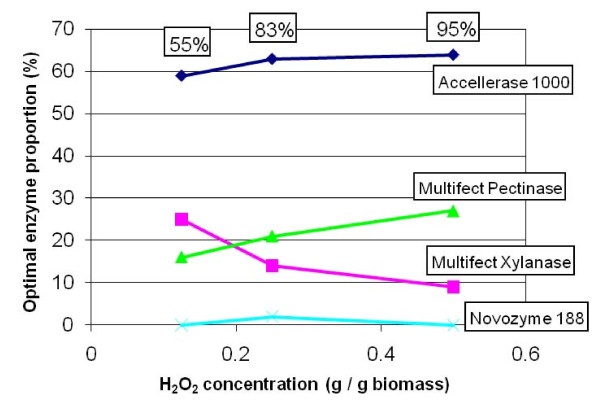
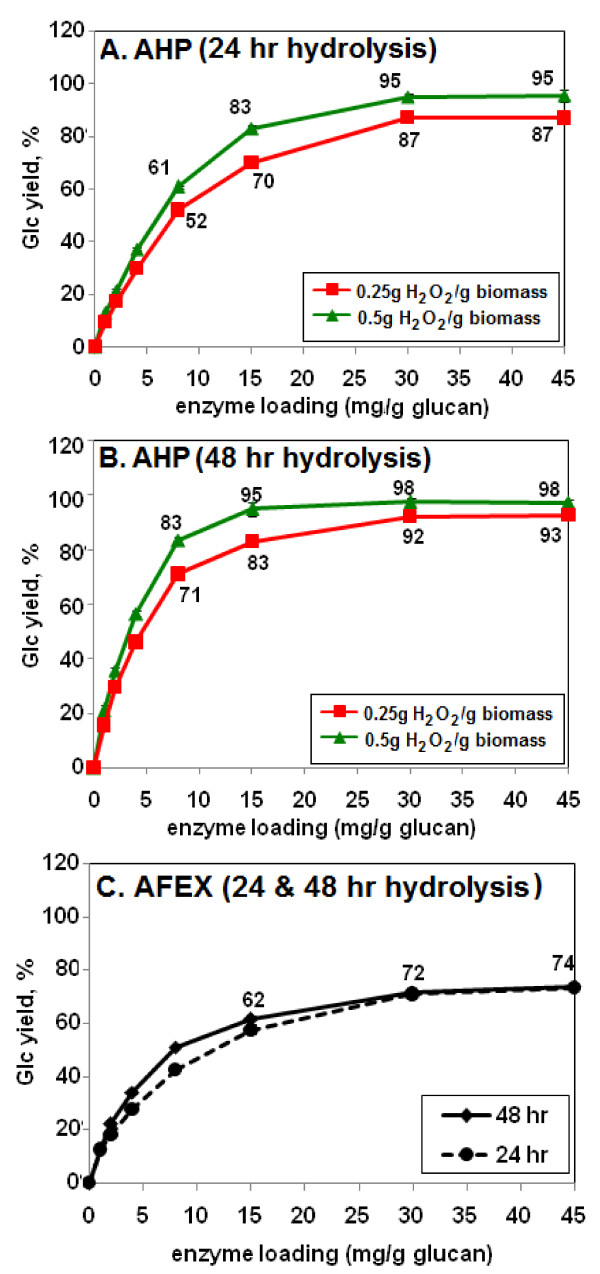
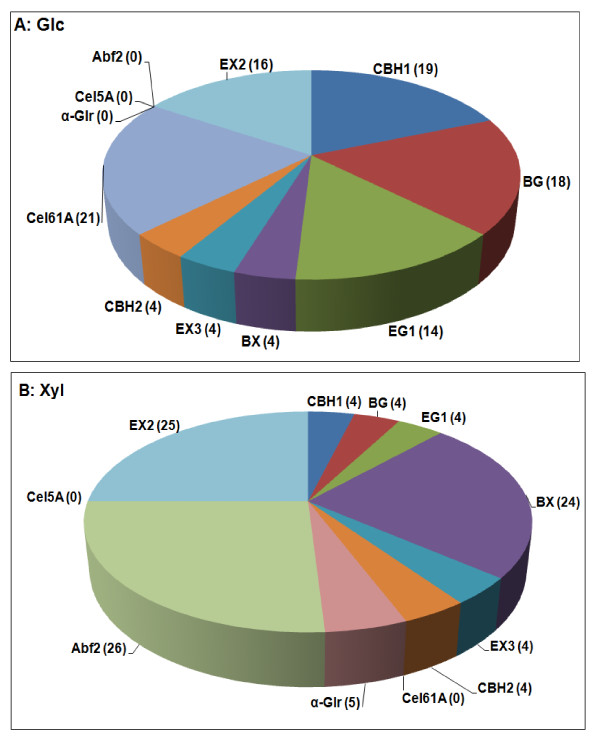
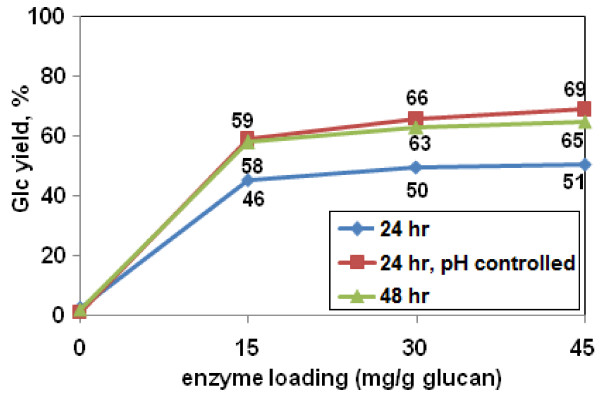
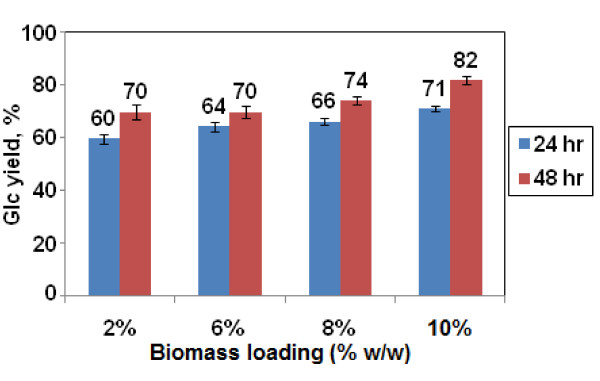
The effects of biomass loading, hydrogen peroxide loading, residence time, and pH control were tested in combination with subsequent digestion with a commercial enzyme preparation, optimized mixtures of four commercial enzymes, or optimized synthetic mixtures of pure enzymes. AHP pretreatment was performed at room temperature (23°C) and atmospheric pressure, and after AHP pretreatment the biomass was neutralized with HCl but not washed before enzyme digestion. Standard enzyme digestion conditions were 0.2% glucan loading, 15 mg protein/g glucan, and 48 h digestion at 50°C. Higher pretreatment biomass loadings (10% to 20%) gave higher monomeric glucose (Glc) and xylose (Xyl) yields than the 2% loading used in earlier studies. An H2O2 loading of 0.25 g/g biomass was almost as effective as 0.5 g/g, but 0.125 g/g was significantly less effective. Optimized mixtures of four commercial enzymes substantially increased post-AHP-pretreatment enzymatic hydrolysis yields at all H2O2 concentrations compared to any single commercial enzyme. At a pretreatment biomass loading of 10% and an H2O2 loading of 0.5 g/g biomass, an optimized commercial mixture at total protein loadings of 8 or 15 mg/g glucan gave monomeric Glc yields of 83% or 95%, respectively. Yields of Glc and Xyl after pretreatment at a low hydrogen peroxide loading (0.125 g H2O2/g biomass) could be improved by extending the pretreatment residence time to 48 h and readjusting the pH to 11.5 every 6 h during the pretreatment. A Glc yield of 77% was obtained using a pretreatment of 15% biomass loading, 0.125 g H2O2/g biomass, and 48 h with pH adjustment, followed by digestion with an optimized commercial enzyme mixture at an enzyme loading of 15 mg protein/g glucan.
Alkaline peroxide is an effective pretreatment for corn stover. Particular advantages are the use of reagents with low environmental impact and avoidance of special reaction chambers. Reasonable yields of monomeric Glc can be obtained at an H2O2 concentration one-quarter of that used in previous AHP research. Additional improvements in the AHP process, such as peroxide stabilization, peroxide recycling, and improved pH control, could lead to further improvements in AHP pretreatment.
预处理是将木质纤维素转化为可发酵糖的关键步骤。尽管目前有许多预处理工艺正在研究中,但在效果、成本或环境影响方面,没有一种完全令人满意。古尔德等人表明,在动物营养和乙醇生产方面,pH 值为 11.5 的过氧化氢(碱性过氧化氢(AHP))的使用是草秸秆和其他植物材料的有效预处理。我们之前的实验表明,与另外两种碱性预处理方法相比,AHP 的效果很好。在这里,我们探讨了几个关键参数,以测试 AHP 在与木质纤维素乙醇生产相关的进一步改进方面的潜力。
在与后续用商业酶制剂、四种商业酶的优化混合物或优化的纯酶合成混合物进行消化相结合的情况下,测试了生物质负载量、过氧化氢负载量、停留时间和 pH 控制。AHP 预处理在室温(23°C)和大气压下进行,AHP 预处理后,用 HCl 中和生物质,但在酶消化前不进行洗涤。标准酶消化条件为 0.2%葡聚糖负载量、15mg 蛋白/g 葡聚糖和 50°C 下 48h 消化。与早期研究中使用的 2%负载量相比,较高的预处理生物质负载量(10%至 20%)可获得更高的单体葡萄糖(Glc)和木糖(Xyl)产量。0.25g/g 生物质的 H2O2 负载量几乎与 0.5g/g 一样有效,但 0.125g/g 则明显效果较差。与任何单一的商业酶相比,在所有 H2O2 浓度下,四种商业酶的优化混合物均能显著提高 AHP 预处理后的酶解产率。在预处理生物质负载量为 10%和 H2O2 负载量为 0.5g/g 生物质的情况下,总蛋白负载量为 8 或 15mg/g 葡聚糖的优化商业混合物可分别获得 83%或 95%的单体 Glc 产率。通过将预处理停留时间延长至 48h,并在预处理过程中每 6h 调整 pH 值至 11.5,可提高低过氧化氢负载量(0.125g H2O2/g 生物质)下的预处理后 Glc 和 Xyl 产率。使用 15%生物质负载量、0.125g H2O2/g 生物质和 48h 以及 pH 值调整的预处理,然后用 15mg 蛋白/g 葡聚糖的优化商业酶混合物进行消化,可获得 77%的 Glc 产率。
碱性过氧化物是玉米秸秆的有效预处理方法。特别的优点是使用对环境影响较小的试剂,避免使用特殊的反应室。在 H2O2 浓度为之前 AHP 研究中使用浓度的四分之一的情况下,可以获得合理的单体 Glc 产率。通过过氧化物稳定、过氧化物回收和改进 pH 控制等 AHP 工艺的进一步改进,可以进一步提高 AHP 预处理的效果。