Carlin Economics and Science, Fairfax, VA 22031, USA.
Int J Environ Res Public Health. 2011 Apr;8(4):985-1031. doi: 10.3390/ijerph8040985. Epub 2011 Apr 1.
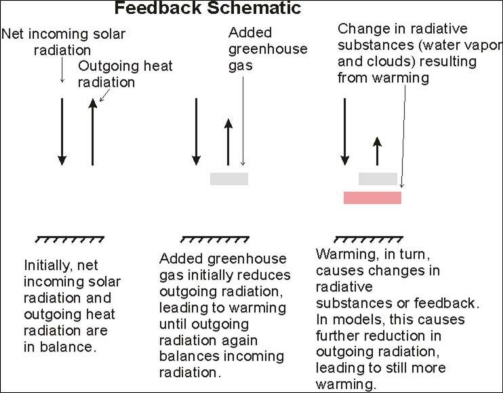
Economic analyses of environmental mitigation and other interdisciplinary public policy issues can be much more useful if they critically examine what other disciplines have to say, insist on using the most relevant observational data and the scientific method, and examine lower cost alternatives to the change proposed. These general principles are illustrated by applying them to the case of climate change mitigation, one of the most interdisciplinary of public policy issues. The analysis shows how use of these principles leads to quite different conclusions than those of most previous such economic analyses, as follows: The economic benefits of reducing CO(2) emissions may be about two orders of magnitude less than those estimated by most economists because the climate sensitivity factor (CSF) is much lower than assumed by the United Nations because feedback is negative rather than positive and the effects of CO(2) emissions reductions on atmospheric CO(2) appear to be short rather than long lasting. The costs of CO(2) emissions reductions are very much higher than usually estimated because of technological and implementation problems recently identified. Geoengineering such as solar radiation management is a controversial alternative to CO(2) emissions reductions that offers opportunities to greatly decrease these large costs, change global temperatures with far greater assurance of success, and eliminate the possibility of low probability, high consequence risks of rising temperatures, but has been largely ignored by economists. CO(2) emissions reductions are economically unattractive since the very modest benefits remaining after the corrections for the above effects are quite unlikely to economically justify the much higher costs unless much lower cost geoengineering is used.The risk of catastrophic anthropogenic global warming appears to be so low that it is not currently worth doing anything to try to control it, including geoengineering.
如果环境缓解和其他跨学科公共政策问题的经济分析能够批判性地审视其他学科的观点,坚持使用最相关的观测数据和科学方法,并审视拟议变革的低成本替代方案,那么这些分析将变得更加有用。这些一般原则通过将其应用于气候变化缓解的案例来说明,气候变化缓解是最具跨学科性的公共政策问题之一。分析表明,这些原则的使用会导致与大多数先前的此类经济分析完全不同的结论,具体如下:减少二氧化碳排放的经济效益可能比大多数经济学家估计的低两个数量级,因为气候敏感度因素(CSF)远低于联合国假设的水平,因为反馈是负面的而不是正面的,而且二氧化碳排放减少对大气二氧化碳的影响似乎是短暂的而不是持久的。由于最近发现的技术和实施问题,二氧化碳减排的成本远高于通常估计的成本。地球工程学,如太阳辐射管理,是减少二氧化碳排放的一种有争议的替代方案,它为大大降低这些高成本提供了机会,可以更有把握地改变全球温度,并消除因气温升高而产生的低概率、高后果风险,但经济学家对此基本上忽略了。由于上述影响的修正后剩余的效益非常适度,因此二氧化碳减排在经济上没有吸引力,不太可能证明更高的成本是合理的,除非使用成本更低的地球工程学。灾难性人为全球变暖的风险似乎如此之低,以至于目前不值得采取任何措施来试图控制它,包括地球工程学。