Mahidol-Oxford Tropical Medicine Research Unit, Mahidol University, Bangkok, Thailand.
Trop Med Int Health. 2011 Sep;16(9):1167-79. doi: 10.1111/j.1365-3156.2011.02822.x. Epub 2011 Jun 24.
Antimicrobial resistance has arisen across the globe in both nosocomial and community settings as a consequence of widespread antibiotic consumption. Poor availability of laboratory diagnosis means that resistance frequently goes unrecognised and may only be detected as clinical treatment failure. In this review, we provide an overview of the reported susceptibility of common community acquired bacterial pathogens in Sub-Saharan Africa and Asia to the antibiotics that are most widely used in these areas.
We reviewed the literature for reports of the susceptibility of prevalent pathogens in the community in SSA and Asia to a range of commonly prescribed antibiotics. Inclusion criteria required that isolates were collected since 2004 and that they were obtained from either normally sterile sites or urine. The data were aggregated by region and by age group.
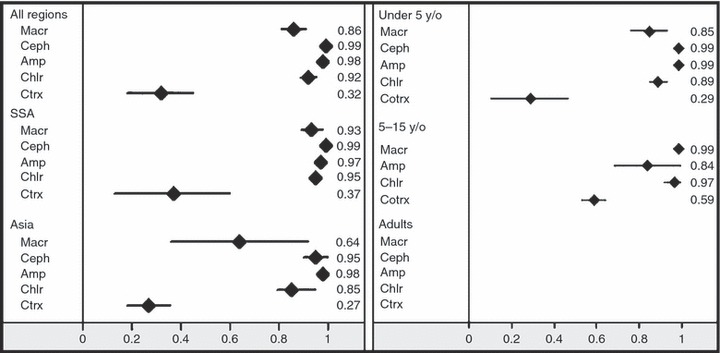
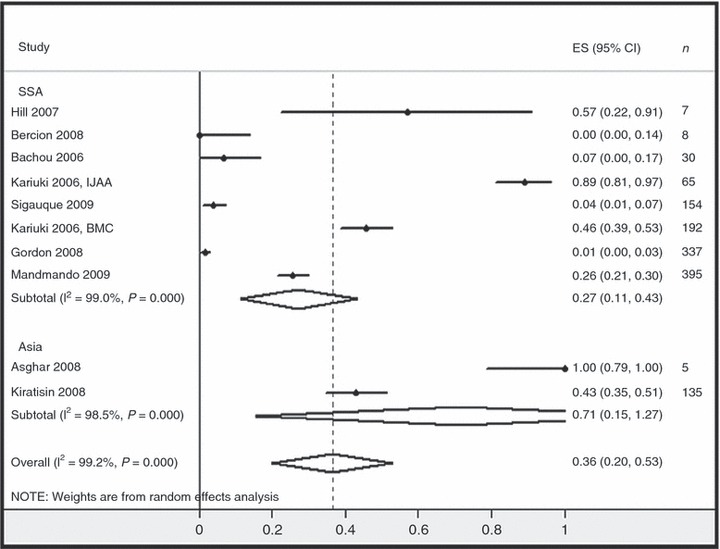
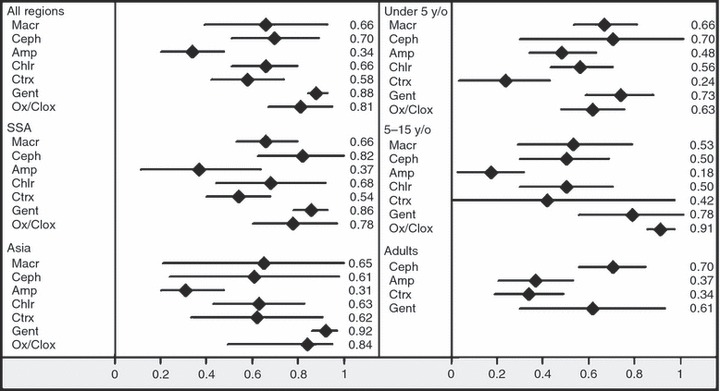
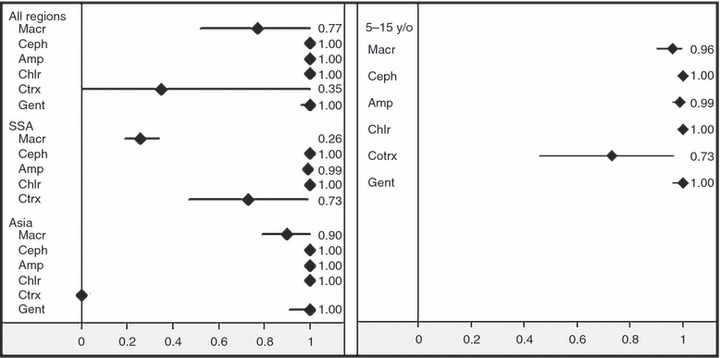
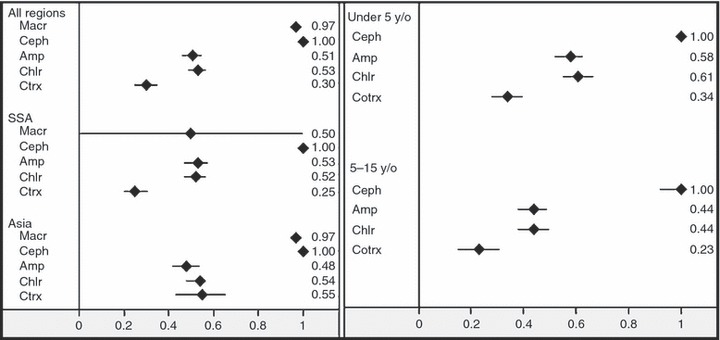
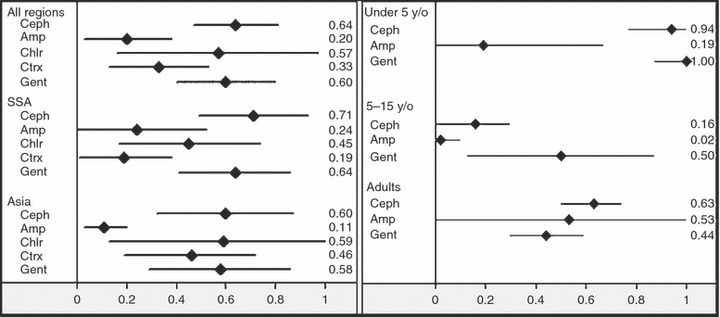
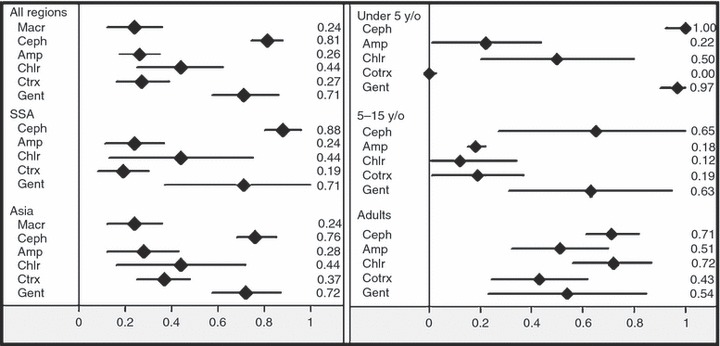
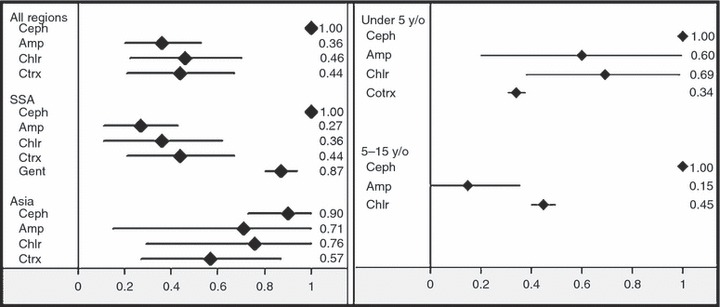
Eighty-three studies were identified since 2004 which reported the antimicrobial susceptibilities of common bacterial pathogens. Different methods were used to assess in-vitro susceptibility in the different studies. The quality of testing (evidenced by resistance profiles) also varied considerably. For Streptococcus pneumoniae and Neisseria meningitidis most drugs maintained relatively high efficacy, apart from co-trimoxazole to which there were high levels of resistance in most of the pathogens surveyed.
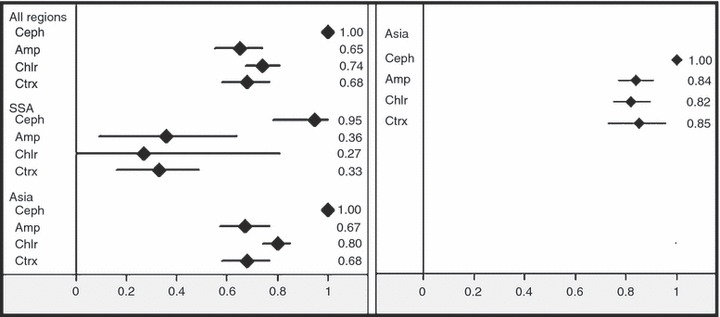
Compared with the enormous infectious disease burden and widespread use of antibiotics there are relatively few reliable data on antimicrobial susceptibility from tropical Asia and Africa upon which to draw firm conclusions, although it is evident that many commonly used antibiotics face considerable resistance in prevalent bacterial pathogens. This is likely to exacerbate morbidity and mortality. Investment in improved antimicrobial susceptibility testing and surveillance systems is likely to be a highly cost-effective strategy and should be complemented by centralized and readily accessible information resources.
由于抗生素的广泛使用,全球范围内的医院和社区都出现了抗生素耐药性。实验室诊断的不足意味着耐药性经常未被发现,只有在临床治疗失败时才会被检测到。在这篇综述中,我们概述了在撒哈拉以南非洲和亚洲,常见社区获得性细菌病原体对这些地区广泛使用的抗生素的报告敏感性。
我们回顾了文献中关于 2004 年以来撒哈拉以南非洲和亚洲社区中流行病原体对一系列常用抗生素的敏感性报告。纳入标准要求分离物是在 2004 年以后采集的,并且是从正常无菌部位或尿液中获得的。数据按地区和年龄组进行汇总。
自 2004 年以来,我们确定了 83 项研究,这些研究报告了常见细菌病原体的抗菌药物敏感性。不同的研究使用不同的方法来评估体外敏感性。检测的质量(通过耐药谱来证明)也有很大差异。对于肺炎链球菌和脑膜炎奈瑟菌,除了复方新诺明(在大多数被调查的病原体中都有很高的耐药性)外,大多数药物的疗效仍然相对较高。
与巨大的传染病负担和广泛使用抗生素相比,来自热带亚洲和非洲的关于抗菌药物敏感性的可靠数据相对较少,因此无法得出确凿的结论,尽管很明显,许多常用抗生素在常见的病原体中面临着相当大的耐药性。这可能会加剧发病率和死亡率。投资于改善抗菌药物敏感性检测和监测系统可能是一种非常具有成本效益的策略,并且应该辅以集中和易于获取的信息资源。