Gupta Suresh Kumar, Kalaiselvan V, Srivastava Sushma, Agrawal Shyam S, Saxena Rohit
Delhi Institute of Pharmaceutical Sciences and Research, New Delhi, India.
J Ayurveda Integr Med. 2010 Oct;1(4):280-6. doi: 10.4103/0975-9476.74425.
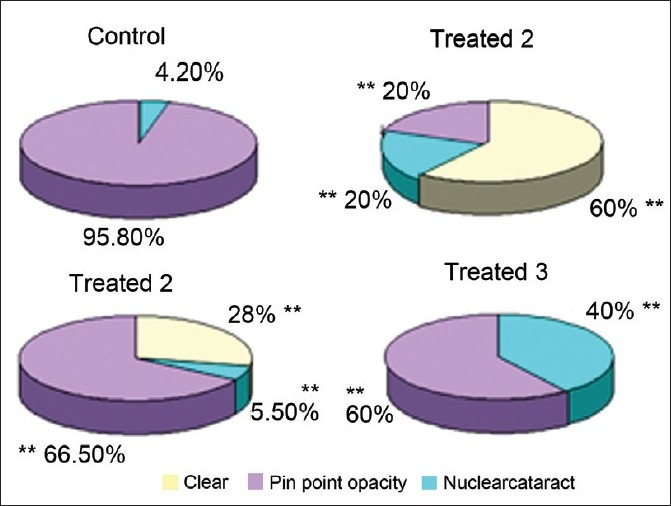
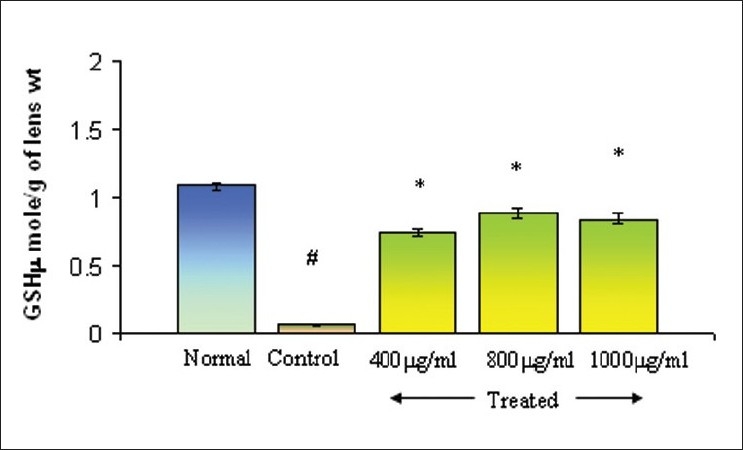
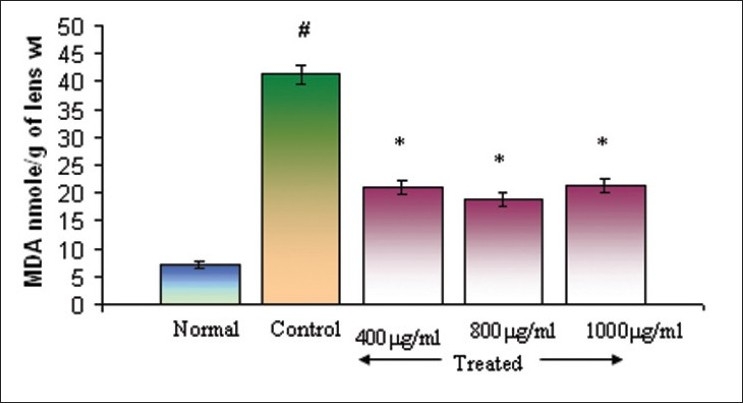
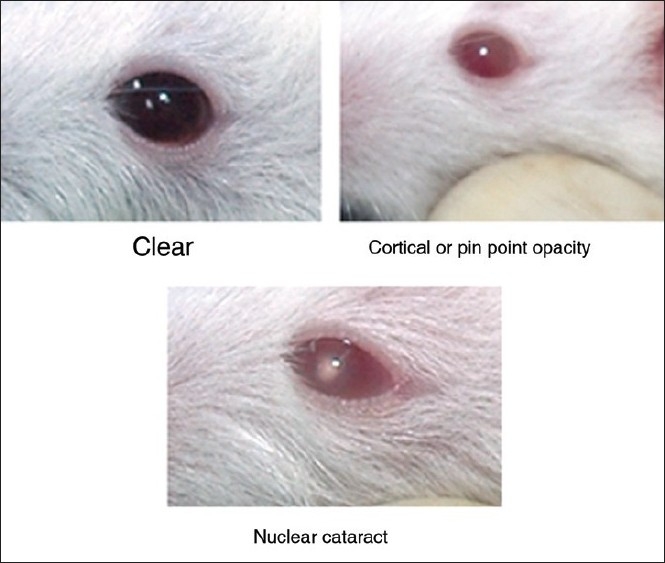
Triphala (TP) is composed of Emblica officinalis, Terminalia chebula, and Terminalia belerica. The present study was undertaken to evaluate its anticataract potential in vitro and in vivo in a selenite-induced experimental model of cataract. In vitro enucleated rat lenses were maintained in organ culture containing Dulbecco's Modified Eagles Medium alone or with the addition of 100μM selenite. These served as the normal and control groups, respectively. In the test group, the medium was supplemented with selenite and different concentrations of TP aqueous extract. The lenses were incubated for 24 h at 37°C. After incubation, the lenses were processed to estimate reduced glutathione (GSH), lipid peroxidation product, and antioxidant enzymes. In vivo selenite cataract was induced in 9-day-old rat pups by subcutaneous injection of sodium selenite (25 μmole/kg body weight). The test groups received 25, 50, and 75 mg/kg of TP intraperitoneally 4 h before the selenite challenge. At the end of the study period, the rats' eyes were examined by slit-lamp. TP significantly (P < 0.01) restored GSH and decreased malondialdehyde levels. A significant restoration in the activities of antioxidant enzymes such as superoxide dismutase (P < 0.05), catalase (P < 0.05), glutathione peroxidase (P < 0.05), and glutathione-s-transferase (P < 0.005) was observed in the TP-supplemented group compared to controls. In vivo TF 25mg/kg developed only 20% nuclear cataract as compared to 100% in control. TP prevents or retards experimental selenite-induced cataract. This effect may be due to antioxidant activity. Further studies are warranted to explore its role in human cataract.
三果木(TP)由余甘子、诃子和毛诃子组成。本研究旨在评估其在亚硒酸盐诱导的白内障实验模型中的体外和体内抗白内障潜力。体外摘除的大鼠晶状体分别在仅含杜氏改良伊格尔培养基或添加100μM亚硒酸盐的器官培养基中培养。这些分别作为正常组和对照组。在测试组中,培养基添加了亚硒酸盐和不同浓度的TP水提取物。晶状体在37°C孵育24小时。孵育后,对晶状体进行处理以估计还原型谷胱甘肽(GSH)、脂质过氧化产物和抗氧化酶。通过皮下注射亚硒酸钠(25μmole/kg体重)在9日龄大鼠幼崽中诱导体内亚硒酸盐白内障。测试组在亚硒酸盐攻击前4小时腹腔注射25、50和75mg/kg的TP。在研究期结束时,通过裂隙灯检查大鼠的眼睛。TP显著(P < 0.01)恢复了GSH并降低了丙二醛水平。与对照组相比,在补充TP的组中观察到抗氧化酶如超氧化物歧化酶(P < 0.05)、过氧化氢酶(P < 0.05)、谷胱甘肽过氧化物酶(P < 0.05)和谷胱甘肽 - S - 转移酶(P < 0.005)的活性有显著恢复。在体内,与对照组100%相比,25mg/kg的TP仅导致20%的核性白内障。TP预防或延缓实验性亚硒酸盐诱导的白内障。这种作用可能归因于抗氧化活性。有必要进一步研究以探索其在人类白内障中的作用。